General Debate 29 April 2020

On the assumption that surely David Clark is goneburger, this raises the issue of who will be the new Minister of Health. Not a lot of options. Let’s look at the Cabinet in order, assuming it must be a Labour Minister:
So my overall pick would be Woods most likely with 2nd most likely is Ardern takes it herself.
The Herald reports:
Health Minister David Clark reportedly moved house while the rest of the country was on lockdown.
Clark was spotted repeatedly between two Dunedin properties during the month-long lockdown period.
He and his family are believed to have recently moved into a new home before the country went into level 4, with the minister seen moving large furniture and appliances as the country went into the mandatory nationwide restrictions, 1 NEWS reported.
Clark’s office confirmed he was working at times during lockdown from his old house, which he still owns and said it provided a quieter work environment.
What did Level 4 rules say? The house you are in the night Level 4 started you must stay in for the duration.
This really is a new low for political stupidity. Not even Ardern’s reluctance to sack Ministers for anything short of assaulting their staff can save him. Surely he is gone.
What is even more astonishing is that we are in the middle of a 1 in 100 year global pandemic and the Minister of Health has so little to do, that he has time to move house an be carrying furniture and appliances between the two houses.
The Times reports:
Labour officials ran a secret operation to deceive Jeremy Corbyn at last year’s general election, micro-targeting Facebook adverts at the leader and his closest aides to convince them the party was running the campaign they demanded.
Campaign chiefs at Labour HQ hoodwinked their own leader because they disapproved of some of Corbyn’s left-wing messages.
They convinced him they were following his campaign plans by spending just £5,000 on adverts solely designed to be seen by Corbyn, his aides and their favourite journalists, while pouring far more money into adverts with a different message for ordinary voters.
That’s really cunning. Spend $5,000 making them appear to the leader’s office and associates and they’ll be appearing so often they’ll think its saturation advertising to the public.
That’s one strike that everyone should get behind.
Charging students fees for rooms they are unable to access is just wrong.
Also it appears Vic Uni is double charging the same room. They’re charging those in emergency accom at Weir House $300 a week and also charging the original inhabitants $150 a week as a holding fee. Just nuts.
If student associations want to prove their value, they should be preparing a lawsuit on behalf of affected students.
Also have to laugh at this response:
The Vice-Chancellor of Victoria University of Wellington says students’ education will suffer if they don’t pay a $150 weekly ‘holding fee’ for student accommodation they can’t access. …
In an email to students yesterday, Victoria University vice-chancellor Professor Grant Guildford said the halls operate as a “cost-recovery ancillary operation”.
“Without the hall fees being paid we are having to cross-subsidise the halls from the tuition revenue – disadvantaging the quality of the education of all students.”
He said the other option was to fire staff.
“Or we cut the costs of the halls which would means a lot of staff (including RA’s) losing their jobs which is the last thing we want to see happen,” he wrote.
What nonsense. The other option is just to wear the loss against your balance sheet as a one off loss, as many other organisations have had to do.
VUW has $150 million of current assets including $80 million cash reserves. Overall net assets are $800 million.
So claiming that it is sack staff or charge students for rooms they are unable to access is a PR claim, but not a binary issue.
The issue is one of common sense. You don’t charge people for a service they can’t access.
Paul Goldsmith writes:
Third, in the longer term, how best do we position New Zealand to succeed in the post-Covid world.
On this, there will be a political divide. The instinct of the Labour/ New Zealand First government will be to assume that a committee of Wellington politicians and officials, with a couple of business folk, a union rep and two iwi leaders should steer our path into the new economy. The likes of Shane Jones and Phil Twyford will implement it.
We are sceptical of that approach.
Sceptical? It’s like a horror show. They could compete on who can spend the most money and achieve almost nothing for it
Absolutely, there is a critical role for government, with its capacity to fund good quality transport and water infrastructure. We’ve seen shortcomings in the health system’s digital infrastructure during this crisis; we should substantially upgrade this. Government has a critical role in ensuring the education sector delivers the skills we need to work productively.
A good example of government’s contribution is the previous National administration’s massive investment in Ultra-Fast-Broadband, which has made the past few weeks much more bearable and productive.
Thank goodness National made this a priority in 2008.
But the core engine of growth will always be private sector investment – men, women and their businesses taking on new ventures, rebuilding their businesses, expanding, hiring people – taking mad risks. No committee would have thought Kiwis should get into rockets, or into online accounting systems.
The recipe hasn’t changed. Successful economies make it easy for the investment to flow to more productive activities – they welcome investment, they don’t over regulate or over tax, they provide clear and consistent rules, properly enforced, and don’t go changing them all the time.
This is what Labour I think can’t do as it goes against their DNA. How do we impose less cost and regulation on businesses.
The headline at Stuff:
Sir John Key buys waterfront Sydney pad and lists it next day
99.9% of people reading that headline would conclude that John Key is a property speculator. That he purchased a property cheap off someone, and the very next day is trying to sell it at a huge profit.
The actual story is mundane:
New Zealand’s former prime minister Sir John Key and his wife Lady Bronagh became Sydney’s newest high-end home owners this past week when they took possession of an A$5.7 million (NZ$6.05 million) harbourside apartment in McMahons Point.
But the Auckland-based couple are not expected to take up residence in the 129-square-metre pad despite having already waited three years for it to be complete since buying it off the plan. …
Agent Tim Abbott said that at the time the couple bought the apartment Sir John had business interests in Australia, but in the years since the building has taken shape, those interests have moved to the United States, leaving their newly completed apartment redundant.
So in fact they brought it three years ago. And now there is no need to have a residence in Australia so they have sold it. And of course you can only sell something once you have settled the purchase, so in fact the story is much ado about nothing.
The vast majority of us during Level 4 were locked down as non-essential workers.
You probably assumed like me that essential workers were doctors, nurses, supermarket workers etc.
But incomprehensibly it seems essential worker status was given by Police National HQ to the Waikato Mongrel Mob gang leader, Sonny Fatu, according to my source.
Fatu is a convicted killer who helped torture and kill a man.
So how did he get given essential worker status by the Police?
It seems it was granted by Police Deputy Commissioner Wally Haumaha after a hui with gang leaders.
But it doesn’t end there. During Level 4 Police got called by neigbours of a gang hq as there were a couple of dozen people there, obviously breaching the lockdown notice. But when Police turned up the gang told them that the work they were doing was signed off by Police National HQ, so of course they were left to it.
So nice of Police HQ to make it easy for gangs to continue their essential work during Level 4.
UPDATE: Police HQ have informed me that they regard my story as wrong as the Police did not grant Sonny Fatu essential worker status.
However they do not deny that he has been granted essential worker status. The question is whether the Police Deputy Commissioner was involved in arranging or facilitating it via another organisation such as an Iwi health agency.
I will include the formal response from Police HQ when I receive it.
So the situation as it stands is that it appears uncontested Sonny Fatu was granted essential worker status. He was not granted it by the Police. We do not know which agency granted it, and we do not know what consultation or facilitation occurred with the Deputy Commissioner with the agency that granted it (if any). OIA responses are being sought.
UPDATE2: The official Police statement is:
Sonny Fatu was not granted Essential Worker status by Police.
Police have no responsibility for granting essential work status to individuals working for any other essential services.
Police is one of a number of government agencies working with Iwi-based providers to ensure vulnerable communities and families could be supported though the Alert Level 4 lockdown, with access to food, health and social services.
In my views gangs create vulnerable communities, rather than assist them.
What we are seeing is a deliberate strategy by some gangs to look legit by infiltrating health and welfare groups. If you spend 5% of your income from drug dealing on social services, then you gain legitimacy. And they hope people ignore the misery caused by them in the first place.
Phil Twyford has basically told local Councils he wants them to proceed with huge rates increases and if they don’t, then he’ll cut Government funding to them!
Stuff reports:
Councils are being warned not to slash rates in response to the coronavirus crisis, with a Cabinet minister saying it could cost them government funding. …
“If you deliberately cut your revenue by scaling back rates increases, or going for zero rates, or cutting rates, how can I stand up with my colleagues and make the case that we should be investing alongside you. I can’t do that.”
So let’s be very clear. He is not just warning Councils against cutting rates, but he is warning them to not even “scale back rates increases”
So at a time when business and household incomes are plummeting, Phil Twyford is telling local Councils they must not scale back rates increases, and if they do, he’ll make sure they miss out on government funding.
Waikato Regional Council chair Russ Rimmington didn’t participate in the meeting of Future Proof partners at which Twyford spoke but had the minister’s comments relayed to him.
Rimmington is focused on delivering a zero per cent rate increase for the next financial year and told Stuff he was “absolutely appalled” by Twyford’s remarks.
As we all should be.
“Here we are trying to be responsible, going through our expenditure line by line to try and be more efficient, and at the same time not introduce a slash and burn to our projects or services,” Rimmington said.
“His [Twyford’s] comments were a little bit threatening because we’ve obviously just spent weeks on these shovel ready project proposals and we don’t want to see those jeopardised.”
Can you believe it. A Minister not just advocating that Councils don’t scale back rates increases, but saying they may lose government funding if they do.
So when your local Council sticks up your rates, you now know who to blame – Phil Twyford.
The Guardian reports:
On 1 April, the prime minister of Sint Maarten addressed her nation’s 41,500 people. Coronavirus cases were rising, and Silveria Jacobs knew the small island country, which welcomes 500,000 tourists a year, was at great risk: it had two ICU beds.
Jacobs did not want to impose a strict lockdown, but she did want physical distancing observed. So she spelled it out: “Simply. Stop. Moving,” she said. “If you don’t have the bread you like in your house, eat crackers. Eat cereal. Eat oats. Eat … sardines.”
The 51-year-old Caribbean premier may not have the global profile of Angela Merkel or Jacinda Ardern, but her blunt message exemplified firm action, effective communication – and showed another female leader getting the job done.
From Germany to New Zealand and Denmark to Taiwan, women have managed the coronavirus crisis with aplomb. Plenty of countries with male leaders – Vietnam, the Czech Republic, Greece, Australia – have also done well. But few with female leaders have done badly.
The following countries have female leaders. This is their death rate per million population.
Belgium has the 2nd highest death rate in the world. I’d say that is doing badly. The global average death rate is 25 so seven countries with female leaders are above that and seven below that.
If Kim Jong-un is dead, she is the likely next ruler of North Korea. She is only 31 years old but her brother took over when he was 27 or 28.

Like her brother she studied in Switzerland. It was hoped for him that this would make him less hostile to the West, but if anything he was worse than his father and grandfather.
She studied computer science at university. In 2018 she attended the Winter Olympics in South Korea – the first ever visit by a member of the Kim dynasty.
She had a child in 2015.
If she does become supreme leader it might be as regent for one of the children of Kim Jong-un.
Of course he may not be dead but if he doesn’t appear for the 1 May military parade that would suggest he is.
If she takes over she could well for 40 years or more. She appears to be in much better health than her male relatives.
Steve Elers writes:
At the same briefing, the prime minister said: “Our testing has scaled up and we have now tested over 85,000 New Zealanders, one of the highest testing rates per capita in the world.” Wrong. At that time we were 31st in the world for testing rates per capita. I don’t think 31st can be considered “one of the highest” in the world, unless, of course, we have turned into a society where we believe everyone is a winner.
And did any journalists at the briefing query the prime minister about her claim? Not one. They just took what she said and regurgitated it to the masses – to us. Whatever happened to fact checking?
The following should have been asked at the time or at least put in writing to the prime minister’s press secretary: “Can you provide us with the source that says New Zealand has one of the highest testing rates per capita in the world?”
Yep rather than repeat the claims, media should ask for proof of them.
When the prime minister announces New Zealand has “one of the highest testing rates per capita in the world” and it goes through the media unchallenged, we’re inclined to believe it.
The same goes with the initial claims we were going hard and going fast when at the time it was in fact going slushy and slow.
For the health and wellbeing of my TV, I hope the news media will start holding power to account. If journalists can’t find the motivation within themselves to ask critical questions of the prime minister, perhaps they should imagine she is Simon Bridges.
I’m sure that would do the trick!
Salient reports:
Students at Victoria University of Wellington have been told that fees will be charged for Halls of Residence from 29 April for most Halls, despite many students being unable to return.
In an email sent to hall residents, besides those in Te Puni Village and Vic House, the University told students they will need to wait until the country enters Alert Level 2 before being able to return, as national travel restrictions remain in place.
This is outraegous.
Surely some friendly law firm can do a pro bono law suit against the university.
“I feel like I’m being strong armed out of money.” commented one Weir resident. “I have now been forced to choose between paying hundreds of dollars rent for a room I’m not legally allowed to enter, or drop out of university.”
For once this is a time for collective action. If every student refuses to pay, the university can’t do anything.
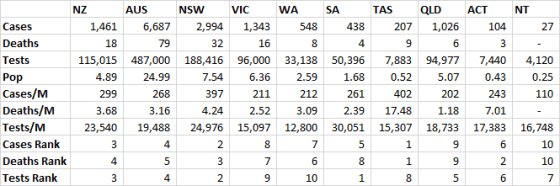
This is the data as of 25 April 2020.
In terms of the number of cases NZ ranks 3rd out of 10 (two countries, six states and two territories). The only two areas with more cases per capita is NSW and Tasmania.
NSW of course had 2,700 passengers from the Ruby Princess disembark there and so far that has led to 500 of their cases. Also Tasmania has had over half its cases due to one outbreak in the NW.
NZ is 4th highest in terms of deaths. Tasmania, ACT and NSW all higher. Australia overall and five other areas all lower.
In terms of testing NZ is 3rd highest (which is good) The only two higher are South Australia and NSW.
Mediaite reports:
President Donald Trump offered up bizarre and possibly dangerous suggestions about medical research on the coronavirus at his daily White House briefing, suggesting that blasting patients with “tremendous” amounts of UV light, even “inside of the body” as well as injecting them with the same disinfectants that are used to kill the viruses on surfaces might be effective treatments for Covid-19. …
“So, supposing we hit the body with tremendous, I don’t know if it’s ultraviolet or very powerful light, and I think you said that has been checked but your’e going to test it,” Trump said, turning to Bryan in a sidebar moment at the end for confirmation. “Then I said what it if you brought the light inside of the body which you could do either through the skin or some other way and I think you said you were going to test that, too, sounds interesting,” he added next, again turning to Bryan for validation.
But then Trump even went further, connecting the household bleaching agents in most surface disinfectants to a possible internal treatment for humans, which would be toxic and possibly fatal. “Then I see the disinfectant, one minute. Is there a way we can do something like that, by injection inside, or almost a cleaning. Because you see it gets in the lungs and it does a tremendous number on the lungs. So it’d be interesting to check that so that you’ll have to use medical doctors with. But it sounds interesting to me. So we’ll see, but the whole concept of the light, where it goes in one minute. That’s pretty powerful.”
Here’s a challenge for all those TDSers (Trump Defenders). Go get some disinfectant and inject yourselves with it, and let us know the outcome.

I love this response.
A guest satirical post by Owen Jennings, former ACT MP:
Imagine for a few moments that you have been appointed the Minister of Health in a new government. You don’t know a lot about health policy.
It is your first day in the saddle. Sitting across the desk from you are the top departmental bureaucrats armed with files and a plan to “capture” their Minister before he gets any bright ideas that run counter to the perceived wisdom that is current health policy.
A quick glance down at your diary shows that your next couple of days are jammed pack full with meetings with unions, DHB’s, government appointed bodies, academics. No sign of any private sector people. You have lain awake the last couple of nights trying to figure out what to do and how to implement the ideas you have chased around the country in the election campaign.
Where do you start?
Surely one of the very early questions you will ask the departmental mandarins is, “what are the major risks and health threats we face as a country?” The follow up question would then be, “how well are we prepared for these threats?”
Equally, surely, one of the department heads would reply, among the options, that every 20 years or so we face a flu pandemic and we haven’t had one for a while. “As to preparedness, Minister, we have a file here you can read that sets out our policy for pandemics. We are fully covered”.
You now have two broad choices. You can thank your staff for such competence, tuck the file in your satchel along with the 276 others and breeze through it on the plane going home, happy you are carrying out your tasks with all diligence.
Or you might take a “Prebble-istic” approach. You might invite a very experienced and successful businessman to look at the preparedness with a practical eye. “Check out for me what would happen if a major bug did hit us. What beds would be available and where, what protective facilities do we have and where are they, what testing arrangements do we have and how quickly can we increase capacity? Have something on my desk in three weeks. Get it right and you will be well paid”.
Why the latter option? It’s simple. As Minister it’s your backside that’s exposed. The buck stops with you. The departmental people can disappear into their offices and avoid the spotlight. As Minister you cannot simply ride off on your bike and disappear down your favourite hill course. You do not want to be ever known as the Minister who was caught unprepared. The Minister who failed to ask the right questions and look past the discussion paper’s headlines that all was well. You do not want to be accused of not being up to date, of having policy that was out of touch and under resourced. The one thing you have learned that it is difficult to hide policy making failures in a world of the Official Information Act.
The challenge for you is going to be when your businessman reports in and tells you that you are going to need to fund a “better preparedness” plan and you face a cabinet full of colleagues all eager to suck up taxpayer’s hard earned dollars on their own wildcat schemes. Suddenly the Cabinet room becomes an auction house.
You are going to be part of a team facing tradeoffs. Will we cancel the upgrading of the Tauranga to Katikati highway where there are too many road deaths so we can plant trees on good farm land to suck up CO2? Will we delay buying equipment for an isolation strategy in a probable flu epidemic or build a cycleway on the Auckland harbour bridge? Should we introduce tough new water quality measures while farmers are struggling and suiciding? Will Pharmac get more money for new drugs to save five to ten lives or will we build a tramline to the airport? Can we afford to close maternity hospitals in Southland risking mothers and babies lives so we can shift the Port of Auckland to Whangarei?
A year or so later and you are still musing and weighing up such options when the phone goes. The expected pandemic has arrived. It’s the PM on the line. A friend from overseas has called and recommends going into lockdown to save lives. “We cannot afford to lose any of our people. The modelling shows we could lose 40,000 people without a lockdown”.
“Is that the same calibre of modelling that has the planet warming by five degrees over the next few decades”, you ask, timidly. “It could be overstating the numbers because there are just too many unknowns to get any degree of accuracy”.
Getting bolder you tell the PM, “this is just another instance of making a trade off. If we manage things so we tighten down on the border, throw resources at testing and tracing and focus on keeping our older people very securely protected we can get through without devastating the economy.”
“Minister, stop reading the blogs and get this clear. We are the government of kindness. We will save every life we can at whatever the cost, even the very old and frail. I am going to front the public. You can stay home and work from there. I will call when I need you.”
Being sent home is code for getting sacked so you make a last stand. “Look PM, the lockdown is not necessary. The only losses that might occur are going to be among those at risk, those over 70 years who have life threatening issues anyway. Our economy is too fragile to absorb a massive depression that will surely occur if we close everything down. We will never be able to fund the recovery. People will be lost to depression, suicide, inability to access the reduced healthcare that will follow and the tensions in families and businesses that will be inevitable”.
“Just leave all that to me. The world is now looking to my leadership so I must stay true to my image. We can raise taxes, bring in CGT, up GST, push up fuel taxes, stimulate the economy with a range of new green initiatives. I can even win the next election on the back of my plans and by staying in front of the nation, encouraging and beguiling them. My friends in the media and the police will continue to help us and I have social media agreeing to cooperate. We have reduced the number of guns in the community so that eliminates that risk”. “Let’s do this”.
105 years ago today was the start of the Gallipoli campaign which lasted from 25 April 1915 to 9 January 1916. It was the birth of ANZAC Day.
The Commonwealth War Graves Commission lists 2,871 members of the New Zealand Armed Forces who died fighting for New Zealand between those dates. Over 16,000 died in total in WWI.
As I did in 2015, I am listing below those 2,871 New Zealanders who died at Gallipoli, or during that period. We shall not forget them.
100 years ago today was the start of the Gallipoli campaign which lasted from 25 April 1915 to 9 January 1916. It was the birth of ANZAC Day.
The Commonwealth War Graves Commission lists 2,871 members of the New Zealand Armed Forces who died fighting for New Zealand between those dates. Over 16,000 died in total in WWI.
Below are those 2,871 New Zealanders who died at Gallipoli, or during that period. We shall not forget them.
Lance Corporal Thomas Francis Adams, killed Sunday, 25 April 1915 aged 31
Second Lieutenant Harold Gordon Allen, killed Sunday, 25 April 1915 aged 21
Private William Eric Anderson, killed Sunday, 25 April 1915 aged 24
Lieutenant Herman Stuart Baddeley, killed Sunday, 25 April 1915
Private Herbert Bailey, killed Sunday, 25 April 1915 aged 27
Private Raymond John Baker, killed Sunday, 25 April 1915 aged 24
Lieutenant Clifford Clapcott Barclay, killed Sunday, 25 April 1915 aged 22
Private Lewen Maughan Barnett, killed Sunday, 25 April 1915 aged 21
Serjeant Kenneth Humphreys Begg, killed Sunday, 25 April 1915 aged 21
Private Roland James Bell, killed Sunday, 25 April 1915 aged 19
Private Alexander Black, killed Sunday, 25 April 1915 aged 23
Private William Black, killed Sunday, 25 April 1915 aged 32
Private Augustine Bond, killed Sunday, 25 April 1915 aged 25
Private Alfred Clifford Boreham, killed Sunday, 25 April 1915 aged 20
Private Walter Percy Boud, killed Sunday, 25 April 1915 aged 29
Private Albert Donald Bourk, killed Sunday, 25 April 1915
Private Arthur Clifford Bowen, killed Sunday, 25 April 1915
Private Ernest Edward Bradbury, killed Sunday, 25 April 1915 aged 27
Corporal William Brass, killed Sunday, 25 April 1915 aged 26
Serjeant David Gordon Burbush, killed Sunday, 25 April 1915
Private Henry Thomas Burnett, killed Sunday, 25 April 1915
Private Thomas Leslie Burns, killed Sunday, 25 April 1915 aged 21
Private Herbert Malcolm Campbell, killed Sunday, 25 April 1915 aged 24
Private Sidney Randolph Campbell, killed Sunday, 25 April 1915 aged 21
Private Lewis Tom Chapman, killed Sunday, 25 April 1915
Private Charlesworth, killed Sunday, 25 April 1915
Private Malcolm Maxwell Mcinnes Charteris, killed Sunday, 25 April 1915 aged 28
Private Lennox Nichol Cheyne, killed Sunday, 25 April 1915
Lance Corporal Arthur Clarke, killed Sunday, 25 April 1915 aged 31
Private William Edmund Cole, killed Sunday, 25 April 1915 aged 29
Private Bernard Collins, killed Sunday, 25 April 1915
Private Joseph Martin Cornwall, killed Sunday, 25 April 1915
Private George Couston, killed Sunday, 25 April 1915 aged 26
Private Albert Charles Cowdrey, killed Sunday, 25 April 1915
Private Ernest Wilkin Cox, killed Sunday, 25 April 1915 aged 22
Private Robert John Richard Bowman Craig, killed Sunday, 25 April 1915 aged 24
Private George Crutcher, killed Sunday, 25 April 1915
Private Robert Hunt Currie, killed Sunday, 25 April 1915 aged 37
Lieutenant Frederick Hugh Dodson, killed Sunday, 25 April 1915 aged 23
Private John Douds, killed Sunday, 25 April 1915 aged 40
Private John James Craig Dove, killed Sunday, 25 April 1915
Private Wilfred Ellis Dove, killed Sunday, 25 April 1915 aged 22
Private Richard Dunphy, killed Sunday, 25 April 1915
Private Joseph William Eades, killed Sunday, 25 April 1915 aged 21
Private Bertram Francis England, killed Sunday, 25 April 1915 aged 27
Private Ralph Feldwick, killed Sunday, 25 April 1915
Private Arthur Ross Fellowes, killed Sunday, 25 April 1915
Second Lieutenant William Evelyn Francise Flower, killed Sunday, 25 April 1915 aged 29
Private Albert Arthur Foote, killed Sunday, 25 April 1915 aged 22
Private William Stanley Frank, killed Sunday, 25 April 1915 aged 38
Lance Corporal Henry Charles Furze, killed Sunday, 25 April 1915 aged 25
Private William Garforth, killed Sunday, 25 April 1915
Private Allan Gordon Garland, killed Sunday, 25 April 1915
Private William James Gibb, killed Sunday, 25 April 1915
Lance Corporal Thomas Alexander Gillanders, killed Sunday, 25 April 1915 aged 34
Private Allan Gillingham, killed Sunday, 25 April 1915
Major David Grant, killed Sunday, 25 April 1915 aged 41
Private Frederick Leslie Griffin, killed Sunday, 25 April 1915 aged 20
Corporal Leonard Richard Grimwade, killed Sunday, 25 April 1915
Private Robert Francis Gudgeon, killed Sunday, 25 April 1915 aged 20
Lance Serjeant William Alexander Hamilton, killed Sunday, 25 April 1915
Private Harold Harding, killed Sunday, 25 April 1915 aged 20
Private Robert Hargreaves, killed Sunday, 25 April 1915
Private Wilfred Louis Harrison, killed Sunday, 25 April 1915
Private William Edmond Hartland, killed Sunday, 25 April 1915 aged 23
Corporal Fred Ellis Haycock, killed Sunday, 25 April 1915 aged 21
Private George Thomas Hayes, killed Sunday, 25 April 1915 aged 21
Private Thomas Western Hayward, killed Sunday, 25 April 1915 aged 26
Private Albert Bert Highsted, killed Sunday, 25 April 1915
Serjeant Major James Beasley Hobbs, killed Sunday, 25 April 1915 aged 44
Private Patrick Edward Lionel R. Holmes, killed Sunday, 25 April 1915
Serjeant Alfred John Douglas Howie, killed Sunday, 25 April 1915 aged 21
Lance Corporal Herbert Frederick Keyes, killed Sunday, 25 April 1915
Serjeant Roy Wilson Lambert, killed Sunday, 25 April 1915
Corporal Donald Bennett Lane, killed Sunday, 25 April 1915
Private Herbert Langley, killed Sunday, 25 April 1915
Private Eric Burton John Lawrence, killed Sunday, 25 April 1915
Private George Leeming, killed Sunday, 25 April 1915 aged 27
Private George Frederick Maber, killed Sunday, 25 April 1915
Private Robert Charles Mackie, killed Sunday, 25 April 1915
Private Langley Manning, killed Sunday, 25 April 1915 aged 21
Private Henry Marr, killed Sunday, 25 April 1915 aged 20
Private Alexander Martin, killed Sunday, 25 April 1915 aged 20
Private Charles Albert Matthews, killed Sunday, 25 April 1915 aged 19
Private Charlie William May, killed Sunday, 25 April 1915 aged 29
Private Samuel Meekan, killed Sunday, 25 April 1915 aged 22
Private John Thomas Milburn, killed Sunday, 25 April 1915 aged 27
Private Edward Noel Milligan, killed Sunday, 25 April 1915
Private Charles James Milne, killed Sunday, 25 April 1915
Private William Moeki, killed Sunday, 25 April 1915 aged 29
Private John Roberts Moore, killed Sunday, 25 April 1915
Private Moore Morpeth, killed Sunday, 25 April 1915 aged 20
Private James Arthur Morrison, killed Sunday, 25 April 1915 aged 24
Private Oswald Mark Norris, killed Sunday, 25 April 1915 aged 22
Corporal John O’Donnell, killed Sunday, 25 April 1915 aged 21
Private Peter Ogilvie, killed Sunday, 25 April 1915 aged 30
Private John O’Grady, killed Sunday, 25 April 1915
Private David Gordon Onion, killed Sunday, 25 April 1915
Private Francis Asbury Paine, killed Sunday, 25 April 1915
Corporal Robert Passmore, killed Sunday, 25 April 1915 aged 32
Private James George Paterson, killed Sunday, 25 April 1915
Private William John Pearmain, killed Sunday, 25 April 1915 aged 44
Serjeant Robert Peterbridge Pearse, killed Sunday, 25 April 1915
Corporal John Gregors Petersen, killed Sunday, 25 April 1915 aged 19
Private Barry Pfundt, killed Sunday, 25 April 1915 aged 26
Private Wilmet Napier Philson, killed Sunday, 25 April 1915
Private Hubert Fair Pink, killed Sunday, 25 April 1915 aged 25
Private Horace Tannant Polglase, killed Sunday, 25 April 1915 aged 28
Private William Stanley Primrose, killed Sunday, 25 April 1915 aged 38
Private Henry Proctor, killed Sunday, 25 April 1915 aged 23
Private Harold John Radcliffe, killed Sunday, 25 April 1915
Private Herbert Victor Reading, killed Sunday, 25 April 1915
Private Thomas Rennett, killed Sunday, 25 April 1915 aged 30
Lieutenant Herbert George Richardson, killed Sunday, 25 April 1915 aged 23
Serjeant Major John Rogers, killed Sunday, 25 April 1915 aged 24
Private James Runciman, killed Sunday, 25 April 1915 aged 28
Private George Leonard Rutland, killed Sunday, 25 April 1915 aged 22
Private Arthur Frederick Sanders, killed Sunday, 25 April 1915 aged 29
Private Francis Leslie Sapsford, killed Sunday, 25 April 1915 aged 24
Private Charles Edward Scott, killed Sunday, 25 April 1915
Private James Albert Scott, killed Sunday, 25 April 1915 aged 23
Corporal John Atkinson Scott, killed Sunday, 25 April 1915
Private John Lamb Scoular, killed Sunday, 25 April 1915 aged 23
Private Noel Roy Sime, killed Sunday, 25 April 1915 aged 22
Private Richard William Sircombe, killed Sunday, 25 April 1915 aged 25
Private John William Small, killed Sunday, 25 April 1915
Lance Corporal Roderick Edwin Standen, killed Sunday, 25 April 1915
Serjeant Thomas Henry Stevens, killed Sunday, 25 April 1915 aged 28
Lieutenant Colonel Douglas Macbean Stewart, killed Sunday, 25 April 1915 aged 38
Major Frederick Stuckey, killed Sunday, 25 April 1915
Private Arthur Stanley Sutton, killed Sunday, 25 April 1915
Private Charles John Talbot, killed Sunday, 25 April 1915 aged 36
Private Carl Henry Thoresen, killed Sunday, 25 April 1915 aged 24
Private Alfred Clarence Henry Tickelpenny, killed Sunday, 25 April 1915
Private James Alexander Troup, killed Sunday, 25 April 1915 aged 25
Private Ned Turner, killed Sunday, 25 April 1915
Serjeant John William Warwick, killed Sunday, 25 April 1915 aged 21
Private Robert Edward Watkins, killed Sunday, 25 April 1915 aged 25
Private Herbert Victor Watson, killed Sunday, 25 April 1915
Private Arthur James Jack West, killed Sunday, 25 April 1915
Private Frederick John Williams, killed Sunday, 25 April 1915 aged 31
Private John Nathaniel Williams, killed Sunday, 25 April 1915 aged 35
Private Thomas Smith Wilson, killed Sunday, 25 April 1915
Private Frederick George Yates, killed Sunday, 25 April 1915 aged 21
Private Alexander Yeats, killed Sunday, 25 April 1915
Private Arthur Yorke, killed Sunday, 25 April 1915
Serjeant Charles Edmond Lyle Young, killed Sunday, 25 April 1915 aged 23
Private Bertram Allan, killed Monday, 26 April 1915
Private Charles Ayre, killed Monday, 26 April 1915 aged 33
Private William Black, killed Monday, 26 April 1915
Private Irving Blackstock, killed Monday, 26 April 1915 aged 20
Private William Charles Bottle, killed Monday, 26 April 1915 aged 22
Private Frank Robert Brown, killed Monday, 26 April 1915 aged 23
Private Ernest Cable, killed Monday, 26 April 1915 aged 20
Private Charles Lyall Cornelius, killed Monday, 26 April 1915
Private Henry Beal Dawson, killed Monday, 26 April 1915 aged 24
Private Thomas Stephen Downes, killed Monday, 26 April 1915 aged 31
Lieutenant Harry Herbert Ffitch, killed Monday, 26 April 1915 aged 25
Private Joseph John Gorman, killed Monday, 26 April 1915 aged 21
Private Alfred Robert Francis Harding, killed Monday, 26 April 1915 aged 23
Private Horace Edward Hayden, killed Monday, 26 April 1915 aged 24
Lance Corporal Wilfred George Looney, killed Monday, 26 April 1915 aged 25
Private Ernest Henry Manson, killed Monday, 26 April 1915
Serjeant Major Matthew Mcglade, killed Monday, 26 April 1915 aged 35
Private John Alfred Mellor, killed Monday, 26 April 1915 aged 24
Private Wilfred Gilhome Selby, killed Monday, 26 April 1915 aged 33
Serjeant Samuel Baldwin Smyth, killed Monday, 26 April 1915
Private Robert Watson, killed Monday, 26 April 1915
Corporal Edward John Weller, killed Monday, 26 April 1915 aged 21
Private Frederick Felix Annabell, killed Tuesday, 27 April 1915 aged 24
Corporal Harry Arnold, killed Tuesday, 27 April 1915 aged 28
Private George Francis Mcg. Bissett, killed Tuesday, 27 April 1915 aged 20
Serjeant Harry John Bruce, killed Tuesday, 27 April 1915 aged 24
Private Robert John Cogle, killed Tuesday, 27 April 1915 aged 21
Private Frederick William Coker, killed Tuesday, 27 April 1915
Private William Alfred Darnill, killed Tuesday, 27 April 1915 aged 33
Private John Findlay, killed Tuesday, 27 April 1915 aged 39
Private Ernest Harold Fountain, killed Tuesday, 27 April 1915 aged 27
Private Kinnear George Fraser, killed Tuesday, 27 April 1915 aged 26
Private Walter Charles Huffam, killed Tuesday, 27 April 1915 aged 28
Lieutenant Laurence William Albert Hugo, killed Tuesday, 27 April 1915 aged 30
Serjeant George Radway Kendle, killed Tuesday, 27 April 1915 aged 27
Corporal Douglas Ker, killed Tuesday, 27 April 1915
Private Ernest Langley, killed Tuesday, 27 April 1915
Private William Thomas Love, killed Tuesday, 27 April 1915
Private Alfred Clarence Mailman, killed Tuesday, 27 April 1915 aged 19
Serjeant Major Alexander Mcdonald, killed Tuesday, 27 April 1915 aged 34
Private Alexander Frederick Mcintyre, killed Tuesday, 27 April 1915
Private Mckenzie, killed Tuesday, 27 April 1915
Private Roy Alexander Mcnabb, killed Tuesday, 27 April 1915 aged 19
Lance Serjeant Martin Wattie Mulloy, killed Tuesday, 27 April 1915 aged 20
Lance Corporal Robert Russell Munn, killed Tuesday, 27 April 1915 aged 24
Private Henry O’Brien, killed Tuesday, 27 April 1915 aged 29
Serjeant Arthur Bolton O’Neale, killed Tuesday, 27 April 1915 aged 24
Private Charles Ernest Phillips, killed Tuesday, 27 April 1915
Private George Percival Pitt, killed Tuesday, 27 April 1915
Private Thomas Pascoe Prideaux, killed Tuesday, 27 April 1915
Private Andrew John Priest, killed Tuesday, 27 April 1915 aged 27
Serjeant Ernest Loftus Robbins, killed Tuesday, 27 April 1915 aged 23
Private Sydney Roberts, killed Tuesday, 27 April 1915 aged 34
Private Hiram Schofield, killed Tuesday, 27 April 1915 aged 22
Private Carl Sittauer, killed Tuesday, 27 April 1915 aged 22
Private John Ernest Smith, killed Tuesday, 27 April 1915 aged 21
Lieutenant Edmund Robinson Wilson, killed Tuesday, 27 April 1915 aged 33
Private James George Anderson, killed Wednesday, 28 April 1915 aged 21
Company Serjeant Major Archibald James Merle Bonar, killed Wednesday, 28 April 1915 aged 39
Private Ernest John Marshall Cook, killed Wednesday, 28 April 1915 aged 23
Corporal Peter Couperthwaite, killed Wednesday, 28 April 1915 aged 28
Private Hugh Saunders Geary, killed Wednesday, 28 April 1915
Private John Hewitt, killed Wednesday, 28 April 1915
Private Maurice Huggett, killed Wednesday, 28 April 1915 aged 21
Private William Kappely, killed Wednesday, 28 April 1915 aged 27
Private John Compton Keasberry, killed Wednesday, 28 April 1915
Private Thomas James Bernard Machray, killed Wednesday, 28 April 1915 aged 41
Private Edward Duncan Rutherford Morrison, killed Wednesday, 28 April 1915
Private Reginald George Murray, killed Wednesday, 28 April 1915 aged 26
Sapper Francis George Pearson, killed Wednesday, 28 April 1915 aged 18
Private Benjamin Sutton, killed Wednesday, 28 April 1915 aged 31
Private Harold Augustus Trewern, killed Wednesday, 28 April 1915
Private Frank Ernest Ayling, killed Thursday, 29 April 1915 aged 23
Private Edmund Ivon Bannerman, killed Thursday, 29 April 1915 aged 32
Private Dan Bardsley, killed Thursday, 29 April 1915
Private Bernard Eyre Baxter, killed Thursday, 29 April 1915 aged 21
Lance Corporal Charles William Burgess, killed Thursday, 29 April 1915 aged 20
Private Edward Herbert Fisher, killed Thursday, 29 April 1915 aged 23
Lance Corporal Archibald James Forsyth, killed Thursday, 29 April 1915
Private Louis William Hill, killed Thursday, 29 April 1915 aged 28
Private Arthur William Holmes, killed Thursday, 29 April 1915
Private Eric Cecil Irving, killed Thursday, 29 April 1915 aged 25
Lance Corporal Martin Kearney, killed Thursday, 29 April 1915 aged 22
Private John Sheehan Lloyd, killed Thursday, 29 April 1915 aged 23
Private Robert Matear, killed Thursday, 29 April 1915 aged 24
Private Herbert Mcmillan, killed Thursday, 29 April 1915
Private Christopher George Meader, killed Thursday, 29 April 1915 aged 27
Private William David Millar, killed Thursday, 29 April 1915 aged 35
Lance Corporal John Edmund Mills, killed Thursday, 29 April 1915 aged 24
Private Frank Henry Moore, killed Thursday, 29 April 1915
Private Frederick Muhleisen, killed Thursday, 29 April 1915
Private Hector Vulcan Palmer, killed Thursday, 29 April 1915
Private Frederick Sydney Pull, killed Thursday, 29 April 1915 aged 28
Lance Corporal Robert Cole Robson, killed Thursday, 29 April 1915 aged 21
Private Thomas Ernest Saunders, killed Thursday, 29 April 1915 aged 21
Private Herbert Alfred Schulz, killed Thursday, 29 April 1915
Private James William Sewell, killed Thursday, 29 April 1915 aged 25
Private Stephen Shadlow, killed Thursday, 29 April 1915
Private Morton Cole Smith, killed Thursday, 29 April 1915 aged 19
Lance Corporal Philip Gardner Tattle, killed Thursday, 29 April 1915
Private Arthur Watson, killed Thursday, 29 April 1915
Private Frederick Vivian Whitta, killed Thursday, 29 April 1915
Private Oliver Williams, killed Thursday, 29 April 1915 aged 22
Lance Corporal Adrian Winter, killed Thursday, 29 April 1915 aged 27
Private Edward James Carr, killed Friday, 30 April 1915 aged 26
Private Henry George Herbert Ensor, killed Friday, 30 April 1915
Second Lieutenant Robert Andrew Frater, killed Friday, 30 April 1915 aged 23
Private William Joseph Griffiths, killed Friday, 30 April 1915 aged 24
Serjeant William Alexander Gunn, killed Friday, 30 April 1915 aged 41
Private Cyril Mcnabb, killed Friday, 30 April 1915 aged 21
Private John O’Keefe, killed Friday, 30 April 1915
Private John Henry Tupara Pickard, killed Friday, 30 April 1915 aged 23
Private Robert Grieve Taylor, killed Friday, 30 April 1915
Sapper Piers Acton Eliot Warburton, killed Friday, 30 April 1915 aged 30
Serjeant Bertram Barrett Wood, killed Friday, 30 April 1915
Private Charles Milne Abernethy, killed Saturday, 1 May 1915
Private Frank Forrester Adamson, killed Saturday, 1 May 1915 aged 23
Private William John Anderson, killed Saturday, 1 May 1915 aged 27
Private George Albany Bain, killed Saturday, 1 May 1915
Private Thomas Beauchamp, killed Saturday, 1 May 1915
Private James Beck, killed Saturday, 1 May 1915 aged 24
Private Charles Adam Bell, killed Saturday, 1 May 1915 aged 38
Private Edward John Booker, killed Saturday, 1 May 1915 aged 28
Private Kenneth Henry Boulton, killed Saturday, 1 May 1915 aged 21
Private James Edward Burgess, killed Saturday, 1 May 1915 aged 21
Private Albert Leonard Burton, killed Saturday, 1 May 1915 aged 25
Private Joseph William Butler, killed Saturday, 1 May 1915 aged 24
Private Frederick William Calverley, killed Saturday, 1 May 1915 aged 30
Private William Cantrick, killed Saturday, 1 May 1915
Private Robert Sampson Chapman, killed Saturday, 1 May 1915 aged 21
Private Alick John Colville, killed Saturday, 1 May 1915 aged 20
Private William Dobson, killed Saturday, 1 May 1915 aged 52
Private Thomas Dowd, killed Saturday, 1 May 1915 aged 34
Private Francis Edward Everest, killed Saturday, 1 May 1915 aged 31
Private Ambrose Alphonsus Falconer, killed Saturday, 1 May 1915
Serjeant John Alfred Ferguson, killed Saturday, 1 May 1915 aged 21
Private John Fitzpatrick, killed Saturday, 1 May 1915 aged 33
Private William Tobin Forrest, killed Saturday, 1 May 1915
Private James Forrester, killed Saturday, 1 May 1915
Lance Corporal Charles Alex Fraser, killed Saturday, 1 May 1915
Private Joseph Freeman, killed Saturday, 1 May 1915
Private Alfred George Goldsack, killed Saturday, 1 May 1915 aged 25
Private Alexander Herbert Graham, killed Saturday, 1 May 1915
Corporal Ernest Hawke, killed Saturday, 1 May 1915 aged 33
Private Robert Paton Henderson, killed Saturday, 1 May 1915 aged 20
Private Stanley Hore, killed Saturday, 1 May 1915
Private Roy Inglis, killed Saturday, 1 May 1915
Private Peter Forbes Ingram, killed Saturday, 1 May 1915 aged 25
Private John Stewart James, killed Saturday, 1 May 1915 aged 24
Private William Jefferies, killed Saturday, 1 May 1915 aged 30
Private William Johnson, killed Saturday, 1 May 1915 aged 21
Lance Corporal John Johnstone Kilpatrick, killed Saturday, 1 May 1915 aged 37
Lance Corporal Edwin Bernard Leary, killed Saturday, 1 May 1915
Private Daniel Joseph Lowry, killed Saturday, 1 May 1915 aged 37
Private Bernard Fairgray Lyons, killed Saturday, 1 May 1915 aged 20
Private Alexander Stewart Malcolm, killed Saturday, 1 May 1915 aged 21
Private Frederick William Mardell, killed Saturday, 1 May 1915
Serjeant John Alexander Frobisher Martin, killed Saturday, 1 May 1915 aged 22
Serjeant Stanley Hone Mcdonald, killed Saturday, 1 May 1915 aged 23
Private Allan Mcdowall, killed Saturday, 1 May 1915 aged 23
Private David Mcfarlane, killed Saturday, 1 May 1915 aged 21
Private Duncan Glass Mcintyre, killed Saturday, 1 May 1915
Private Hugh Mcvicar, killed Saturday, 1 May 1915 aged 35
Private Thomas Millar, killed Saturday, 1 May 1915
Private Thomas Anthony Moloney, killed Saturday, 1 May 1915 aged 21
Private Nicholas James Muldrew, killed Saturday, 1 May 1915 aged 33
Private Martin O’Brien, killed Saturday, 1 May 1915
Private James Ayton Paterson, killed Saturday, 1 May 1915 aged 37
Private Mark Reilly, killed Saturday, 1 May 1915
Private Thomas Alexander Roberts, killed Saturday, 1 May 1915 aged 20
Serjeant Alexander John Ross, killed Saturday, 1 May 1915
Private Norman Ross, killed Saturday, 1 May 1915 aged 22
Private Walter Rouse, killed Saturday, 1 May 1915
Private John Joseph Rowan, killed Saturday, 1 May 1915
Private Edward James Saunders, killed Saturday, 1 May 1915
Private Robert Henry Shapcott, killed Saturday, 1 May 1915 aged 24
Private John Charles Smylie, killed Saturday, 1 May 1915
Lance Corporal Thomas Charles Spence, killed Saturday, 1 May 1915 aged 23
Corporal Daniel Stevens, killed Saturday, 1 May 1915 aged 28
Private Clarence George Stewart, killed Saturday, 1 May 1915 aged 25
Private William Downie Stewart, killed Saturday, 1 May 1915
Private Robert John Sullivan, killed Saturday, 1 May 1915
Private Charles Tait, killed Saturday, 1 May 1915
Private Claude Wandless Thompson, killed Saturday, 1 May 1915
Private William James Thurlow, killed Saturday, 1 May 1915 aged 21
Private William Henry Tohill, killed Saturday, 1 May 1915
Private Clarence Newton Wills, killed Saturday, 1 May 1915
Private Arthur Wilson, killed Saturday, 1 May 1915 aged 20
Private George Henry Wilson, killed Saturday, 1 May 1915 aged 29
Serjeant William John Wright, killed Saturday, 1 May 1915 aged 25
Serjeant James Allan, killed Sunday, 2 May 1915
Lance Corporal Joseph Kennedy Brooks, killed Sunday, 2 May 1915
Corporal Morris Connington Brown, killed Sunday, 2 May 1915 aged 22
Private William John Calder, killed Sunday, 2 May 1915
Corporal Richard Chilman, killed Sunday, 2 May 1915 aged 23
Private Eric Hamilton Clark, killed Sunday, 2 May 1915 aged 23
Corporal William John Copeland, killed Sunday, 2 May 1915 aged 25
Serjeant Francis John Craig, killed Sunday, 2 May 1915
Private Blair Mcleod Cullen, killed Sunday, 2 May 1915 aged 21
Corporal Charles Percival Cunningham, killed Sunday, 2 May 1915 aged 21
Private Edward Christopher Cunningham, killed Sunday, 2 May 1915
Serjeant Archibald Currie, killed Sunday, 2 May 1915 aged 33
Private Brian Cutfield, killed Sunday, 2 May 1915 aged 24
Private John Darragh, killed Sunday, 2 May 1915 aged 22
Serjeant Arthur Leslie Domigan, killed Sunday, 2 May 1915 aged 21
Private Campbell Drake, killed Sunday, 2 May 1915 aged 29
Private William George Duncan, killed Sunday, 2 May 1915
Serjeant Norman Guthrie Chalmers Dunsford, killed Sunday, 2 May 1915 aged 23
Private Edwin Dutton, killed Sunday, 2 May 1915 aged 19
Corporal William Edward Earp, killed Sunday, 2 May 1915 aged 22
Lieutenant Richard Ewen Egglestone, killed Sunday, 2 May 1915 aged 26
Private Leslie Feldwick, killed Sunday, 2 May 1915
Serjeant Ralph Ferguson, killed Sunday, 2 May 1915 aged 34
Private Robert Abernithy Galt, killed Sunday, 2 May 1915 aged 23
Serjeant John James Gilman, killed Sunday, 2 May 1915 aged 23
Private Isaac Charles Gosset, killed Sunday, 2 May 1915 aged 25
Corporal Charles Francis Griffith, killed Sunday, 2 May 1915 aged 28
Lance Corporal James Hand, killed Sunday, 2 May 1915 aged 36
Private Alfred Richard Hayward, killed Sunday, 2 May 1915
Private Ernest Oscar Heads, killed Sunday, 2 May 1915 aged 21
Private Gilbert Henderson, killed Sunday, 2 May 1915 aged 20
Private Hereward Philps Hopkins, killed Sunday, 2 May 1915 aged 25
Private Cecil William Jenkins, killed Sunday, 2 May 1915 aged 22
Lance Serjeant Sidney Jenkins, killed Sunday, 2 May 1915 aged 23
Private Forrester Charles Kent, killed Sunday, 2 May 1915 aged 19
Serjeant Timothy Joseph Bernard Laffey, killed Sunday, 2 May 1915 aged 23
Private Percy William Lawless, killed Sunday, 2 May 1915 aged 23
Serjeant Macmullen, killed Sunday, 2 May 1915
Gunner Herbert John Manley, killed Sunday, 2 May 1915
Private William Robert Marshall, killed Sunday, 2 May 1915 aged 21
Private James Mcdonald, killed Sunday, 2 May 1915 aged 27
Staff Serjeant Major Henry Mclardy, killed Sunday, 2 May 1915 aged 39
Private John Mcmurtrie, killed Sunday, 2 May 1915
Private Donald Mcphee, killed Sunday, 2 May 1915 aged 28
Private Richard Morgan, killed Sunday, 2 May 1915 aged 27
Private Archibald Muir, killed Sunday, 2 May 1915 aged 32
Private James Mulholland, killed Sunday, 2 May 1915 aged 24
Private Munden, killed Sunday, 2 May 1915
Private William Ernest Musselwhite, killed Sunday, 2 May 1915 aged 24
Private Howard Newton, killed Sunday, 2 May 1915 aged 24
Lance Corporal Peter O’Connor, killed Sunday, 2 May 1915
Private William Page, killed Sunday, 2 May 1915 aged 28
Private Lionel Henry Parson, killed Sunday, 2 May 1915 aged 23
Private Edward Patterson, killed Sunday, 2 May 1915
Private James Piper, killed Sunday, 2 May 1915
Private Francis Alexander Pollard, killed Sunday, 2 May 1915
Major Richard Price, killed Sunday, 2 May 1915
Serjeant Walter Rae, killed Sunday, 2 May 1915 aged 21
Sapper Edward Herman Reid, killed Sunday, 2 May 1915 aged 27
Private Robert Risk, killed Sunday, 2 May 1915 aged 21
Private Arthur Harold Robinson, killed Sunday, 2 May 1915
Private Rogan, killed Sunday, 2 May 1915
Private James Oswald Ross, killed Sunday, 2 May 1915 aged 23
Corporal John Andrew Waugh Russell, killed Sunday, 2 May 1915
Private Thomas Ryan, killed Sunday, 2 May 1915
Private James Archibald Smaill, killed Sunday, 2 May 1915 aged 24
Private James William Smith, killed Sunday, 2 May 1915 aged 36
Private Sidney Smith, killed Sunday, 2 May 1915 aged 27
Captain Arthur Vivian Spedding, killed Sunday, 2 May 1915 aged 23
Private Gilbert Reynold Stratton, killed Sunday, 2 May 1915 aged 23
Lance Corporal Thomas Sutherland, killed Sunday, 2 May 1915 aged 22
Private Samuel Thistleton, killed Sunday, 2 May 1915
Lance Corporal George Thomas Uren, killed Sunday, 2 May 1915
Private Ambrose Leonard Ward, killed Sunday, 2 May 1915 aged 20
Private Charles Morrison Ward, killed Sunday, 2 May 1915
Private William White, killed Sunday, 2 May 1915 aged 33
Private John Layton Wildermoth, killed Sunday, 2 May 1915
Private John Arthur Willis, killed Sunday, 2 May 1915 aged 24
Private Bertram Henry Anderson, killed Monday, 3 May 1915
Private David Shaw Baillie, killed Monday, 3 May 1915 aged 21
Private Christie Harold Boyce, killed Monday, 3 May 1915 aged 22
Private George Scott Campbell, killed Monday, 3 May 1915 aged 32
Private Hunter Fairbairn, killed Monday, 3 May 1915 aged 21
Private Edward Franks, killed Monday, 3 May 1915 aged 21
Private James Fraser, killed Monday, 3 May 1915
Private William Heaver, killed Monday, 3 May 1915
Serjeant Ernest Arthur Ingram, killed Monday, 3 May 1915 aged 23
Lance Corporal Samuel Frederick Johnson, killed Monday, 3 May 1915 aged 26
Private Jens Andreas Kjar, killed Monday, 3 May 1915 aged 34
Lieutenant David John Albert Lyttle, killed Monday, 3 May 1915 aged 27
Private Timothy Moriarty, killed Monday, 3 May 1915 aged 21
Captain Alfred Bishop Morton, killed Monday, 3 May 1915 aged 33
Private Stanley George Murcott, killed Monday, 3 May 1915 aged 24
Lieutenant John Stuart Reid, killed Monday, 3 May 1915 aged 22
Lieutenant Hugh Liddon Richards, killed Monday, 3 May 1915 aged 23
Private Joshua James Salter, killed Monday, 3 May 1915
Private Reginald Peter Sim, killed Monday, 3 May 1915 aged 20
Second Lieutenant William Godfray Skelton, killed Monday, 3 May 1915 aged 21
Corporal Robert Torrie, killed Monday, 3 May 1915 aged 22
Serjeant Arthur Fred Varcoe, killed Monday, 3 May 1915 aged 29
Private Thomas Bullen Vincent, killed Monday, 3 May 1915 aged 23
Private Robert Wilford Wells, killed Monday, 3 May 1915
Serjeant William Warrener Abbott, killed Tuesday, 4 May 1915 aged 33
Private James Horne Aitken, killed Tuesday, 4 May 1915
Private William Barrett, killed Tuesday, 4 May 1915 aged 20
Private Robert Buchanan, killed Tuesday, 4 May 1915 aged 23
Private Charles Wallace Edgar, killed Tuesday, 4 May 1915 aged 27
Private Cecil Thomas Ellery, killed Tuesday, 4 May 1915 aged 21
Serjeant Major Joseph Ernest Partridge, killed Tuesday, 4 May 1915
Private Hugh Patterson, killed Tuesday, 4 May 1915 aged 24
Private Frederick Smith, killed Tuesday, 4 May 1915
Private Peter Stewart, killed Tuesday, 4 May 1915
Private George Williams, killed Tuesday, 4 May 1915 aged 28
Private Wilfrid Jack Bunting, killed Wednesday, 5 May 1915 aged 20
Private Thomas Donovan, killed Wednesday, 5 May 1915
Private August Harwood, killed Wednesday, 5 May 1915
Lance Corporal George Rattray Macfarlane, killed Wednesday, 5 May 1915
Private Francis James Meehan, killed Wednesday, 5 May 1915 aged 26
Private William Carlton, killed Thursday, 6 May 1915
Second Lieutenant David Reid Carpenter, killed Thursday, 6 May 1915 aged 23
Second Lieutenant Alister Elder Forsythe, killed Thursday, 6 May 1915 aged 30
Captain Ateo Frandi, killed Thursday, 6 May 1915 aged 41
Private Walter Marshall James, killed Thursday, 6 May 1915
Private Herman Henry Kerr, killed Thursday, 6 May 1915
Private George Kirkham, killed Thursday, 6 May 1915 aged 24
Lieutenant Charles Bruce Stuart Menteath, killed Thursday, 6 May 1915 aged 23
Lieutenant Harry Morgan, killed Thursday, 6 May 1915
Private Stanley Pitkin, killed Thursday, 6 May 1915 aged 20
Private George Andrew Ross, killed Thursday, 6 May 1915
Private John Hogg Smith, killed Thursday, 6 May 1915
Lieutenant Noel Steadman, killed Thursday, 6 May 1915 aged 24
Private John Williams, killed Thursday, 6 May 1915 aged 32
Private Alan Brown, killed Friday, 7 May 1915 aged 25
Private Frank Tranter Chapman, killed Friday, 7 May 1915 aged 24
Corporal Gerald Richard Clarkson, killed Friday, 7 May 1915 aged 21
Lieutenant James George Cowan, killed Friday, 7 May 1915
Corporal Ernest James Ireland, killed Friday, 7 May 1915
Private William Arthur Mcquillan, killed Friday, 7 May 1915
Private Bernard Herbert Monk, killed Friday, 7 May 1915 aged 22
Private William Albert Nielsen, killed Friday, 7 May 1915 aged 25
Private Sydney Charles Rees, killed Friday, 7 May 1915 aged 19
Private William Mcdonald Wilson, killed Friday, 7 May 1915
Lance Corporal Ameral Christopher Abbott, killed Saturday, 8 May 1915 aged 21
Private Ralph Amundsen, killed Saturday, 8 May 1915 aged 19
Private Harold Richard Anderson, killed Saturday, 8 May 1915
Private Edward Angove, killed Saturday, 8 May 1915
Private Charlie Appleton, killed Saturday, 8 May 1915
Private Frederick Roy Ardern, killed Saturday, 8 May 1915
Private Ami Bard, killed Saturday, 8 May 1915
Private Howard George Barnett, killed Saturday, 8 May 1915 aged 30
Private Henry George Thomas Bell, killed Saturday, 8 May 1915 aged 29
Private Stephen Alexander Bell, killed Saturday, 8 May 1915 aged 25
Private Haakon Ludvig Bergh, killed Saturday, 8 May 1915
Private George Harry Blatherwick, killed Saturday, 8 May 1915 aged 23
Private Hugh Gordon Bonar, killed Saturday, 8 May 1915
Private Joseph Wendell Boreham, killed Saturday, 8 May 1915
Corporal Keble Reginald Bowden, killed Saturday, 8 May 1915 aged 23
Private Douglas Percival Boyd, killed Saturday, 8 May 1915
Private James Vincent Brooks, killed Saturday, 8 May 1915
Private Geoffrey Mcpherson Brown, killed Saturday, 8 May 1915 aged 20
Private Herbert William Brown, killed Saturday, 8 May 1915 aged 39
Private John Love Brown, killed Saturday, 8 May 1915
Private Sampson George Brown, killed Saturday, 8 May 1915 aged 21
Private Hugh Smith Bruce, killed Saturday, 8 May 1915
Private Patrick Callaghan, killed Saturday, 8 May 1915
Private Harry Cameron, killed Saturday, 8 May 1915
Private Edwin Joseph Collins Campbell, killed Saturday, 8 May 1915 aged 29
Lance Corporal James Campbell, killed Saturday, 8 May 1915 aged 21
Private Norman Edgar Carswell, killed Saturday, 8 May 1915
Private William Mcevoy Carter, killed Saturday, 8 May 1915 aged 22
Private Daniel Charles Chinnery, killed Saturday, 8 May 1915 aged 24
Private Leslie Goldie Clark, killed Saturday, 8 May 1915
Private Edwin Grandison Cochrane, killed Saturday, 8 May 1915 aged 24
Lance Corporal Ernest Desmond Cogan, killed Saturday, 8 May 1915 aged 26
Private Edward James Colbourne, killed Saturday, 8 May 1915 aged 23
Serjeant Kenneth Wrigley Commons, killed Saturday, 8 May 1915
Private Norman Douglas Cooke, killed Saturday, 8 May 1915 aged 21
Private Philip Stanley Coote, killed Saturday, 8 May 1915 aged 25
Serjeant Leonard George Corbett, killed Saturday, 8 May 1915 aged 23
Private Richard Cowper, killed Saturday, 8 May 1915 aged 26
Private George Cox, killed Saturday, 8 May 1915 aged 38
Private Norman Crawford, killed Saturday, 8 May 1915 aged 20
Private John Cuthbertson, killed Saturday, 8 May 1915 aged 26
Serjeant Oral Edgar Davey, killed Saturday, 8 May 1915
Private Thomas Davis, killed Saturday, 8 May 1915 aged 22
Private Percy Ash Dawson, killed Saturday, 8 May 1915
Private Charles Edward Daynes, killed Saturday, 8 May 1915 aged 23
Private Alfred Manuel De Andrad, killed Saturday, 8 May 1915
Private Bertram Charles Denyer, killed Saturday, 8 May 1915 aged 23
Private George Robert Devonside, killed Saturday, 8 May 1915 aged 21
Serjeant Edward Dewhirst, killed Saturday, 8 May 1915 aged 24
Private George Joseph Donnelly, killed Saturday, 8 May 1915
Private Oliver Hawkes Drewet, killed Saturday, 8 May 1915
Private Robert Gordon Dunnage, killed Saturday, 8 May 1915
Lance Serjeant Gilbert Farmer Dust, killed Saturday, 8 May 1915 aged 24
Private Alfred John Dyer, killed Saturday, 8 May 1915
Private William Earley, killed Saturday, 8 May 1915 aged 33
Private John Etches Earnshaw, killed Saturday, 8 May 1915 aged 29
Private John Christian Enersen, killed Saturday, 8 May 1915 aged 20
Private Thomas Eyles, killed Saturday, 8 May 1915 aged 24
Private Louis William Fayen, killed Saturday, 8 May 1915
Private James William Dick Fiddes, killed Saturday, 8 May 1915 aged 27
Lance Corporal Frederick Arthur Fothergill, killed Saturday, 8 May 1915 aged 29
Private Archibald French, killed Saturday, 8 May 1915 aged 33
Private Charles Clifford Gibbs, killed Saturday, 8 May 1915 aged 22
Private Frederick Norman Gillander, killed Saturday, 8 May 1915 aged 25
Private John Stuart Glen, killed Saturday, 8 May 1915
Private James Henry Gore, killed Saturday, 8 May 1915 aged 36
Corporal Frank Grace, killed Saturday, 8 May 1915
Private Hugh Graham, killed Saturday, 8 May 1915
Private Douglas Wilson Gray, killed Saturday, 8 May 1915 aged 23
Private Walter Alexander Grierson, killed Saturday, 8 May 1915
Private Ralph Richmond De Normanville Guy, killed Saturday, 8 May 1915 aged 19
Serjeant Otto Louis Hahn, killed Saturday, 8 May 1915 aged 24
Private William Haining, killed Saturday, 8 May 1915
Private Charles Hansen, killed Saturday, 8 May 1915
Private Walter Harte, killed Saturday, 8 May 1915 aged 20
Private Sydney Haldane Heald, killed Saturday, 8 May 1915
Private Robert Francis Augustus Hughes, killed Saturday, 8 May 1915
Corporal Harry Hunter, killed Saturday, 8 May 1915 aged 24
Private Ernest William James, killed Saturday, 8 May 1915
Lance Corporal Ian Douglas Jameson, killed Saturday, 8 May 1915 aged 21
Private Keeley Selwyn Jameson, killed Saturday, 8 May 1915 aged 27
Private John Stuart Jarman, killed Saturday, 8 May 1915 aged 31
Private John Wright Johnson, killed Saturday, 8 May 1915 aged 32
Private Edward Herbert Jones, killed Saturday, 8 May 1915 aged 20
Private Walter Jones, killed Saturday, 8 May 1915 aged 22
Corporal Benjamin Kay, killed Saturday, 8 May 1915
Private James Victor Kitto, killed Saturday, 8 May 1915 aged 29
Private Thomas Lambert, killed Saturday, 8 May 1915
Private Francis Bertram Langridge, killed Saturday, 8 May 1915 aged 24
Private George Leonard Lindsay, killed Saturday, 8 May 1915
Private Gordon William Lockhart, killed Saturday, 8 May 1915 aged 25
Private Samuel Thomas Alexander Lowry, killed Saturday, 8 May 1915
Corporal Thomas Macdonald, killed Saturday, 8 May 1915 aged 28
Private Eric Trelawder Maclean, killed Saturday, 8 May 1915 aged 25
Private Samuel Manson, killed Saturday, 8 May 1915 aged 33
Private Justin Francis Mccarthy, killed Saturday, 8 May 1915
Lance Corporal Charles Vernon Mcdonald, killed Saturday, 8 May 1915
Private Harry Mcdowell, killed Saturday, 8 May 1915
Private Frank Philip Mcginley, killed Saturday, 8 May 1915 aged 21
Private Leon Philip Mcgrath, killed Saturday, 8 May 1915
Lance Serjeant Alexander Mcinnes, killed Saturday, 8 May 1915
Private George William Mckenna, killed Saturday, 8 May 1915 aged 42
Private Eric Andrew Mclaren, killed Saturday, 8 May 1915
Private Frederick James Mcleod, killed Saturday, 8 May 1915
Private Hugh Mcmaster, killed Saturday, 8 May 1915
Private Robert Mcmillan, killed Saturday, 8 May 1915 aged 21
Private Wilfred Lancelot Mcmurray, killed Saturday, 8 May 1915
Lance Corporal Duncan Mcphee, killed Saturday, 8 May 1915
Private Walter Mcquarrie, killed Saturday, 8 May 1915
Private Percy Lionel Midgley, killed Saturday, 8 May 1915 aged 22
Private James Mullin, killed Saturday, 8 May 1915
Corporal Norman Hector Munro, killed Saturday, 8 May 1915 aged 21
Private Edward William Neighbour, killed Saturday, 8 May 1915 aged 40
Private William Henry Nethey, killed Saturday, 8 May 1915 aged 31
Private Walter Orme, killed Saturday, 8 May 1915
Private John Denis Hargraves Owens, killed Saturday, 8 May 1915 aged 20
Serjeant Alexander Paisley, killed Saturday, 8 May 1915 aged 22
Serjeant Donald Kelway Pallant, killed Saturday, 8 May 1915
Private William George Patching, killed Saturday, 8 May 1915 aged 23
Driver George Robert Paterson, killed Saturday, 8 May 1915
Private Arthur Pavitt, killed Saturday, 8 May 1915
Private George Payne, killed Saturday, 8 May 1915 aged 21
Private Ernest Washington Perry, killed Saturday, 8 May 1915
Private Isaac Pickles, killed Saturday, 8 May 1915
Lance Corporal Clarence Pierce, killed Saturday, 8 May 1915
Private Gilbert George Porter, killed Saturday, 8 May 1915
Private Thomas William Price, killed Saturday, 8 May 1915
Private William Charles Price, killed Saturday, 8 May 1915
Private John Arthur Quirk, killed Saturday, 8 May 1915
Private George Sydney Ramsay, killed Saturday, 8 May 1915
Private Holger Bro Randrup, killed Saturday, 8 May 1915 aged 27
Second Lieutenant Stuart Graham Templeton Reid, killed Saturday, 8 May 1915 aged 32
Private James Galloway Roberts, killed Saturday, 8 May 1915 aged 29
Private Macinroy Robertson Roberts, killed Saturday, 8 May 1915 aged 21
Private Stanley Robinson, killed Saturday, 8 May 1915 aged 23
Private Sydney Rose, killed Saturday, 8 May 1915
Lance Serjeant Augustus Bernard Paul Rosenfeldt, killed Saturday, 8 May 1915
Private Frank George Ross, killed Saturday, 8 May 1915 aged 23
Private John Rostron, killed Saturday, 8 May 1915 aged 49
Private Denis Ryan, killed Saturday, 8 May 1915 aged 36
Lance Corporal Charles Savory, killed Saturday, 8 May 1915
Private Frank Scott, killed Saturday, 8 May 1915 aged 34
Lieutenant Thomas Gerald Norman Screaton, killed Saturday, 8 May 1915 aged 23
Private William Semple, killed Saturday, 8 May 1915 aged 19
Private William Seymour, killed Saturday, 8 May 1915 aged 22
Private Lawrence Henry Shaw, killed Saturday, 8 May 1915 aged 24
Private Percy Robert James Shearer, killed Saturday, 8 May 1915 aged 26
Private Edgar Francis Sheppard, killed Saturday, 8 May 1915 aged 22
Serjeant Henry Thomas Smale, killed Saturday, 8 May 1915 aged 21
Private Arthur Herbert Smith, killed Saturday, 8 May 1915 aged 28
Private Walter Robert Smith, killed Saturday, 8 May 1915 aged 21
Private John Steven, killed Saturday, 8 May 1915
Private Charles Edward Stevenson, killed Saturday, 8 May 1915 aged 28
Private Samuel Stanford Strang, killed Saturday, 8 May 1915
Private William James Strongman, killed Saturday, 8 May 1915 aged 20
Private Adam Tawse, killed Saturday, 8 May 1915
Private David James Thomas, killed Saturday, 8 May 1915 aged 18
Private George Vicary Thomas, killed Saturday, 8 May 1915
Private James Traynor, killed Saturday, 8 May 1915
Private Wesley Earle Varcoe, killed Saturday, 8 May 1915
Private Alfred Charles Wadsworth, killed Saturday, 8 May 1915 aged 25
Private Thomas William Walker, killed Saturday, 8 May 1915 aged 33
Private William Arthur Wall, killed Saturday, 8 May 1915 aged 40
Private William Henry Warner, killed Saturday, 8 May 1915 aged 19
Private James Carson Warren, killed Saturday, 8 May 1915
Private George Henry Weston, killed Saturday, 8 May 1915 aged 20
Private Charles Andrew Wood, killed Saturday, 8 May 1915 aged 39
Private Norman Harold Wood, killed Saturday, 8 May 1915 aged 23
Private George Myles Woolhouse, killed Saturday, 8 May 1915
Lance Corporal John Wright, killed Saturday, 8 May 1915
Lance Corporal Cedric Mornington Wyrall, killed Saturday, 8 May 1915 aged 26
Sapper Lawrence Allen, killed Sunday, 9 May 1915
Private Leonard Cave Armstrong, killed Sunday, 9 May 1915 aged 21
Private William Auld, killed Sunday, 9 May 1915 aged 32
Sapper Frank Burton, killed Sunday, 9 May 1915 aged 46
Private Jack Mervyn Deacon, killed Sunday, 9 May 1915
Private Charles Henry Dorsett, killed Sunday, 9 May 1915 aged 25
Private Robert Wheeler Earles, killed Sunday, 9 May 1915 aged 22
Private Victor Gardiner, killed Sunday, 9 May 1915
Private John Hugh Zealand Geddes, killed Sunday, 9 May 1915 aged 19
Second Lieutenant James Hawthorne Gray, killed Sunday, 9 May 1915 aged 31
Serjeant William Tom Higgott, killed Sunday, 9 May 1915 aged 36
Sapper John Dudley Keating, killed Sunday, 9 May 1915
Private Herbert Augustine Knight, killed Sunday, 9 May 1915 aged 20
Corporal Herbert Lawson, killed Sunday, 9 May 1915 aged 31
Private John Mcarthur, killed Sunday, 9 May 1915
Private Joseph Henry Mills, killed Sunday, 9 May 1915
Private William John Mulholland, killed Sunday, 9 May 1915 aged 38
Serjeant David Sinclair Munro, killed Sunday, 9 May 1915 aged 19
Private Robert Russell Reisima, killed Sunday, 9 May 1915 aged 20
Private Francis Leonard Richards, killed Sunday, 9 May 1915 aged 20
Private Charles Luther Garnet Rose, killed Sunday, 9 May 1915 aged 26
Sapper George Shearwood, killed Sunday, 9 May 1915 aged 31
Private Leonard Stanley Sherring, killed Sunday, 9 May 1915 aged 27
Serjeant Leslie Perry Sole, killed Sunday, 9 May 1915 aged 24
Private Harry Palmer Taylor, killed Sunday, 9 May 1915
Private Arthur Toms, killed Sunday, 9 May 1915 aged 36
Private Percy Coombe Baker, killed Monday, 10 May 1915 aged 26
Private Harry Elliott Morton Broome, killed Monday, 10 May 1915 aged 20
Private Hedley Bryant, killed Monday, 10 May 1915 aged 27
Second Lieutenant Eric Mountjoy Burnard, killed Monday, 10 May 1915 aged 21
Private Robert James Day, killed Monday, 10 May 1915 aged 23
Private Walter Temple Fisher, killed Monday, 10 May 1915 aged 21
Private Leonard Charles Harding, killed Monday, 10 May 1915 aged 23
Private James Hazeldine, killed Monday, 10 May 1915
Lieutenant Francis Dennison Maurice, killed Monday, 10 May 1915 aged 23
Private Arthur Harold Mccoy, killed Monday, 10 May 1915 aged 44
Private Robert Myhill, killed Monday, 10 May 1915 aged 30
Sapper Walter Naylor, killed Monday, 10 May 1915
Private Ernest Nears, killed Monday, 10 May 1915 aged 30
Private Henry Peacock, killed Monday, 10 May 1915 aged 20
Private George Piper, killed Monday, 10 May 1915 aged 21
Serjeant John William Turton Ross, killed Monday, 10 May 1915 aged 23
Serjeant Percy Savage, killed Monday, 10 May 1915
Private Harold James Toomer, killed Monday, 10 May 1915 aged 23
Private Valieres, killed Monday, 10 May 1915
Serjeant Alan Wallace, killed Monday, 10 May 1915 aged 24
Private Richard Norris Wild, killed Monday, 10 May 1915 aged 34
Private Norman Brown, killed Tuesday, 11 May 1915
Private Leonard Kibblewhite, killed Tuesday, 11 May 1915
Private Robert James Mccall, killed Tuesday, 11 May 1915
Sapper Garland Oswald Morgan, killed Tuesday, 11 May 1915 aged 22
Sapper Edward Oliver Ruddock, killed Tuesday, 11 May 1915 aged 23
Lance Corporal Eric George Smith, killed Tuesday, 11 May 1915
Private Arthur Morris Turner, killed Tuesday, 11 May 1915 aged 21
Quartermaster Serjeant George William York, killed Tuesday, 11 May 1915 aged 34
Corporal Cyril Haynes Ballantyne, killed Wednesday, 12 May 1915 aged 22
Lieutenant Robert Leiper Martin Duthie, killed Wednesday, 12 May 1915
Private Edward James Fryday, killed Wednesday, 12 May 1915 aged 29
Private James Hanly, killed Wednesday, 12 May 1915
Private Charles Crawford Noble, killed Wednesday, 12 May 1915 aged 28
Private Christopher Rae Templeman, killed Wednesday, 12 May 1915 aged 20
Private George Hartland White, killed Wednesday, 12 May 1915
Corporal William Brian De Laval Willis, killed Wednesday, 12 May 1915
Private James Carr, killed Thursday, 13 May 1915 aged 40
Lieutenant Henry Rawlings Cowan, killed Thursday, 13 May 1915 aged 25
Private William Sturrock Smith, killed Thursday, 13 May 1915 aged 28
Private James Young, killed Thursday, 13 May 1915 aged 23
Private George Turnley Cox, killed Friday, 14 May 1915 aged 20
Serjeant Thomas Moore Davis, killed Friday, 14 May 1915 aged 24
Trooper William Harold Hay, killed Friday, 14 May 1915 aged 26
Private Alfred Kewley, killed Friday, 14 May 1915 aged 30
Private Sutherland Sinclair Mcneil, killed Friday, 14 May 1915
Driver Harry George Page, killed Friday, 14 May 1915 aged 23
Lance Corporal John Horner Booth, killed Saturday, 15 May 1915 aged 28
Corporal Joseph Claffey, killed Saturday, 15 May 1915 aged 25
Private William Elliott, killed Saturday, 15 May 1915
Private Edward John Newman, killed Saturday, 15 May 1915 aged 22
Corporal Alfred Stanley Corlett, killed Sunday, 16 May 1915
Private Claude Dustin, killed Sunday, 16 May 1915 aged 24
Private Edmund King Lewis, killed Sunday, 16 May 1915 aged 28
Private Samuel Watts Reynolds, killed Sunday, 16 May 1915 aged 35
Trooper Edward Mcintosh Stewart, killed Sunday, 16 May 1915 aged 31
Private Arthur Gibson Wilson, killed Sunday, 16 May 1915
Serjeant William Richard Bowden, killed Monday, 17 May 1915 aged 25
Corporal James Flynn Bradley, killed Monday, 17 May 1915 aged 24
Trooper Alexander Bromley, killed Monday, 17 May 1915 aged 25
Private Robert Munro Low, killed Monday, 17 May 1915 aged 22
Private Patrick Sheerin, killed Monday, 17 May 1915
Captain Alfred Charles Bluck, killed Tuesday, 18 May 1915 aged 38
Private George Albert Hooper, killed Tuesday, 18 May 1915
Lance Corporal James Lovell, killed Tuesday, 18 May 1915
Staff Serjeant Major Joseph Marr, killed Tuesday, 18 May 1915 aged 37
Trooper Thomas Bradley, killed Wednesday, 19 May 1915 aged 31
Trooper Wastel Brisco, killed Wednesday, 19 May 1915 aged 27
Trooper Hewett Barnard Brown, killed Wednesday, 19 May 1915 aged 27
Trooper Clifford Bryan, killed Wednesday, 19 May 1915
Gunner Charles John Canton, killed Wednesday, 19 May 1915 aged 38
Private Thomas Robert Carson, killed Wednesday, 19 May 1915 aged 22
Lance Corporal William Crickett, killed Wednesday, 19 May 1915 aged 33
Trooper William Henry Dalton, killed Wednesday, 19 May 1915 aged 30
Serjeant Christopher Farrer, killed Wednesday, 19 May 1915 aged 23
Trooper John Harold Gale, killed Wednesday, 19 May 1915
Trooper Kenneth Gould, killed Wednesday, 19 May 1915 aged 27
Trooper Arthur Hacker, killed Wednesday, 19 May 1915 aged 28
Trooper James Happer, killed Wednesday, 19 May 1915 aged 26
Trooper Reginald Michael Hill, killed Wednesday, 19 May 1915 aged 21
Serjeant Major John Dunstan Lawley Leech, killed Wednesday, 19 May 1915 aged 36
Sapper Murdock Mckenzie, killed Wednesday, 19 May 1915 aged 25
Trooper William Moody, killed Wednesday, 19 May 1915 aged 25
Trooper James Dilworth Mossman, killed Wednesday, 19 May 1915 aged 21
Trooper Robert William Munro, killed Wednesday, 19 May 1915 aged 21
Lance Corporal Harry Cuthbert Northcroft, killed Wednesday, 19 May 1915 aged 26
Trooper George Arthur Page, killed Wednesday, 19 May 1915 aged 24
Second Lieutenant Sydney William Paine, killed Wednesday, 19 May 1915 aged 24
Trooper Edgar John Penman, killed Wednesday, 19 May 1915 aged 20
Private Herbert Valentine Petersen, killed Wednesday, 19 May 1915
Trooper Frank Arnold Sullivan, killed Wednesday, 19 May 1915 aged 28
Trooper James Thompson, killed Wednesday, 19 May 1915
Serjeant Hugh Hilliard Watts, killed Wednesday, 19 May 1915
Trooper Arthur Herbert White, killed Wednesday, 19 May 1915 aged 26
Trooper Hubert Leslie Williams, killed Wednesday, 19 May 1915 aged 22
Lance Corporal Guy Fosbrooke Woodward, killed Wednesday, 19 May 1915 aged 24
Lance Corporal Lionel Richard Logan Baddeley, killed Thursday, 20 May 1915 aged 27
Major Robert Horatio Roy Bayly, killed Thursday, 20 May 1915
Private Henry Bottle, killed Thursday, 20 May 1915 aged 20
Trooper Albert Edward Gascoigne, killed Thursday, 20 May 1915
Private William Baxter Morrison, killed Thursday, 20 May 1915 aged 25
Private George Thomas Tuckwell, killed Thursday, 20 May 1915 aged 28
Private Henry Kemp Anderson, killed Friday, 21 May 1915 aged 33
Private Albert Mcindoe, killed Friday, 21 May 1915 aged 31
Lieutenant Preston Logan, killed Saturday, 22 May 1915 aged 22
Lance Corporal Manley Marfell, killed Saturday, 22 May 1915
Private Roy Alexander Munro, killed Saturday, 22 May 1915
Lieutenant James Cornelius Nicholas, killed Saturday, 22 May 1915 aged 34
Private Alexander Patterson, killed Saturday, 22 May 1915 aged 31
Private Arthur Theodore Perry, killed Saturday, 22 May 1915 aged 29
Trooper Archibald Cranley Simpson, killed Saturday, 22 May 1915 aged 23
Serjeant Richard Athur Boden, killed Sunday, 23 May 1915
Lance Serjeant Walter John Pengelly Johnson, killed Sunday, 23 May 1915 aged 36
Trooper Johnny Linwood, killed Sunday, 23 May 1915
Lieutenant Robert Richards, killed Sunday, 23 May 1915
Trooper James Walter Steele, killed Sunday, 23 May 1915 aged 21
Private George Arthur Ward, killed Sunday, 23 May 1915 aged 21
Trooper Joseph Marshall, killed Tuesday, 25 May 1915
Trooper Neil Campion, killed Wednesday, 26 May 1915 aged 22
Sapper Thomas Purdy Cooke, killed Wednesday, 26 May 1915 aged 31
Trooper William Angus Mckay Hastie, killed Wednesday, 26 May 1915
Trooper Philip Hunter, killed Wednesday, 26 May 1915
Sapper Thomas Angus Ridgley, killed Wednesday, 26 May 1915 aged 31
Private Owen Henry Roberts, killed Wednesday, 26 May 1915 aged 20
Sapper John Ernest Rosevear, killed Wednesday, 26 May 1915
Lance Serjeant Frank Jennings Rule, killed Wednesday, 26 May 1915 aged 26
Trooper John Jackson, killed Thursday, 27 May 1915 aged 34
Trooper Alfred Henry Bryant, killed Friday, 28 May 1915 aged 33
Private Francis Bernard Enwright, killed Friday, 28 May 1915 aged 22
Trooper Gibson Low, killed Friday, 28 May 1915
Trooper Herbert Edward Somersett, killed Friday, 28 May 1915 aged 37
Trooper George Marmaduke Cleary, killed Saturday, 29 May 1915 aged 40
Private Frederick Whitburn Herring, killed Saturday, 29 May 1915
Corporal William Alexander Mitchell, killed Saturday, 29 May 1915 aged 23
Gunner James Donald Ross, killed Saturday, 29 May 1915 aged 35
Lance Corporal George Henry Bishop, killed Sunday, 30 May 1915 aged 22
Lieutenant Norman Donald Cameron, killed Sunday, 30 May 1915 aged 21
Lance Corporal Reginald Thomas Chisholm, killed Sunday, 30 May 1915
Trooper Frederick John Coates, killed Sunday, 30 May 1915 aged 32
Trooper John Davey, killed Sunday, 30 May 1915
Trooper Alfred Dickenson, killed Sunday, 30 May 1915
Serjeant George Edmund Drower, killed Sunday, 30 May 1915
Trooper Cyril Charles Dunlop, killed Sunday, 30 May 1915
Lieutenant Percy Tivy Emerson, killed Sunday, 30 May 1915 aged 34
Serjeant Edward Dare Evans, killed Sunday, 30 May 1915
Trooper John Leybourne Grace, killed Sunday, 30 May 1915 aged 19
Private Thomas Francis Henry Green, killed Sunday, 30 May 1915
Private Thomas John Greenfield, killed Sunday, 30 May 1915 aged 27
Trooper Ernest Raukapuka Gripp, killed Sunday, 30 May 1915 aged 22
Gunner George Merry Gundry, killed Sunday, 30 May 1915 aged 25
Trooper Thomas Nelson Hogg, killed Sunday, 30 May 1915
Trooper Lionel Hughes, killed Sunday, 30 May 1915 aged 26
Private Becher Alexander Colin Hutchinson, killed Sunday, 30 May 1915 aged 25
Trooper William Thomas Huxford, killed Sunday, 30 May 1915 aged 20
Trooper John Johnston, killed Sunday, 30 May 1915
Serjeant John Randall St. John Kebbell, killed Sunday, 30 May 1915 aged 22
Private Peter James Little, killed Sunday, 30 May 1915 aged 25
Trooper Peter Mcglashan, killed Sunday, 30 May 1915 aged 29
Trooper George Moore, killed Sunday, 30 May 1915 aged 27
Private Archibald Fred Patterson, killed Sunday, 30 May 1915 aged 28
Trooper Thomas Colin Campbell Patterson, killed Sunday, 30 May 1915 aged 25
Trooper Archibald Ravenwood, killed Sunday, 30 May 1915 aged 22
Trooper Leonard John Rountree, killed Sunday, 30 May 1915 aged 22
Lance Corporal Jack Scales, killed Sunday, 30 May 1915
Serjeant Henry Wilson Smith, killed Sunday, 30 May 1915 aged 29
Lieutenant Charles Watt, killed Sunday, 30 May 1915 aged 34
Serjeant Gordon Hart Whyte, killed Sunday, 30 May 1915 aged 35
Trooper Victor James Christophers, killed Monday, 31 May 1915 aged 29
Private French, killed Monday, 31 May 1915
Trooper Walter Frederick Harding, killed Monday, 31 May 1915 aged 35
Trooper Frank Ehot Hobson, killed Monday, 31 May 1915
Serjeant Percy Kent Irvine, killed Monday, 31 May 1915 aged 25
Trooper Bertie Lyon, killed Monday, 31 May 1915 aged 24
Trooper William Mckenzie, killed Monday, 31 May 1915 aged 34
Trooper Roland Henderson Nicholas, killed Monday, 31 May 1915
Trooper Alexander James Roxburgh, killed Monday, 31 May 1915 aged 25
Private Bertie William Bentley Shaw, killed Monday, 31 May 1915 aged 21
Lieutenant William Stephen Simpson, killed Monday, 31 May 1915 aged 22
Driver Frank Henry Vickers, killed Monday, 31 May 1915 aged 19
Private George Councellor Willetts, killed Monday, 31 May 1915 aged 25
Sapper Samuel Carlyon, killed Tuesday, 1 June 1915 aged 26
Private John Joseph Farrell, killed Tuesday, 1 June 1915 aged 22
Trooper Lindesay Filmer Hughes, killed Tuesday, 1 June 1915 aged 19
Private John Blackmore Huxtable, killed Tuesday, 1 June 1915
Private John William Johnston, killed Tuesday, 1 June 1915 aged 21
Private Leslie Owen Keoghan, killed Tuesday, 1 June 1915 aged 20
Trooper Malcolm Morgan, killed Tuesday, 1 June 1915
Serjeant Frederick William Ellesmere Overton, killed Tuesday, 1 June 1915 aged 21
Serjeant Lawrence Winks, killed Tuesday, 1 June 1915 aged 23
Serjeant Alexander John Bennington, killed Wednesday, 2 June 1915 aged 24
Private Edmund Bird, killed Wednesday, 2 June 1915 aged 20
Corporal Vincent John Baird Hall, killed Wednesday, 2 June 1915
Sapper Richard Hopkins, killed Wednesday, 2 June 1915
Private Cyril Knight, killed Wednesday, 2 June 1915 aged 32
Serjeant Gerald Nevitt, killed Wednesday, 2 June 1915 aged 33
Private William Winett Webb, killed Wednesday, 2 June 1915 aged 33
Lieutenant Frederick James Weir, killed Wednesday, 2 June 1915
Second Lieutenant James Roy Cargo, killed Thursday, 3 June 1915 aged 25
Trooper Arthur John Thomson, killed Thursday, 3 June 1915 aged 29
Private Sidney Herbert Valentine, killed Thursday, 3 June 1915
Private James Hurley, killed Friday, 4 June 1915 aged 28
Private Herbert Williams, killed Friday, 4 June 1915 aged 22
Private Arthur Charles Warner Bain, killed Saturday, 5 June 1915 aged 22
Private Ernest Beaumont, killed Saturday, 5 June 1915
Private Phillip Richard Bond, killed Saturday, 5 June 1915 aged 28
Private Gilbert James Bryan Cairnie, killed Saturday, 5 June 1915 aged 34
Private William Robertson Cardno, killed Saturday, 5 June 1915 aged 20
Private Richard Cogar, killed Saturday, 5 June 1915 aged 23
Private Frederick Thomas Cole, killed Saturday, 5 June 1915 aged 34
Private John Paper Coster, killed Saturday, 5 June 1915
Private William Davis, killed Saturday, 5 June 1915 aged 39
Private William Thomas Dundon, killed Saturday, 5 June 1915 aged 24
Private Alfred Ernest Fraser, killed Saturday, 5 June 1915
Private Frederick Alfred Gibbons, killed Saturday, 5 June 1915 aged 30
Private Harry Handley, killed Saturday, 5 June 1915 aged 29
Private John Albert Harp, killed Saturday, 5 June 1915 aged 35
Private Donald Micklefield Harper, killed Saturday, 5 June 1915 aged 17
Private Cyril Bertram Harsant, killed Saturday, 5 June 1915 aged 26
Private Roy Alfred Hawkins, killed Saturday, 5 June 1915
Private Herbert Jesse Howe, killed Saturday, 5 June 1915 aged 36
Trooper George Covell Jackson, killed Saturday, 5 June 1915 aged 26
Private John Mervyn Johnson, killed Saturday, 5 June 1915 aged 23
Private Edward Lambert, killed Saturday, 5 June 1915 aged 23
Private George Pain Lattimore, killed Saturday, 5 June 1915 aged 22
Private William Alexander Lockwood, killed Saturday, 5 June 1915 aged 28
Private Alexander Pratt Lornie, killed Saturday, 5 June 1915 aged 24
Private James Joseph O’Connor, killed Saturday, 5 June 1915 aged 30
Private James John Parker, killed Saturday, 5 June 1915 aged 20
Private William John Paul, killed Saturday, 5 June 1915
Corporal Robert John Petre, killed Saturday, 5 June 1915 aged 21
Private George Porter, killed Saturday, 5 June 1915
Lance Serjeant Donovan Lewis Rees, killed Saturday, 5 June 1915 aged 21
Private Horace Sidney Robinson, killed Saturday, 5 June 1915
Private Stanley Ernest Woods, killed Saturday, 5 June 1915
Captain Valentine Joseph Egglestone, killed Sunday, 6 June 1915 aged 22
Captain John Hannington Goulding, killed Sunday, 6 June 1915 aged 34
Lance Corporal William John Halkett, killed Sunday, 6 June 1915 aged 21
Private Thomas Happer, killed Sunday, 6 June 1915 aged 28
Private James Lyndhurst, killed Sunday, 6 June 1915
Private Herbert David Manning, killed Sunday, 6 June 1915
Private James Mcarthur, killed Sunday, 6 June 1915 aged 33
Lieutenant Duncan Buchanan Mcdonald, killed Sunday, 6 June 1915
Corporal Sydney Bret Monteith, killed Sunday, 6 June 1915 aged 20
Corporal George Paterson, killed Sunday, 6 June 1915
Private Edward Thomas Rice, killed Sunday, 6 June 1915 aged 35
Trooper Ernest Edward Snow, killed Sunday, 6 June 1915 aged 20
Private Edgar Normanby Booth, killed Monday, 7 June 1915 aged 26
Battery Quartermaster Serjeant Joseph George Faulknor, killed Monday, 7 June 1915 aged 27
Private Joseph Patrick Nolan, killed Monday, 7 June 1915 aged 33
Private Hugh Wotherspoon Paterson, killed Monday, 7 June 1915 aged 20
Gunner Herbert Basil Richardson, killed Monday, 7 June 1915
Private Hugh Latimer Tuke, killed Monday, 7 June 1915 aged 31
Private John Mcneil Brown, killed Tuesday, 8 June 1915 aged 23
Second Lieutenant John Mainer Corbett, killed Tuesday, 8 June 1915 aged 22
Private Herbert Harold Gaskin, killed Tuesday, 8 June 1915
Private James Lambert, killed Tuesday, 8 June 1915 aged 41
Private James Francis Joseph Madigan, killed Tuesday, 8 June 1915 aged 35
Private Ulic James Mahoney, killed Tuesday, 8 June 1915 aged 20
Private Harry Mccarthy, killed Tuesday, 8 June 1915
Private James Grewar Millar, killed Tuesday, 8 June 1915 aged 21
Lance Corporal Frederick Nelson Moore, killed Tuesday, 8 June 1915
Private Walter Ernest Pearcy, killed Tuesday, 8 June 1915 aged 28
Private Charles Edward Stewart, killed Tuesday, 8 June 1915 aged 28
Bugler Donald Roy Treacher, killed Tuesday, 8 June 1915 aged 19
Private Frank George Waghorn, killed Tuesday, 8 June 1915 aged 21
Private Thomas Henry Whitson, killed Tuesday, 8 June 1915 aged 22
Private Albert Anker, killed Wednesday, 9 June 1915 aged 22
Private Roderick Bethune, killed Wednesday, 9 June 1915 aged 27
Private Horace James Jemmett, killed Wednesday, 9 June 1915 aged 22
Serjeant Louis Somervell Robertson, killed Wednesday, 9 June 1915 aged 30
Private George Williams, killed Wednesday, 9 June 1915 aged 31
Private Gilbert William Crossan, killed Thursday, 10 June 1915 aged 26
Private Reginald Frederick Morten, killed Thursday, 10 June 1915 aged 21
Trooper Charles John Victor Munn, killed Thursday, 10 June 1915
Private Alfred John Hamilton Pevreal, killed Thursday, 10 June 1915 aged 23
Private Alfred Henry Turner, killed Thursday, 10 June 1915
Private John Allen, killed Friday, 11 June 1915 aged 27
Private James William Bennett, killed Friday, 11 June 1915 aged 23
Private William Henry Cable, killed Friday, 11 June 1915 aged 25
Private Stanley Colley, killed Friday, 11 June 1915 aged 27
Trooper William Archibald Corleison, killed Friday, 11 June 1915
Private Robert Louis Forbes, killed Friday, 11 June 1915
Gunner Thomas Erroll Sheehan Kennedy, killed Friday, 11 June 1915 aged 23
Private Maitland Hector Peters, killed Friday, 11 June 1915 aged 27
Private Alan Lawson Simpson, killed Friday, 11 June 1915 aged 21
Serjeant Ingelow Penrose Dunbar Stocker, killed Friday, 11 June 1915 aged 22
Serjeant Charles Frederick Dilworth Fox, killed Saturday, 12 June 1915
Trooper Edward Duncan Mclennan, killed Saturday, 12 June 1915 aged 26
Trooper Neil Kenneth Mcleod, killed Saturday, 12 June 1915 aged 21
Sapper Cyril Alfred Scrivener, killed Saturday, 12 June 1915 aged 21
Trooper George Taylor, killed Saturday, 12 June 1915
Trooper William Arthur Walker, killed Saturday, 12 June 1915 aged 22
Gunner John Fitzgerald, killed Sunday, 13 June 1915 aged 26
Trooper Frederick William Kerr, killed Sunday, 13 June 1915
Private Errol John Velvin, killed Sunday, 13 June 1915 aged 20
Private Ernest Gordon Guillaume, killed Tuesday, 15 June 1915 aged 24
Private Edward Llewellyn Harold, killed Tuesday, 15 June 1915 aged 24
Trooper William Luoni, killed Tuesday, 15 June 1915 aged 24
Private Dennis O’Donnell, killed Tuesday, 15 June 1915 aged 28
Trooper Richard Herbert Barton, killed Wednesday, 16 June 1915 aged 24
Private Christopher Barney Billing, killed Wednesday, 16 June 1915 aged 21
Sapper Clive Napier Cargill, killed Wednesday, 16 June 1915 aged 26
Private John Coppin, killed Wednesday, 16 June 1915 aged 25
Private John Albert Hewitt, killed Wednesday, 16 June 1915 aged 24
Private Roy Raynor Kingdon, killed Wednesday, 16 June 1915 aged 24
Trooper Archibald N. Mcfarlane, killed Wednesday, 16 June 1915
Trooper Alfred Edward Thomas, killed Wednesday, 16 June 1915 aged 26
Private Roy Courtney Bell, killed Thursday, 17 June 1915
Trooper Gardner Ellis, killed Thursday, 17 June 1915 aged 25
Trooper William Haddock, killed Thursday, 17 June 1915 aged 31
Private Albert Ernest Jackson, killed Thursday, 17 June 1915 aged 22
Serjeant Harold Arnold Gale Lee, killed Thursday, 17 June 1915 aged 23
Private John Adams, killed Friday, 18 June 1915 aged 27
Trooper Francis George Kidson, killed Friday, 18 June 1915 aged 23
Trooper Harold Willoughby, killed Friday, 18 June 1915
Private John Ludwig Ziegler, killed Friday, 18 June 1915 aged 27
Private William Herbert Clegg, killed Saturday, 19 June 1915 aged 23
Sapper Neil Hamilton Howell, killed Saturday, 19 June 1915
Private Cecil Frank Twidle, killed Saturday, 19 June 1915 aged 24
Trooper Aaron Anderson Clarke, killed Sunday, 20 June 1915 aged 22
Private Cornelius Dooling, killed Sunday, 20 June 1915 aged 20
Driver John Joseph Merrick, killed Sunday, 20 June 1915 aged 18
Private Charles Edgar, killed Monday, 21 June 1915 aged 35
Private Leonard Mason, killed Monday, 21 June 1915 aged 25
Private Robert Henry Weldon Oliver, killed Monday, 21 June 1915 aged 35
Private Albert Edward Pattrick, killed Monday, 21 June 1915 aged 35
Lance Corporal Stephen Radcliffe Archer, killed Tuesday, 22 June 1915 aged 23
Trooper William John Birdsall, killed Tuesday, 22 June 1915 aged 20
Private Alexander Thomas Callan, killed Tuesday, 22 June 1915 aged 28
Private William Martin Hislop, killed Tuesday, 22 June 1915
Private William Charles Wootten, killed Tuesday, 22 June 1915 aged 24
Lance Serjeant Huia Lyonal Wyatt, killed Tuesday, 22 June 1915 aged 23
Sapper Eric Henry Astley, killed Wednesday, 23 June 1915 aged 21
Trooper Samuel Eric Bassett, killed Wednesday, 23 June 1915 aged 24
Sapper William Joseph Busbridge, killed Wednesday, 23 June 1915 aged 20
Private Edward Frye, killed Wednesday, 23 June 1915 aged 30
Private James Cooper, killed Thursday, 24 June 1915 aged 35
Sapper Bert Hunt, killed Thursday, 24 June 1915
Private James Dasler, killed Friday, 25 June 1915 aged 25
Trooper Arthur Stanley Endean, killed Friday, 25 June 1915
Private Oliver James Ludlow, killed Friday, 25 June 1915 aged 20
Trooper George Swanson, killed Friday, 25 June 1915
Driver John Henley, killed Saturday, 26 June 1915 aged 33
Private John Alexander Mcauley, killed Saturday, 26 June 1915
Private Harry Pearce, killed Saturday, 26 June 1915 aged 40
Lance Corporal Wilfred Singleton, killed Saturday, 26 June 1915 aged 26
Trooper Arthur Bernard Verner, killed Saturday, 26 June 1915 aged 31
Private Herbert Bourne, killed Sunday, 27 June 1915
Private Cecil Crichton, killed Sunday, 27 June 1915 aged 22
Corporal Gilbert Heald, killed Sunday, 27 June 1915
Private Walter Herbert Keith-Murray, killed Sunday, 27 June 1915 aged 26
Trooper William Tavendale, killed Sunday, 27 June 1915 aged 22
Private Percy Leonard Darville, killed Monday, 28 June 1915 aged 22
Rifleman John Muriwai, killed Monday, 28 June 1915 aged 26
Private Henry John Burns, killed Tuesday, 29 June 1915 aged 20
Rifleman Angus Matheson, killed Tuesday, 29 June 1915 aged 21
Trooper Frederick Smith, killed Tuesday, 29 June 1915
Lance Corporal Richard Thwaites, killed Tuesday, 29 June 1915 aged 35
Private David Bartlett, killed Wednesday, 30 June 1915 aged 21
Trooper John Robert Campbell, killed Wednesday, 30 June 1915 aged 23
Trooper Owen Sinclair Jones, killed Wednesday, 30 June 1915 aged 20
Trooper George Francis Bradey, killed Thursday, 1 July 1915 aged 24
Corporal Charles Grant, killed Thursday, 1 July 1915 aged 21
Trooper Arthur Hannah, killed Thursday, 1 July 1915
Gunner John Alexander Holden, killed Thursday, 1 July 1915 aged 25
Private Alfred Ernest Jones, killed Thursday, 1 July 1915 aged 25
Corporal Edwin Matthew Phillips, killed Thursday, 1 July 1915 aged 21
Rifleman Hugh W J. Stafford, killed Thursday, 1 July 1915 aged 27
Trooper Richard John Cottingham, killed Friday, 2 July 1915 aged 34
Trooper Herbert Henry Fordham, killed Friday, 2 July 1915
Rifleman John Henry Pollard, killed Friday, 2 July 1915 aged 29
Gunner Fred Warner Settle, killed Saturday, 3 July 1915
Private David Wade, killed Saturday, 3 July 1915
Private Walter Fredrick Winchester, killed Saturday, 3 July 1915 aged 21
Rifleman Archibald Lionel Smith Badger, killed Sunday, 4 July 1915 aged 22
Private Alexander Bennett, killed Sunday, 4 July 1915
Rifleman Kenneth Moir Calder, killed Sunday, 4 July 1915 aged 21
Trooper Cecil Theodore Crook, killed Sunday, 4 July 1915 aged 24
Rifleman William James Jewell, killed Sunday, 4 July 1915 aged 31
Private David Stewart, killed Sunday, 4 July 1915 aged 22
Trooper Frederick Arthur Grant-Ussher, killed Monday, 5 July 1915 aged 26
Rifleman William Harris, killed Monday, 5 July 1915 aged 18
Lance Corporal Oscar Avonmore Lynch, killed Monday, 5 July 1915
Rifleman Charles Joseph Going, killed Tuesday, 6 July 1915 aged 20
Private Francis Selwyn Long, killed Tuesday, 6 July 1915
Private Howard Russell Sanford, killed Tuesday, 6 July 1915 aged 20
Private Patrick Gardiner, killed Wednesday, 7 July 1915 aged 25
Private Douglas William Heather, killed Wednesday, 7 July 1915 aged 19
Private John Sydney James, killed Wednesday, 7 July 1915 aged 23
Trooper John Macdonald, killed Wednesday, 7 July 1915
Private Thomas John Greig Bradford Robb, killed Wednesday, 7 July 1915
Private Howard Swift, killed Wednesday, 7 July 1915 aged 21
Private Noel Williams, killed Wednesday, 7 July 1915 aged 21
Private Albert Clark, killed Thursday, 8 July 1915 aged 44
Trooper Ernest Smith, killed Thursday, 8 July 1915 aged 26
Private George Frederick Yeoman, killed Thursday, 8 July 1915 aged 22
Trooper Edgar Percy Jordan, killed Friday, 9 July 1915 aged 21
Private Ernest George Reay, killed Friday, 9 July 1915
Trooper Albert Milton Stevens, killed Friday, 9 July 1915 aged 40
Major Robert Ross Bowie, killed Saturday, 10 July 1915 aged 42
Private Albert Branton Doidge, killed Saturday, 10 July 1915 aged 21
Private William Jakes, killed Saturday, 10 July 1915 aged 33
Sapper John Albert Neville, killed Saturday, 10 July 1915 aged 31
Sapper Hugh Macpherson Ross, killed Saturday, 10 July 1915 aged 21
Trooper John Henry Turner, killed Saturday, 10 July 1915 aged 23
Private Frederick Oliver Chapman, killed Sunday, 11 July 1915
Trooper Reginald Charles Dreaper, killed Sunday, 11 July 1915 aged 30
Gunner George Fitzsimmons, killed Sunday, 11 July 1915 aged 36
Private Francis Alexander Lawrie, killed Sunday, 11 July 1915 aged 25
Trooper Henry Hayward Harrison, killed Monday, 12 July 1915 aged 27
Private Edward Daniel Marshall, killed Monday, 12 July 1915 aged 21
Trooper Harry Stanley Palmerson, killed Monday, 12 July 1915 aged 27
Serjeant Eric Oliver Allan, killed Tuesday, 13 July 1915 aged 22
Private Benjamin Stanley Barker, killed Tuesday, 13 July 1915
Trooper Harold James Dick, killed Tuesday, 13 July 1915
Private Henry Feltrim Fagan, killed Tuesday, 13 July 1915 aged 39
Private Alfred Hagenson, killed Tuesday, 13 July 1915 aged 26
Serjeant William Watson Kelk, killed Tuesday, 13 July 1915 aged 23
Private Percy James Mceachen, killed Tuesday, 13 July 1915 aged 28
Private David Andrew Mcmurtrie, killed Tuesday, 13 July 1915 aged 20
Serjeant James Gilbert Morrison, killed Tuesday, 13 July 1915 aged 29
Private Jack Murry, killed Tuesday, 13 July 1915
Trooper John Thomas Primrose, killed Tuesday, 13 July 1915 aged 22
Serjeant William Rutherford, killed Tuesday, 13 July 1915 aged 34
Bombardier Herbert Ayling, killed Wednesday, 14 July 1915 aged 20
Trooper Lewis Maurice Mcpherson Leaman, killed Wednesday, 14 July 1915 aged 20
Gunner Alexander Lees Morton, killed Wednesday, 14 July 1915 aged 23
Corporal Alfred Ernest Trevarthen, killed Wednesday, 14 July 1915 aged 19
Private John Murray Gow, killed Thursday, 15 July 1915
Serjeant Bertram Willoughby Legg, killed Thursday, 15 July 1915 aged 28
Private Charles William Osborne, killed Thursday, 15 July 1915
Captain Harry Thomas Palmer, killed Thursday, 15 July 1915 aged 45
Trooper Robert George Bradshaw, killed Friday, 16 July 1915 aged 39
Private William Herbert Henderson, killed Friday, 16 July 1915
Corporal George William Jackson, killed Friday, 16 July 1915 aged 25
Lance Corporal Rory Arnold, killed Saturday, 17 July 1915
Trooper Horace Stanley Bate, killed Saturday, 17 July 1915 aged 42
Private David Booth Doggett, killed Saturday, 17 July 1915 aged 21
Private John Cyril Terence Foley, killed Saturday, 17 July 1915 aged 23
Private Herbert James Trengove Williams, killed Saturday, 17 July 1915 aged 22
Private Donald Mckenzie Dickson, killed Sunday, 18 July 1915 aged 21
Private Walter Ford, killed Sunday, 18 July 1915 aged 26
Private Crowther Garside, killed Sunday, 18 July 1915
Private Charles Denton Tate, killed Sunday, 18 July 1915
Sapper Jack Brett Horne, killed Monday, 19 July 1915 aged 26
Serjeant Norman Matau Bell, killed Tuesday, 20 July 1915
Corporal Arthur Orlando Christensen, killed Tuesday, 20 July 1915 aged 24
Rifleman Daniel Henry Kempthorne, killed Tuesday, 20 July 1915 aged 18
Private Alfred Larkins, killed Tuesday, 20 July 1915
Trooper William Benjamin Sampson, killed Tuesday, 20 July 1915 aged 28
Private Reuben William Ellis, killed Wednesday, 21 July 1915 aged 21
Rifleman Duncan Reid Fraser, killed Wednesday, 21 July 1915
Gunner Edward Richmond Kirk, killed Wednesday, 21 July 1915 aged 23
Trooper Norman Maisey, killed Wednesday, 21 July 1915 aged 21
Lance Corporal Lewis Mathias, killed Wednesday, 21 July 1915
Trooper Thomas Edward Currie, killed Thursday, 22 July 1915 aged 29
Corporal Frederick Henry Stockley, killed Thursday, 22 July 1915 aged 36
Sapper Bertram James Gibson, killed Friday, 23 July 1915
Private Ernest Samuel Gribble, killed Friday, 23 July 1915 aged 34
Gunner George Leonard Jory, killed Friday, 23 July 1915 aged 24
Private Leddra Le Gallais, killed Friday, 23 July 1915 aged 29
Private Thomas Mckain, killed Friday, 23 July 1915
Trooper John Carville Munro, killed Friday, 23 July 1915 aged 34
Private Richard William Parkinson, killed Friday, 23 July 1915 aged 24
Private Andrew Brown, killed Saturday, 24 July 1915
Trooper Daniel Jenkins, killed Saturday, 24 July 1915 aged 34
Gunner John Nathaniel March, killed Saturday, 24 July 1915 aged 22
2nd Corporal William John Matthews, killed Sunday, 25 July 1915
Private Edward Kenneth Milburn, killed Sunday, 25 July 1915 aged 21
Private David Stewart, killed Sunday, 25 July 1915
Trooper Stanley Sullivan, killed Sunday, 25 July 1915 aged 23
Private Leonard David Adcock, killed Monday, 26 July 1915
Private John Colin Cameron, killed Monday, 26 July 1915
Gunner Leslie Gower, killed Monday, 26 July 1915 aged 21
Private Charles James Hally, killed Monday, 26 July 1915
Private Frank Proctor, killed Monday, 26 July 1915
Trooper Hilton Arthur Browne, killed Tuesday, 27 July 1915 aged 22
Trooper Harry David Burrage, killed Tuesday, 27 July 1915 aged 35
Private Harold Phillip James Childs, killed Tuesday, 27 July 1915
Rifleman Ralph Tugi Cowley, killed Tuesday, 27 July 1915
Gunner George Victor Wakefield Falder, killed Tuesday, 27 July 1915
Serjeant Hugh Morrison Feeney, killed Tuesday, 27 July 1915 aged 33
Private Jack Fowler, killed Tuesday, 27 July 1915 aged 21
Trooper William Edward Gibson, killed Tuesday, 27 July 1915
Corporal David Kerr Haig, killed Tuesday, 27 July 1915 aged 22
Private Henry James Reynolds, killed Tuesday, 27 July 1915 aged 19
Private Norman Seymour Rowley, killed Tuesday, 27 July 1915 aged 21
Private Frank Senior, killed Tuesday, 27 July 1915 aged 22
Gunner Arthur Arrowsmith, killed Wednesday, 28 July 1915 aged 25
Serjeant Thomas Hillier Denniston, killed Wednesday, 28 July 1915 aged 23
Private Hall Martin Dowman, killed Wednesday, 28 July 1915
Gunner Thomas Saunders, killed Wednesday, 28 July 1915 aged 42
Private Harrie Wilkin Corrie, killed Thursday, 29 July 1915 aged 33
Sapper John William Rooney, killed Thursday, 29 July 1915 aged 27
Sapper Cyril Percy Bateman, killed Friday, 30 July 1915
Lieutenant William Wallace Allison Burn, killed Friday, 30 July 1915 aged 24
Serjeant Charles Henry Cole, killed Friday, 30 July 1915 aged 30
Private John Hartley, killed Friday, 30 July 1915 aged 21
Private Samuel James Richard Hiatt, killed Friday, 30 July 1915 aged 25
Trooper Alexander Mccandlish Moir, killed Friday, 30 July 1915 aged 37
Private Percy Carline Walsh, killed Friday, 30 July 1915 aged 27
Private Frank Boland, killed Saturday, 31 July 1915 aged 38
Serjeant Stewart Charles Everett, killed Saturday, 31 July 1915 aged 22
Private Taiawhiao Te Whare, killed Saturday, 31 July 1915
Private Frank Gillespie, killed Sunday, 1 August 1915
Trooper Clarence John Hall, killed Sunday, 1 August 1915 aged 21
Private George Albert James, killed Sunday, 1 August 1915
Private George Rankin, killed Sunday, 1 August 1915
Gunner Frederick Anton Schollum, killed Sunday, 1 August 1915
Corporal George Alfred Gordon, killed Monday, 2 August 1915 aged 23
Serjeant Robert Roland Nairn, killed Monday, 2 August 1915 aged 24
Private Donald Stevens, killed Monday, 2 August 1915 aged 20
Private John Shand Sutherland, killed Monday, 2 August 1915 aged 24
Trooper Horap William Hopkins, killed Tuesday, 3 August 1915
Trooper James Edgar Hutchings, killed Tuesday, 3 August 1915 aged 24
Private Edgar Mcivor Jennings, killed Tuesday, 3 August 1915 aged 19
Sapper Angus David George Quayle, killed Tuesday, 3 August 1915
Trooper William Boyle, killed Wednesday, 4 August 1915
Private Robert Foster, killed Wednesday, 4 August 1915 aged 21
Lieutenant Vincent Fosbery Nancarrow, killed Wednesday, 4 August 1915 aged 22
Sapper Charles Bernard Storer, killed Wednesday, 4 August 1915
Private James Bain, killed Thursday, 5 August 1915
Trooper Reginald Frank Birdling, killed Thursday, 5 August 1915 aged 23
Serjeant Richard Herbert Dyson, killed Thursday, 5 August 1915
Sapper Douglas Harrison, killed Thursday, 5 August 1915 aged 30
Sapper Harold Leishman Langdon, killed Thursday, 5 August 1915 aged 29
Trooper Hedley Raymond Patmore, killed Thursday, 5 August 1915
Lance Corporal John Riddell, killed Thursday, 5 August 1915 aged 23
Serjeant William Percival Abraham, killed Friday, 6 August 1915 aged 22
Trooper John Patrick Ahern, killed Friday, 6 August 1915
Private Herewini Aramakutu, killed Friday, 6 August 1915 aged 27
Lance Corporal Norman Baxter, killed Friday, 6 August 1915 aged 21
Lance Corporal John Thomas Beattie, killed Friday, 6 August 1915 aged 36
Trooper Cecil Featherstonhaugh Berry, killed Friday, 6 August 1915 aged 31
Trooper Basil Brooke, killed Friday, 6 August 1915
Trooper Arthur Joseph Bull, killed Friday, 6 August 1915
Trooper Robert Bruce Burn, killed Friday, 6 August 1915 aged 27
Trooper Alexander Cameron Burt, killed Friday, 6 August 1915 aged 28
Trooper Robert Guy Chamberlain, killed Friday, 6 August 1915 aged 25
Trooper Stanley Maris Clark, killed Friday, 6 August 1915 aged 35
Trooper Arthur Cook, killed Friday, 6 August 1915 aged 30
Trooper George Wickham Crosley, killed Friday, 6 August 1915 aged 21
Serjeant Major Jermiah Nugent Cuff, killed Friday, 6 August 1915 aged 27
Trooper Alan Hirst De Castro, killed Friday, 6 August 1915 aged 26
Gunner Edward Dennehy, killed Friday, 6 August 1915
Private James Daniel Dillon, killed Friday, 6 August 1915 aged 25
Private Henry William Dixon, killed Friday, 6 August 1915
Lance Corporal Frank Mark Dooley, killed Friday, 6 August 1915 aged 22
Private Albert Fredrick Campbell Dore, killed Friday, 6 August 1915 aged 33
Trooper James Dow, killed Friday, 6 August 1915
Trooper John Edgar, killed Friday, 6 August 1915
Trooper William Allan Elston, killed Friday, 6 August 1915 aged 26
Private Walter Evans, killed Friday, 6 August 1915 aged 26
Lance Serjeant Harold Fischer, killed Friday, 6 August 1915 aged 29
Serjeant Robert Anthony Fleming, killed Friday, 6 August 1915 aged 24
Trooper Percival Hugh Fullerton-Smith, killed Friday, 6 August 1915 aged 24
Trooper Herman Gardiner, killed Friday, 6 August 1915
Trooper William John Gillett, killed Friday, 6 August 1915 aged 28
Lance Serjeant Arthur Robert Greenwood, killed Friday, 6 August 1915
Trooper William Guttery, killed Friday, 6 August 1915 aged 24
Trooper Robert James Hamilton, killed Friday, 6 August 1915
Trooper John Hannen, killed Friday, 6 August 1915
Lance Corporal George Leslie Ilsley, killed Friday, 6 August 1915 aged 27
Trooper Frank Elworthy Jarman, killed Friday, 6 August 1915 aged 27
Corporal Robert Kelly, killed Friday, 6 August 1915
Serjeant Ebenezer Lindsay, killed Friday, 6 August 1915 aged 26
Trooper Hugh Alexander Livingstone, killed Friday, 6 August 1915 aged 24
Trooper Robert Lusk, killed Friday, 6 August 1915 aged 27
Trooper James Trotter Gilzean Mackessack, killed Friday, 6 August 1915 aged 20
Private Waitere Manihera, killed Friday, 6 August 1915 aged 23
Trooper Louis Albert Mclean, killed Friday, 6 August 1915 aged 19
Trooper Charles Patrick Mcmahon, killed Friday, 6 August 1915 aged 22
Trooper Neil Mcmillan, killed Friday, 6 August 1915 aged 21
Private Henry John Mcnatty, killed Friday, 6 August 1915 aged 25
Corporal Claude Victor Adrian Meads, killed Friday, 6 August 1915
Lance Corporal Maurice Oswald Moore, killed Friday, 6 August 1915 aged 26
Trooper James Mounsey, killed Friday, 6 August 1915 aged 25
Private Henry Albert Murphy, killed Friday, 6 August 1915
Corporal David Campbell Murray, killed Friday, 6 August 1915
Corporal Leslie William Nalder, killed Friday, 6 August 1915
Trooper William James Neal, killed Friday, 6 August 1915 aged 30
Private Hoani Ngamu, killed Friday, 6 August 1915 aged 21
Private Kurei Papuni, killed Friday, 6 August 1915
Trooper Lawrence Kelway Pope, killed Friday, 6 August 1915 aged 26
Trooper John Alexander Porter, killed Friday, 6 August 1915 aged 24
Trooper Harold Clarence Prosser, killed Friday, 6 August 1915 aged 28
Trooper William Rupert Pyle, killed Friday, 6 August 1915 aged 26
Private Herewini Rapihana, killed Friday, 6 August 1915 aged 20
Private William Riddle, killed Friday, 6 August 1915
Rifleman Horace Deason Robinson, killed Friday, 6 August 1915 aged 25
Corporal John Walker Roger, killed Friday, 6 August 1915 aged 35
Private Pahia Ropata, killed Friday, 6 August 1915 aged 25
Trooper Henry Alan Shain, killed Friday, 6 August 1915
Private Alexander Smart, killed Friday, 6 August 1915
Private Alfred Thomas Smith, killed Friday, 6 August 1915 aged 28
Trooper George Wyse Smith, killed Friday, 6 August 1915
Trooper Robert Stanley Smith, killed Friday, 6 August 1915
Lance Serjeant David Sutherland, killed Friday, 6 August 1915 aged 24
Private Ngakapa Tahu, killed Friday, 6 August 1915 aged 21
Private William Taka, killed Friday, 6 August 1915
Private Matehaere Te Moni, killed Friday, 6 August 1915
Trooper Alexander Frederick Thomas, killed Friday, 6 August 1915 aged 24
Trooper James Sutherland Thompson, killed Friday, 6 August 1915
Private Compton Tothill, killed Friday, 6 August 1915
Trooper Alexander Miller Urquhart, killed Friday, 6 August 1915
Private Archibald Veitch, killed Friday, 6 August 1915 aged 33
Private Thomas Wahia, killed Friday, 6 August 1915
Trooper Edward Walmsley, killed Friday, 6 August 1915 aged 23
Trooper Edward Walsh, killed Friday, 6 August 1915 aged 23
Lance Corporal Alleyne Gordon Webber, killed Friday, 6 August 1915 aged 27
Private Tuakana Kore Whareraupo, killed Friday, 6 August 1915
Corporal Lancelot Joseph Addison, killed Saturday, 7 August 1915 aged 24
Private Darce Basil Alborough, killed Saturday, 7 August 1915 aged 18
Private James Anderson, killed Saturday, 7 August 1915
Private William Alexander Anderson, killed Saturday, 7 August 1915 aged 31
Private Hedley Charlie Arthur, killed Saturday, 7 August 1915
Private Gerald Innes Atkinson, killed Saturday, 7 August 1915 aged 21
Private Alexander Bain, killed Saturday, 7 August 1915 aged 26
Private James Alexander Begg, killed Saturday, 7 August 1915 aged 27
Private Peter Biggar, killed Saturday, 7 August 1915
Private Sydney Conrad Blake, killed Saturday, 7 August 1915 aged 28
Private George Patrick Breeze, killed Saturday, 7 August 1915 aged 23
Private Andrew Alexander Buchanan, killed Saturday, 7 August 1915 aged 28
Private Herbert George Budd, killed Saturday, 7 August 1915 aged 20
Private William Campbell, killed Saturday, 7 August 1915 aged 53
Private Francis Carmine, killed Saturday, 7 August 1915
Major Selwyn Chambers, killed Saturday, 7 August 1915 aged 28
Private Frederick Arthur Clark, killed Saturday, 7 August 1915 aged 25
Private Simon Clark, killed Saturday, 7 August 1915 aged 27
Private Albert Phillip Clarke, killed Saturday, 7 August 1915 aged 20
Sapper Walter Edwin Clarke, killed Saturday, 7 August 1915 aged 26
Private Thomas Codling, killed Saturday, 7 August 1915 aged 28
Lance Corporal Allan Erskine Codyre, killed Saturday, 7 August 1915
Private David Mccrorie Cook, killed Saturday, 7 August 1915 aged 32
Private Cyril Chester Cookes, killed Saturday, 7 August 1915 aged 34
Private George Stephen Cottle, killed Saturday, 7 August 1915 aged 26
Private John Coull, killed Saturday, 7 August 1915
Private Allan Osborne Davey, killed Saturday, 7 August 1915
Private James Davies, killed Saturday, 7 August 1915
Lieutenant Francis Davison, killed Saturday, 7 August 1915 aged 26
Private Albert Cecil Deans, killed Saturday, 7 August 1915
Private Bernard Diamond, killed Saturday, 7 August 1915
Trooper Albert Duff, killed Saturday, 7 August 1915 aged 23
Corporal Alexander Grindell Duncan, killed Saturday, 7 August 1915 aged 25
Private Victor Duncan, killed Saturday, 7 August 1915
Company Serjeant Major Thomas Dunleavy, killed Saturday, 7 August 1915 aged 28
Private Alfred Victor Fitchett, killed Saturday, 7 August 1915 aged 25
Private Patrick Gregory Fitzgerald, killed Saturday, 7 August 1915 aged 20
Private Owen Gaffney, killed Saturday, 7 August 1915
Private Andrew Gardiner, killed Saturday, 7 August 1915
Private James Percy Garlick, killed Saturday, 7 August 1915 aged 20
Private Archibald John Gill, killed Saturday, 7 August 1915
Private Robert Henry Gold, killed Saturday, 7 August 1915 aged 28
Private Ernest Greenwood, killed Saturday, 7 August 1915 aged 35
Private William Arthur Hall, killed Saturday, 7 August 1915 aged 24
Private William Ewart Hall, killed Saturday, 7 August 1915
Private William Alexander Hammond, killed Saturday, 7 August 1915 aged 22
Private Edward Hantom, killed Saturday, 7 August 1915 aged 26
Private Heremaia Hare, killed Saturday, 7 August 1915 aged 25
Private William Ramsden Harris, killed Saturday, 7 August 1915 aged 22
Private Bruce Harvey, killed Saturday, 7 August 1915
Captain Bruce Somerville Hay, killed Saturday, 7 August 1915
Private Thomas Heenan, killed Saturday, 7 August 1915
Lance Serjeant George Mclachlan Hogben, killed Saturday, 7 August 1915 aged 29
Private Adam Jones Houlston, killed Saturday, 7 August 1915
Serjeant Bernard Alfred Humpherson, killed Saturday, 7 August 1915 aged 22
Private Howard Lewis Ingram, killed Saturday, 7 August 1915 aged 49
Private George Innes, killed Saturday, 7 August 1915
Private Charles Leslie Jampen, killed Saturday, 7 August 1915 aged 22
Private Leslie Jesson, killed Saturday, 7 August 1915
Private Roy Johnstone, killed Saturday, 7 August 1915
Private John Arthur Jones, killed Saturday, 7 August 1915 aged 24
Private Joseph Jones, killed Saturday, 7 August 1915
Private Joseph Keely, killed Saturday, 7 August 1915 aged 29
Private Clyde Kennedy, killed Saturday, 7 August 1915
Private William King, killed Saturday, 7 August 1915 aged 28
Private Charles Lappan, killed Saturday, 7 August 1915 aged 33
Private Frank Lima, killed Saturday, 7 August 1915
Private Ellis Gordon Littlejohn, killed Saturday, 7 August 1915 aged 21
Private Thomas Lockett, killed Saturday, 7 August 1915
Private Alexander Lodge, killed Saturday, 7 August 1915
Private Thomas Stanley Logan, killed Saturday, 7 August 1915
Private Scobie Mckenzie Macgregor, killed Saturday, 7 August 1915
Second Lieutenant Peter Mackay, killed Saturday, 7 August 1915 aged 25
Second Lieutenant Henry Frederick Ernest Mackesy, killed Saturday, 7 August 1915 aged 32
Private Thomas Patrick Mahalm, killed Saturday, 7 August 1915
Private William John Mansell, killed Saturday, 7 August 1915 aged 26
Private John Blake Marsh, killed Saturday, 7 August 1915
Corporal Herbert James Marshall, killed Saturday, 7 August 1915 aged 33
Private William Mather, killed Saturday, 7 August 1915 aged 28
Lieutenant George Dyer Mayo, killed Saturday, 7 August 1915 aged 33
Private George Mcgonigal, killed Saturday, 7 August 1915 aged 29
Company Quartermaster Serjeant John Todd Mcgoun, killed Saturday, 7 August 1915
Private Patrick Francis Mcguire, killed Saturday, 7 August 1915 aged 44
Trooper Malcolm Mcinnes, killed Saturday, 7 August 1915
Private John Mclagan, killed Saturday, 7 August 1915
Serjeant David Mclennan, killed Saturday, 7 August 1915
Private George Frederick Coore (Eric) Mein, killed Saturday, 7 August 1915 aged 34
Lance Serjeant Eric Gordon Miles, killed Saturday, 7 August 1915 aged 23
Private Eric William Mitchell, killed Saturday, 7 August 1915 aged 20
Corporal James Morrison, killed Saturday, 7 August 1915 aged 22
Corporal Robert Reuben Moss, killed Saturday, 7 August 1915 aged 47
Corporal Colin Ebenezer Moxham, killed Saturday, 7 August 1915 aged 27
Private Lewis Mullany, killed Saturday, 7 August 1915 aged 31
Private Walter Alexander Munro, killed Saturday, 7 August 1915
Private Harry Walter Allwright Nilsen, killed Saturday, 7 August 1915 aged 25
Lieutenant Thomas Holmes Nisbet, killed Saturday, 7 August 1915 aged 23
Private Robert Oliver, killed Saturday, 7 August 1915
Private Edmond O’Reilly, killed Saturday, 7 August 1915
Major Percy John Overton, killed Saturday, 7 August 1915
Private Charles Robert Pacey, killed Saturday, 7 August 1915 aged 29
Private Joseph Parrott, killed Saturday, 7 August 1915
Private Arthur Charles Peat, killed Saturday, 7 August 1915 aged 19
Private Samuel Murray Penny, killed Saturday, 7 August 1915
Private Thomas Phillips, killed Saturday, 7 August 1915
Private Henry Earl Philp, killed Saturday, 7 August 1915 aged 21
Lance Corporal Trevor Wilfred Preece, killed Saturday, 7 August 1915 aged 29
Private Ernest Edgar Purcell, killed Saturday, 7 August 1915 aged 21
Private Nepia Ratima, killed Saturday, 7 August 1915 aged 22
Private Herbert Edward Richards, killed Saturday, 7 August 1915
Private George Reid Robertson, killed Saturday, 7 August 1915
Private James Edward Robinson, killed Saturday, 7 August 1915
Private Arthur Beverley Rutherford, killed Saturday, 7 August 1915 aged 29
Private Alfred John Sherman, killed Saturday, 7 August 1915 aged 21
Private Norman Harold Sigglekow, killed Saturday, 7 August 1915
Private Martin Andrew Simpson, killed Saturday, 7 August 1915 aged 24
Private Sidney Smith, killed Saturday, 7 August 1915 aged 22
Private William Spence, killed Saturday, 7 August 1915
Private James Gilchrist Spotswood, killed Saturday, 7 August 1915 aged 29
Private George Hay Steven, killed Saturday, 7 August 1915
Private Andrew James Stuart, killed Saturday, 7 August 1915
Private Basil Herbert Talbot, killed Saturday, 7 August 1915 aged 22
Private Archibald Thompson, killed Saturday, 7 August 1915
Serjeant George Tinsley Thompson, killed Saturday, 7 August 1915 aged 24
Private John Blair Thompson, killed Saturday, 7 August 1915 aged 21
Private John Thomson, killed Saturday, 7 August 1915 aged 27
Private Richard Enoder Tonkin, killed Saturday, 7 August 1915 aged 22
Private John Turner, killed Saturday, 7 August 1915
Lieutenant George Ebingtori Waite, killed Saturday, 7 August 1915 aged 23
Private Richard Wall, killed Saturday, 7 August 1915
Serjeant Joseph Henry Wallace, killed Saturday, 7 August 1915 aged 24
Private Francis James Wansbrough, killed Saturday, 7 August 1915 aged 26
Private Charles Ward, killed Saturday, 7 August 1915 aged 37
Trooper Michael Lawrence Wheatley, killed Saturday, 7 August 1915
Private Douglas James Aubrey Whitcombe, killed Saturday, 7 August 1915
Lance Serjeant Hamish Winsbury White, killed Saturday, 7 August 1915
Private Adderley James Willcocks, killed Saturday, 7 August 1915
Private Arthur Williams, killed Saturday, 7 August 1915
Serjeant Harry Errol Williams, killed Saturday, 7 August 1915
Lance Corporal Edward Douglas Wilson, killed Saturday, 7 August 1915
Private Edwin John Wilson, killed Saturday, 7 August 1915 aged 42
Private Andrew White Woodside, killed Saturday, 7 August 1915 aged 24
Lance Corporal Henry Ernest John Wotton, killed Saturday, 7 August 1915 aged 27
Lieutenant Harry Marshall Wright, killed Saturday, 7 August 1915 aged 24
Private William James Abbott, killed Sunday, 8 August 1915
Private William Henry Adams, killed Sunday, 8 August 1915
Lance Serjeant Gordon Aitken, killed Sunday, 8 August 1915
Company Serjeant Major John Aitken, killed Sunday, 8 August 1915 aged 25
Trooper Edward Alker, killed Sunday, 8 August 1915
Private Norman Thomas Allen, killed Sunday, 8 August 1915
Private William Henry James Amos, killed Sunday, 8 August 1915 aged 19
Corporal John Fraser Anderson, killed Sunday, 8 August 1915 aged 27
Private Charles Louis Richard Andresen, killed Sunday, 8 August 1915
Private John Andrew, killed Sunday, 8 August 1915 aged 21
Private Edward Clement Andrews, killed Sunday, 8 August 1915 aged 34
Private George Argrave, killed Sunday, 8 August 1915 aged 29
Private Clarence Arguile, killed Sunday, 8 August 1915 aged 23
Private Leonard Charles Argyle, killed Sunday, 8 August 1915 aged 21
Private Percival Argyle, killed Sunday, 8 August 1915 aged 25
Private Martin Armstrong, killed Sunday, 8 August 1915
Trooper Walter Patrick Armstrong, killed Sunday, 8 August 1915
Private Robert Ashworth, killed Sunday, 8 August 1915 aged 22
Private Edward Bennett Attwood, killed Sunday, 8 August 1915 aged 28
Lance Corporal Albert Henry Bailey, killed Sunday, 8 August 1915
Trooper Robert Porteous Baillie, killed Sunday, 8 August 1915 aged 23
Lieutenant John Sinclair Bain, killed Sunday, 8 August 1915 aged 27
Private Frank Bower Baine, killed Sunday, 8 August 1915 aged 19
Lance Serjeant Arthur Baines, killed Sunday, 8 August 1915 aged 32
Private Cecil Frederick Baker, killed Sunday, 8 August 1915
Private Henry Barnby, killed Sunday, 8 August 1915 aged 26
Corporal John Barnes, killed Sunday, 8 August 1915 aged 33
Private Victor Edwin James Barnes, killed Sunday, 8 August 1915
Trooper Ludlow Maynard La Costa Fox Bartrop, killed Sunday, 8 August 1915 aged 41
Private Harry Thomas Batchelor, killed Sunday, 8 August 1915 aged 20
Private Frank Gilderoy Batters, killed Sunday, 8 August 1915 aged 19
Private Edgar Tyrrell Baxter, killed Sunday, 8 August 1915 aged 24
Private Frank William Bayler, killed Sunday, 8 August 1915 aged 21
Private George Anderson Bayne, killed Sunday, 8 August 1915 aged 21
Private Francis Walters Bealing, killed Sunday, 8 August 1915 aged 23
Private Charles Beard, killed Sunday, 8 August 1915
Serjeant Oswald Beaumont, killed Sunday, 8 August 1915 aged 25
Private Walter Henry Behrent, killed Sunday, 8 August 1915
Private Arthur Offley Bell, killed Sunday, 8 August 1915 aged 41
Private Robert Thomas Bennell, killed Sunday, 8 August 1915 aged 31
Private Isaac Robert Benson, killed Sunday, 8 August 1915 aged 20
Private Walter Rex Beresford, killed Sunday, 8 August 1915 aged 22
Corporal Arthur Casement Bernard, killed Sunday, 8 August 1915
Corporal Frank Te Kauru Best, killed Sunday, 8 August 1915 aged 25
Private Henry Francis Bickens, killed Sunday, 8 August 1915
Private William Henry Biggs, killed Sunday, 8 August 1915 aged 22
Private Charles Vince Billing, killed Sunday, 8 August 1915 aged 23
Trooper Joseph Hohepa Bird, killed Sunday, 8 August 1915 aged 27
Trooper Charles Birse, killed Sunday, 8 August 1915 aged 24
Private Aubrey Horotiu Black, killed Sunday, 8 August 1915 aged 22
Private Arthur Blackmore, killed Sunday, 8 August 1915
Corporal Philip Manu Blake, killed Sunday, 8 August 1915 aged 22
Private Thomas Middleton Blake, killed Sunday, 8 August 1915 aged 29
Private Alexander Borthwick, killed Sunday, 8 August 1915 aged 28
Private Arthur Jules Hayden Bourgeois, killed Sunday, 8 August 1915 aged 31
Private George Allan Bowker, killed Sunday, 8 August 1915 aged 27
Private James Joseph Breen, killed Sunday, 8 August 1915
Private Ronald Oldham Brettargh, killed Sunday, 8 August 1915 aged 22
Private Charles Tudor Brewer, killed Sunday, 8 August 1915
Private James Wood Brewer, killed Sunday, 8 August 1915
Private Frederick Brierley, killed Sunday, 8 August 1915 aged 24
Lance Serjeant Vivian Russell Britten, killed Sunday, 8 August 1915 aged 20
Private Fred Broncher, killed Sunday, 8 August 1915 aged 38
Lieutenant George Leonard Purchas Brookfield, killed Sunday, 8 August 1915 aged 22
Private Henry William Berwick Brown, killed Sunday, 8 August 1915 aged 29
Private James Patrick Brown, killed Sunday, 8 August 1915 aged 33
Private David Tevack Bruce, killed Sunday, 8 August 1915 aged 39
Corporal Clarence Frederick Bull, killed Sunday, 8 August 1915 aged 36
Private William Arthur Trevelyan Bullock, killed Sunday, 8 August 1915 aged 20
Lance Corporal Allan Cummock Burns, killed Sunday, 8 August 1915 aged 25
Private Gordon Harvey Burr, killed Sunday, 8 August 1915 aged 28
Private Richard Stanley Burridge, killed Sunday, 8 August 1915
Trooper Edwin Fitzherbert Burrowes, killed Sunday, 8 August 1915 aged 20
Corporal John Henry Burrows, killed Sunday, 8 August 1915 aged 25
Private William Joseph Ignatius Butler, killed Sunday, 8 August 1915 aged 22
Corporal Archibald Edward Campbell, killed Sunday, 8 August 1915 aged 26
Lance Serjeant Ernest Wellesley Campbell, killed Sunday, 8 August 1915 aged 30
Private John Campbell, killed Sunday, 8 August 1915 aged 33
Private Robert James Capstick, killed Sunday, 8 August 1915 aged 23
Private Arthur Vivian Carbines, killed Sunday, 8 August 1915 aged 35
Private Robert Webster Cardno, killed Sunday, 8 August 1915
Private George Stanley Carpenter, killed Sunday, 8 August 1915
Private Henry Carswell, killed Sunday, 8 August 1915
Private Felix Claude Carter, killed Sunday, 8 August 1915 aged 31
Private John Carter, killed Sunday, 8 August 1915 aged 42
Trooper Thomas Eric Catchpole, killed Sunday, 8 August 1915 aged 23
Private Thomas Cawthorn, killed Sunday, 8 August 1915
Second Lieutenant Clement Marshall Cazalet, killed Sunday, 8 August 1915
Major Frank Chapman, killed Sunday, 8 August 1915
Private Sydney Parnell Chapman, killed Sunday, 8 August 1915
Private Edward Heber Charles, killed Sunday, 8 August 1915 aged 22
Private Francis Athol Cimino, killed Sunday, 8 August 1915 aged 22
Private Leslie Harvey Clark, killed Sunday, 8 August 1915
Lance Corporal Samuel Goodall Clark, killed Sunday, 8 August 1915
Trooper Thomas Lander Clark, killed Sunday, 8 August 1915 aged 38
Private Sydney George Clement, killed Sunday, 8 August 1915 aged 23
Private Albert Dixon Cochrane, killed Sunday, 8 August 1915 aged 24
Lance Corporal Charles Leonard Cogar, killed Sunday, 8 August 1915 aged 22
Private Charles Coleman, killed Sunday, 8 August 1915
Private Albert Colhoun, killed Sunday, 8 August 1915
Private Robert Henry Connolly, killed Sunday, 8 August 1915
Trooper Edwin Tennyson Conolly, killed Sunday, 8 August 1915 aged 42
Trooper Austin Dwyer Cook, killed Sunday, 8 August 1915 aged 21
Private Arthur Cooke, killed Sunday, 8 August 1915 aged 34
Serjeant John Thomas Coonan, killed Sunday, 8 August 1915
Private Ernest Cooper, killed Sunday, 8 August 1915 aged 26
Private Victor William Cooper, killed Sunday, 8 August 1915
Private Alfred Harpham Corlett, killed Sunday, 8 August 1915 aged 24
Private Franklin Corlett, killed Sunday, 8 August 1915 aged 22
Trooper Donald Henry Cory, killed Sunday, 8 August 1915 aged 36
Private Victor Reginald Couchman, killed Sunday, 8 August 1915 aged 28
Private James Cowley, killed Sunday, 8 August 1915 aged 31
Private Walter Crocombe, killed Sunday, 8 August 1915 aged 32
Private Charles Crone, killed Sunday, 8 August 1915
Rifleman Arthur Frederick Crowhurst, killed Sunday, 8 August 1915 aged 20
Private Colin George Cummins, killed Sunday, 8 August 1915
Private Robert Joseph Daniel, killed Sunday, 8 August 1915 aged 23
Private Joseph Hampton Davidson, killed Sunday, 8 August 1915
Second Lieutenant Thomas Alan Davidson, killed Sunday, 8 August 1915 aged 35
Private Roy Sutherland Davies, killed Sunday, 8 August 1915
Private William Davies, killed Sunday, 8 August 1915
Private Frederick Anthony Davis, killed Sunday, 8 August 1915 aged 21
Private Nelson Davy, killed Sunday, 8 August 1915 aged 34
Private Basil Fred Dawson, killed Sunday, 8 August 1915 aged 31
Private John Dellow, killed Sunday, 8 August 1915
Corporal George David Dempsey, killed Sunday, 8 August 1915
Private Richard John Denny, killed Sunday, 8 August 1915
Private Arthur Louis Dew, killed Sunday, 8 August 1915
Serjeant Frank Morris Dimick, killed Sunday, 8 August 1915 aged 46
Private Reginald Henry Victor Dobbie, killed Sunday, 8 August 1915 aged 27
Trooper Charles Rube Dobson, killed Sunday, 8 August 1915 aged 27
Private Robert Edward Donelley, killed Sunday, 8 August 1915 aged 27
Private William Scott Donkin, killed Sunday, 8 August 1915 aged 23
Trooper George Alexander Douglas, killed Sunday, 8 August 1915 aged 28
Serjeant John James Douglas, killed Sunday, 8 August 1915 aged 27
Serjeant Albert Joseph Downing, killed Sunday, 8 August 1915
Private Thomas William Driver, killed Sunday, 8 August 1915 aged 23
Private George Henry Dryden, killed Sunday, 8 August 1915 aged 24
Private Clarence Kimber Duggan, killed Sunday, 8 August 1915
Private Alexander Cobb Dunbar, killed Sunday, 8 August 1915 aged 21
Private Alexander Duncan, killed Sunday, 8 August 1915
Private John Robert Dunn, killed Sunday, 8 August 1915 aged 26
Private Peter David Dunn, killed Sunday, 8 August 1915
Private Robert Christy Dunn, killed Sunday, 8 August 1915
Lance Corporal Donald Durham, killed Sunday, 8 August 1915
Private James Heywood Dutton, killed Sunday, 8 August 1915
Private Edward John Earley, killed Sunday, 8 August 1915
Private Albert Winter James Ebbett, killed Sunday, 8 August 1915
Private John Henry Edwards, killed Sunday, 8 August 1915 aged 25
Private Cecil Annesley Ellaby, killed Sunday, 8 August 1915 aged 27
Private Claude Ellingham, killed Sunday, 8 August 1915
Private Sydney Robert Ellis, killed Sunday, 8 August 1915 aged 20
Private Frederick John Elsmore, killed Sunday, 8 August 1915 aged 27
Corporal Percy Enright, killed Sunday, 8 August 1915 aged 24
Private William Charles Falconer, killed Sunday, 8 August 1915
Trooper Arthur John Farr, killed Sunday, 8 August 1915 aged 23
Trooper Oliver Lawrence Farrelly, killed Sunday, 8 August 1915 aged 28
Private Henry Guy Fearon, killed Sunday, 8 August 1915
Private Donald Ferris, killed Sunday, 8 August 1915
Private Henry George Field, killed Sunday, 8 August 1915 aged 23
Private Herbert Fletcher, killed Sunday, 8 August 1915
Trooper Sam Fletcher, killed Sunday, 8 August 1915 aged 24
Trooper William Fletcher, killed Sunday, 8 August 1915
Private Robert Shannell Flynn, killed Sunday, 8 August 1915
Trooper Lionel Gordon Forrest, killed Sunday, 8 August 1915
Trooper Charles Walter Francis, killed Sunday, 8 August 1915 aged 27
Private Albert John Fraser, killed Sunday, 8 August 1915
Private Arthur John Fraser, killed Sunday, 8 August 1915
Private Malcolm Fraser, killed Sunday, 8 August 1915
Private Joseph Alexander Freeman, killed Sunday, 8 August 1915 aged 23
Trooper Anthony Thomas Fryer, killed Sunday, 8 August 1915 aged 31
Private Robert Galloway, killed Sunday, 8 August 1915 aged 22
Private Alfred Gardner, killed Sunday, 8 August 1915
Private William Nelson Gardner, killed Sunday, 8 August 1915
Lance Corporal John Geary, killed Sunday, 8 August 1915 aged 28
Private Theophilus John Gemming, killed Sunday, 8 August 1915 aged 22
Private Robert Gifford, killed Sunday, 8 August 1915
Corporal Ralph Giles, killed Sunday, 8 August 1915 aged 44
Lance Corporal Frederick Gillard, killed Sunday, 8 August 1915
Private John Mitchellhill Glasgow, killed Sunday, 8 August 1915 aged 20
Private William Goldstone, killed Sunday, 8 August 1915 aged 19
Private Charles Goodwin, killed Sunday, 8 August 1915
Private John Thomas Gosling, killed Sunday, 8 August 1915
Second Lieutenant Thomas Marshall Percy Grace, killed Sunday, 8 August 1915 aged 25
Private John Graham, killed Sunday, 8 August 1915 aged 26
Private Charles Keith Grant, killed Sunday, 8 August 1915 aged 25
Private Wilfrid Mayfield Gray, killed Sunday, 8 August 1915 aged 25
Private Walter Greenslade, killed Sunday, 8 August 1915 aged 37
Private John Gregory, killed Sunday, 8 August 1915
Private William Griffin, killed Sunday, 8 August 1915
Private Richard Griffiths, killed Sunday, 8 August 1915 aged 27
Private Henry Vernon Grundy, killed Sunday, 8 August 1915 aged 25
Serjeant Lance Nigel Haines, killed Sunday, 8 August 1915 aged 23
Private Richard James Hall, killed Sunday, 8 August 1915
Private William Francis Hamilton, killed Sunday, 8 August 1915
Private Alfred Henry Harding, killed Sunday, 8 August 1915 aged 20
Private Alexander Harris, killed Sunday, 8 August 1915
Private Frank Adam Harris, killed Sunday, 8 August 1915 aged 21
Private Stephen Arthur Harris, killed Sunday, 8 August 1915 aged 25
Trooper Charles Benjamin Harrison, killed Sunday, 8 August 1915
Serjeant Jack Lovell Harvey, killed Sunday, 8 August 1915
Private Robert Morrison Harvey, killed Sunday, 8 August 1915 aged 23
Trooper William Hawkins, killed Sunday, 8 August 1915 aged 32
Private Gordon Grant Hay, killed Sunday, 8 August 1915 aged 25
Serjeant Vernon Joseph Hay, killed Sunday, 8 August 1915 aged 20
Trooper Frank Raymond Haydon, killed Sunday, 8 August 1915
Private Charles Hayward, killed Sunday, 8 August 1915
Trooper John Henry Hayward, killed Sunday, 8 August 1915
Private Walter Gisborne Heale, killed Sunday, 8 August 1915 aged 22
Private John Edward Heastman, killed Sunday, 8 August 1915 aged 25
Lieutenant James Henderson, killed Sunday, 8 August 1915
Private Ernest Shaw Hill, killed Sunday, 8 August 1915
Serjeant George Allen Hill, killed Sunday, 8 August 1915 aged 23
Private Reginald Inkerman Hill, killed Sunday, 8 August 1915
Corporal Bertie Charles Hockley, killed Sunday, 8 August 1915 aged 23
Private Reuben Holmes, killed Sunday, 8 August 1915 aged 23
Trooper William John Holmes, killed Sunday, 8 August 1915 aged 24
Private Robert Grossmith Hopkins, killed Sunday, 8 August 1915
Private James Lidderdale Houston, killed Sunday, 8 August 1915
Major Arthur Grenville Hume, killed Sunday, 8 August 1915 aged 42
Private Kenneth Newman Hunt, killed Sunday, 8 August 1915 aged 24
Private William Klien Hunt, killed Sunday, 8 August 1915 aged 21
Private Arthur Hunter, killed Sunday, 8 August 1915 aged 24
Private James Hunter, killed Sunday, 8 August 1915
Private William Murphy Hunter, killed Sunday, 8 August 1915
Private William George Hutchinson, killed Sunday, 8 August 1915
Private Frank Rideal Hutton, killed Sunday, 8 August 1915 aged 32
Private James Ireland, killed Sunday, 8 August 1915 aged 20
Private Joseph Ireland, killed Sunday, 8 August 1915 aged 25
Private Frederick Charles Jackson, killed Sunday, 8 August 1915 aged 31
Private Henry George Jackson, killed Sunday, 8 August 1915 aged 30
Private Jack James, killed Sunday, 8 August 1915
Private William Andrew Jamison, killed Sunday, 8 August 1915 aged 23
Private Thomas Jeffs, killed Sunday, 8 August 1915 aged 30
Private Lonza Jensen, killed Sunday, 8 August 1915
Private George Jessol, killed Sunday, 8 August 1915
Private William Henry Jessop, killed Sunday, 8 August 1915
Private Carl Oscar Johansson, killed Sunday, 8 August 1915 aged 29
Private Arthur Routledge Johnson, killed Sunday, 8 August 1915 aged 28
Private George Albert Jones, killed Sunday, 8 August 1915 aged 20
Trooper Harry Compton Jones, killed Sunday, 8 August 1915
Trooper John Jones, killed Sunday, 8 August 1915
Private Thomas Bertram Spencer Jones, killed Sunday, 8 August 1915 aged 20
Corporal George Juno, killed Sunday, 8 August 1915
Second Lieutenant Ernest Albert Jurd, killed Sunday, 8 August 1915 aged 23
Private William Kauter, killed Sunday, 8 August 1915 aged 31
Private John Keith, killed Sunday, 8 August 1915 aged 26
Private Joseph Richard Kellett, killed Sunday, 8 August 1915
Captain Victor Albert Kelsall, killed Sunday, 8 August 1915 aged 44
Trooper Alfred William Kent, killed Sunday, 8 August 1915 aged 24
Private William Leslie Kittelty, killed Sunday, 8 August 1915 aged 28
Private Eric William Knight, killed Sunday, 8 August 1915 aged 26
Private Leonard Larkin, killed Sunday, 8 August 1915 aged 20
Serjeant David Robert Brannigan Lascelles, killed Sunday, 8 August 1915 aged 25
Private Alfred John Law, killed Sunday, 8 August 1915
Private Thomas Gabriel Lawrence, killed Sunday, 8 August 1915 aged 25
Private Arthur James Lawson, killed Sunday, 8 August 1915 aged 22
Private Peter Lawson, killed Sunday, 8 August 1915
Private Walter Vivian Lawton, killed Sunday, 8 August 1915 aged 23
Private Edward Lee, killed Sunday, 8 August 1915
Private Cedric William Leeks, killed Sunday, 8 August 1915 aged 19
Private Victor Norman Levien, killed Sunday, 8 August 1915 aged 24
Private Watkin Eldridge Lewis, killed Sunday, 8 August 1915
Private Walter Little, killed Sunday, 8 August 1915 aged 21
Trooper George Lloyd, killed Sunday, 8 August 1915
Corporal George James Lloyd, killed Sunday, 8 August 1915
Private George Wallace Loach, killed Sunday, 8 August 1915
Serjeant John Alexander Lochhead, killed Sunday, 8 August 1915 aged 22
Private Robert Lewis Barnett Lockett, killed Sunday, 8 August 1915 aged 26
Private Wilfred Edwin Lorenzen, killed Sunday, 8 August 1915 aged 22
Private William George Lowther, killed Sunday, 8 August 1915 aged 29
Trooper Frederick William Lucas, killed Sunday, 8 August 1915 aged 32
Private Henry Kildare Lynch, killed Sunday, 8 August 1915
Private Owen Eugene Lynch, killed Sunday, 8 August 1915
Private Kenneth Macdonald, killed Sunday, 8 August 1915 aged 25
Lance Serjeant Victor Eaton Mailman, killed Sunday, 8 August 1915 aged 21
Lieutenant Colonel William George Malone, killed Sunday, 8 August 1915 aged 53
Private William Watts Mansfield, killed Sunday, 8 August 1915 aged 26
Lance Corporal Richard Manuel, killed Sunday, 8 August 1915
Private George Henry Marra, killed Sunday, 8 August 1915
Trooper Frederick George Marsh, killed Sunday, 8 August 1915 aged 22
Private Harry Haynes Martin, killed Sunday, 8 August 1915 aged 27
Private Michael David Martin, killed Sunday, 8 August 1915
Private Ronald Lindsay Henry Martin, killed Sunday, 8 August 1915
Private Thomas Henry Martin, killed Sunday, 8 August 1915
Private William John Martin, killed Sunday, 8 August 1915
Private Ernest Mason, killed Sunday, 8 August 1915 aged 20
Private George Frederick Masterman, killed Sunday, 8 August 1915 aged 28
Private Herbert Victor Masters, killed Sunday, 8 August 1915 aged 30
Lieutenant George Cuthbert Mayne, killed Sunday, 8 August 1915 aged 30
Serjeant Eric Mccarthy, killed Sunday, 8 August 1915 aged 26
Private William Mcculloch, killed Sunday, 8 August 1915
Private Robert George Mcfarlane, killed Sunday, 8 August 1915
Private William Vivian Mcfarlane, killed Sunday, 8 August 1915
Private Patrick Joseph Mcgree, killed Sunday, 8 August 1915
Private William Patrick Mckandry, killed Sunday, 8 August 1915
Trooper Alexander Duncan Mckay, killed Sunday, 8 August 1915 aged 31
Serjeant Alexander Peter Mckay, killed Sunday, 8 August 1915
Private Eric Gordon Mckay, killed Sunday, 8 August 1915 aged 29
Private Robert Mckay, killed Sunday, 8 August 1915 aged 27
Trooper George Gray Mckenzie, killed Sunday, 8 August 1915 aged 34
Private Henry Alfred Mckenzie, killed Sunday, 8 August 1915 aged 25
Trooper John Mckinnon, killed Sunday, 8 August 1915 aged 24
Private Kenneth Mckinnon, killed Sunday, 8 August 1915 aged 20
Private Alexander Robertson Mclauchlan, killed Sunday, 8 August 1915 aged 23
Private James Patrick Mclaughlan, killed Sunday, 8 August 1915
Trooper Alexander Donald Mcleod, killed Sunday, 8 August 1915 aged 24
Captain Leslie Somers Mclernon, killed Sunday, 8 August 1915 aged 24
Trooper James Mcnaughton, killed Sunday, 8 August 1915
Private William Waihora Mcneil, killed Sunday, 8 August 1915 aged 20
Serjeant George Francis Mcneish, killed Sunday, 8 August 1915 aged 22
Private Alexander Mcniel, killed Sunday, 8 August 1915 aged 38
Private Enoch Alty Mearns, killed Sunday, 8 August 1915
Private Arthur Foster Mellor, killed Sunday, 8 August 1915 aged 30
Lance Corporal Clement Mellor, killed Sunday, 8 August 1915 aged 21
Private Basil Ernest Mercer, killed Sunday, 8 August 1915 aged 17
Trooper James Highton Metcalfe, killed Sunday, 8 August 1915
Corporal Teira Hoani Mete Kingi, killed Sunday, 8 August 1915 aged 28
Second Lieutenant Morris James Milliken, killed Sunday, 8 August 1915 aged 23
Private Percy Mills, killed Sunday, 8 August 1915 aged 24
Private James Milne, killed Sunday, 8 August 1915 aged 39
Private Robert Milroy, killed Sunday, 8 August 1915 aged 26
Private Horace Minnell, killed Sunday, 8 August 1915 aged 20
Private John Sharp Mitchell, killed Sunday, 8 August 1915
Private Thomas Smith Mitchell, killed Sunday, 8 August 1915 aged 27
Private Harry Moffat, killed Sunday, 8 August 1915
Serjeant James Edward Moloney, killed Sunday, 8 August 1915 aged 22
Second Lieutenant Robert Mooney, killed Sunday, 8 August 1915 aged 36
Private Stanley George Moore, killed Sunday, 8 August 1915 aged 23
Private John Moreland, killed Sunday, 8 August 1915 aged 27
Private Norman Morris, killed Sunday, 8 August 1915
Private Arthur Vincent Mould, killed Sunday, 8 August 1915 aged 29
Private John Mulcahy, killed Sunday, 8 August 1915 aged 21
Serjeant Lewis George Munro, killed Sunday, 8 August 1915 aged 27
Corporal Sydney Murdoch, killed Sunday, 8 August 1915 aged 33
Private James Murphy, killed Sunday, 8 August 1915
Private Robert Murray, killed Sunday, 8 August 1915 aged 33
Trooper Gordon Cyril Musk, killed Sunday, 8 August 1915 aged 22
Private Ewart Gladstone Myers, killed Sunday, 8 August 1915
Serjeant James Malcolm Napier, killed Sunday, 8 August 1915 aged 20
Private Frederick Henry Needham, killed Sunday, 8 August 1915 aged 27
Private Edward Nelson, killed Sunday, 8 August 1915
Corporal Alfred Nesbit, killed Sunday, 8 August 1915
Private Charles Edward Hatherly Newcombe, killed Sunday, 8 August 1915
Private Owen Strangwood Niccolls, killed Sunday, 8 August 1915
Trooper Stanley William Nicholas, killed Sunday, 8 August 1915 aged 25
Private Arthur Nickels, killed Sunday, 8 August 1915
Trooper Dermot Lister Nolan, killed Sunday, 8 August 1915 aged 26
Corporal Samuel Northey, killed Sunday, 8 August 1915
Private Denis William O’Callaghan, killed Sunday, 8 August 1915
Serjeant Sydney Melville Okey, killed Sunday, 8 August 1915 aged 25
Trooper Victor Albert Olen, killed Sunday, 8 August 1915 aged 30
Private Edward James Oliver, killed Sunday, 8 August 1915 aged 21
Private John Harold Olsen, killed Sunday, 8 August 1915 aged 23
Trooper Norman Olsen, killed Sunday, 8 August 1915
Private Peter Joseph Owens, killed Sunday, 8 August 1915
Private Thomas Claude Oxley, killed Sunday, 8 August 1915
Trooper Percy George Palmer, killed Sunday, 8 August 1915
Private Albert James Parker, killed Sunday, 8 August 1915
Private Harold Parkin, killed Sunday, 8 August 1915
Private Thomas Parkinson, killed Sunday, 8 August 1915 aged 28
Corporal Reginald Parsons, killed Sunday, 8 August 1915
Trooper John Sutherland Paton, killed Sunday, 8 August 1915
Private William Henry Patterson, killed Sunday, 8 August 1915 aged 22
Private Henry Shields Paul, killed Sunday, 8 August 1915 aged 35
Trooper Harry Wilfred Paulsen, killed Sunday, 8 August 1915 aged 21
Private John Gordon Penney, killed Sunday, 8 August 1915
Private James Joseph Pepper, killed Sunday, 8 August 1915
Private Henry Stewart Percy, killed Sunday, 8 August 1915 aged 39
Private Joseph Greenlaw Perie, killed Sunday, 8 August 1915 aged 27
Corporal John Geoffrey Persse, killed Sunday, 8 August 1915
Private Martin Andrew Persson, killed Sunday, 8 August 1915 aged 17
Private George Phillips, killed Sunday, 8 August 1915
Trooper Claude Picard, killed Sunday, 8 August 1915
Private George Pirrit, killed Sunday, 8 August 1915
Private John Kirker Potts, killed Sunday, 8 August 1915 aged 37
Private Augustus Power, killed Sunday, 8 August 1915
Trooper James Percival Price, killed Sunday, 8 August 1915 aged 31
Lieutenant Arthur Francis Lester Priest, killed Sunday, 8 August 1915 aged 21
Private Henry Capel Pritt, killed Sunday, 8 August 1915 aged 46
Private Robert Andrew Quane, killed Sunday, 8 August 1915 aged 23
Private Walter James Rauch, killed Sunday, 8 August 1915 aged 20
Private Herbert Reardon, killed Sunday, 8 August 1915 aged 22
Trooper Frederick Sturge Redfern, killed Sunday, 8 August 1915
Private Thomas Reid, killed Sunday, 8 August 1915 aged 27
Private John Reilly, killed Sunday, 8 August 1915
Trooper John Reston, killed Sunday, 8 August 1915
Trooper Robert Alfred Richmond, killed Sunday, 8 August 1915 aged 30
Serjeant Walter Cecil Riley, killed Sunday, 8 August 1915
Private Thomas Alick Rimmer, killed Sunday, 8 August 1915
Private Frank Ringrow, killed Sunday, 8 August 1915
Private John Henry Rist, killed Sunday, 8 August 1915
Private Arthur Glen Robinson, killed Sunday, 8 August 1915
Private Richard Robinson, killed Sunday, 8 August 1915 aged 22
Private Thomas William Robinson, killed Sunday, 8 August 1915 aged 21
Private Daniel Rodgers, killed Sunday, 8 August 1915 aged 27
Private Ernest Briscoe Ronaldson, killed Sunday, 8 August 1915
Private James Ross, killed Sunday, 8 August 1915
Private Ernest Edwin Rushbrooke, killed Sunday, 8 August 1915 aged 29
Private George Gladstone Russell, killed Sunday, 8 August 1915
Private Richard John Russell, killed Sunday, 8 August 1915
Private Joe Willie Schofield, killed Sunday, 8 August 1915 aged 28
Private Ernest John Scrutton, killed Sunday, 8 August 1915
Private Edgar Sewell, killed Sunday, 8 August 1915
Private Alexander Shaw, killed Sunday, 8 August 1915 aged 21
Private James Sheerin, killed Sunday, 8 August 1915
Private John Joseph Wilfred Sheldon, killed Sunday, 8 August 1915
Private Sidney Herbert Shergold, killed Sunday, 8 August 1915 aged 27
Private Alfred Sherratt, killed Sunday, 8 August 1915
Private James Charles Shoemark, killed Sunday, 8 August 1915 aged 33
Sapper John Shore, killed Sunday, 8 August 1915 aged 19
Private Leslie Howard Short, killed Sunday, 8 August 1915 aged 19
Private John Andrew Siegel, killed Sunday, 8 August 1915
Serjeant Gerald Sievers, killed Sunday, 8 August 1915
Private Walter Leonard Sim, killed Sunday, 8 August 1915 aged 21
Private Claude Elliott Simpson, killed Sunday, 8 August 1915 aged 28
Private Frank James Simpson, killed Sunday, 8 August 1915 aged 32
Private Robert Alexander Sims, killed Sunday, 8 August 1915
Regimental Serjeant Major Charles Bramwell Sinton, killed Sunday, 8 August 1915 aged 23
Private Sydney Elliott Skellern, killed Sunday, 8 August 1915 aged 20
Private Harry Smith, killed Sunday, 8 August 1915 aged 23
Private Thomas William Smith, killed Sunday, 8 August 1915
Serjeant Wilford King Smith, killed Sunday, 8 August 1915 aged 38
Private Thomas Snowden, killed Sunday, 8 August 1915
Serjeant Reginald Gore Sole, killed Sunday, 8 August 1915 aged 27
Private Edward James Spooner, killed Sunday, 8 August 1915
Serjeant Walter Touho Spratt, killed Sunday, 8 August 1915 aged 21
Trooper Charles James William Spurr, killed Sunday, 8 August 1915 aged 23
Serjeant Alan Richard Squire, killed Sunday, 8 August 1915 aged 23
Corporal Clive Heathcote Falk Statham, killed Sunday, 8 August 1915
Major Frank Hadfield Statham, killed Sunday, 8 August 1915
Private John Steele, killed Sunday, 8 August 1915
Private Arthur Francis Noble Stephens, killed Sunday, 8 August 1915 aged 36
Private William Stewart, killed Sunday, 8 August 1915 aged 20
Private George Stock, killed Sunday, 8 August 1915
Private James Fawcett Stokes, killed Sunday, 8 August 1915 aged 25
Private Sydney Herbert Stokes, killed Sunday, 8 August 1915 aged 26
Private Sidney Ernest Stroud, killed Sunday, 8 August 1915 aged 19
Driver Robert Charles Andrew Stuart, killed Sunday, 8 August 1915
Private Arthur Studley, killed Sunday, 8 August 1915
Private Herbert Hanson Style, killed Sunday, 8 August 1915 aged 33
Private Peter John Sutherland, killed Sunday, 8 August 1915
Private Charles Svenson, killed Sunday, 8 August 1915 aged 18
Private Frederick Richard Swindlehurst, killed Sunday, 8 August 1915
Lance Corporal John Henry Swinton, killed Sunday, 8 August 1915 aged 29
Private Cyril George Sykes, killed Sunday, 8 August 1915 aged 22
Private William Henry Tanner, killed Sunday, 8 August 1915 aged 22
Private Ivan Tansley, killed Sunday, 8 August 1915
Lieutenant George Washington Tayler, killed Sunday, 8 August 1915 aged 25
Private Alexandria Norman Taylor, killed Sunday, 8 August 1915
Lance Corporal Archibald Taylor, killed Sunday, 8 August 1915 aged 20
Private Gilbert Rivers Taylor, killed Sunday, 8 August 1915 aged 29
Private Pitonga Te Otimi, killed Sunday, 8 August 1915 aged 31
Corporal John Vivian Telfer, killed Sunday, 8 August 1915
Corporal Frank William Terry, killed Sunday, 8 August 1915 aged 27
Private William Thaxter, killed Sunday, 8 August 1915
Private Hugh Francis Thomas, killed Sunday, 8 August 1915
Lance Corporal Rupert Jennings Thomas, killed Sunday, 8 August 1915 aged 20
Private Charles Walter Thompson, killed Sunday, 8 August 1915 aged 26
Private Harold James Thomson, killed Sunday, 8 August 1915 aged 19
Private John Thomson, killed Sunday, 8 August 1915
Private William Henry Thurlow, killed Sunday, 8 August 1915 aged 26
Private George Selwyn Travers, killed Sunday, 8 August 1915 aged 23
Private Anthony Retallack Tremayne, killed Sunday, 8 August 1915 aged 35
Trooper William Trimble, killed Sunday, 8 August 1915 aged 30
Private Clifford Turvey, killed Sunday, 8 August 1915 aged 33
Private William Pettet Underwood, killed Sunday, 8 August 1915 aged 25
Private Frank Lawrence Vickers, killed Sunday, 8 August 1915
Private William Edward Virtue, killed Sunday, 8 August 1915 aged 29
Private Frederick Wainwright, killed Sunday, 8 August 1915
Private Hereward Langdale Wake, killed Sunday, 8 August 1915 aged 19
Private Robert Broomfield Waldie, killed Sunday, 8 August 1915 aged 35
Trooper Edmund Walker, killed Sunday, 8 August 1915 aged 25
Private Frank Ernest Walker, killed Sunday, 8 August 1915
Private John Roy Wallace, killed Sunday, 8 August 1915
Corporal James Walsh, killed Sunday, 8 August 1915 aged 33
Private Patrick Joseph Walsh, killed Sunday, 8 August 1915
Private Arthur Edwin Ward, killed Sunday, 8 August 1915 aged 27
Private Henry James Ward, killed Sunday, 8 August 1915 aged 35
Private Colin Airlie Warden, killed Sunday, 8 August 1915 aged 27
Trooper Francis Maxwell Way, killed Sunday, 8 August 1915 aged 20
Private Daniel Webb, killed Sunday, 8 August 1915 aged 32
Serjeant Thomas Haehae Wellington, killed Sunday, 8 August 1915 aged 25
Private Edward Gordon Wells, killed Sunday, 8 August 1915 aged 25
Second Lieutenant Ewart Linley Wells, killed Sunday, 8 August 1915 aged 31
Private Hubert Maxwell Whichelo, killed Sunday, 8 August 1915 aged 38
Private James Highton Whitaker, killed Sunday, 8 August 1915 aged 28
Trooper Gerald Aubrey Whitcombe, killed Sunday, 8 August 1915
Private Walter Thomas Whiteman, killed Sunday, 8 August 1915
Lance Corporal Horace Knight Whittington, killed Sunday, 8 August 1915
Trooper John Wild, killed Sunday, 8 August 1915 aged 23
Serjeant Arthur Charles Williams, killed Sunday, 8 August 1915
Private William Stephen Williams, killed Sunday, 8 August 1915
Private Carson Wilson, killed Sunday, 8 August 1915
Private Charles Wilson, killed Sunday, 8 August 1915
Private James Grant Wilson, killed Sunday, 8 August 1915
Trooper Leslie Wilson, killed Sunday, 8 August 1915 aged 32
Private Thomas Lawrence Wilson, killed Sunday, 8 August 1915
Lieutenant Holloway Elliott Winder, killed Sunday, 8 August 1915 aged 28
Serjeant Major William Henry Winter, killed Sunday, 8 August 1915
Private William Wise, killed Sunday, 8 August 1915 aged 35
Private Percy Wood, killed Sunday, 8 August 1915
Private John Woodger, killed Sunday, 8 August 1915
Lance Corporal William Woods, killed Sunday, 8 August 1915
Private William Frederick Wrobleske, killed Sunday, 8 August 1915 aged 27
Private James Bulloch Wyllie, killed Sunday, 8 August 1915 aged 25
Trooper Roy Cecil Wynter, killed Sunday, 8 August 1915
Lance Corporal Oscar Frederick Anderson, killed Monday, 9 August 1915
Trooper Edward Rippon Armstrong, killed Monday, 9 August 1915 aged 23
Private Frank George Averis, killed Monday, 9 August 1915 aged 22
Trooper Thomas George Ball, killed Monday, 9 August 1915 aged 25
Trooper William Thomson Bargrove, killed Monday, 9 August 1915 aged 24
Lance Corporal Herbert Bland, killed Monday, 9 August 1915 aged 21
Trooper Ronald Arthur Booth, killed Monday, 9 August 1915 aged 21
Private George Henry Browning, killed Monday, 9 August 1915 aged 29
Trooper Melville James Bull, killed Monday, 9 August 1915 aged 21
Private David Burnett, killed Monday, 9 August 1915
Trooper Eric Bell Burr, killed Monday, 9 August 1915 aged 23
Trooper Frederic Victor Byrch, killed Monday, 9 August 1915 aged 38
Lance Corporal Allan Cameron, killed Monday, 9 August 1915 aged 23
Private Maxwell Rae Carnegie, killed Monday, 9 August 1915 aged 23
Private Richard Bailey Collings, killed Monday, 9 August 1915
Trooper William Gill Constance, killed Monday, 9 August 1915 aged 34
Corporal Frank Reginald Corrie, killed Monday, 9 August 1915
Major Charles William Edward Cribb, killed Monday, 9 August 1915
Private Robert Malcolm Currie, killed Monday, 9 August 1915 aged 30
Private William Stuart Currie, killed Monday, 9 August 1915 aged 27
Serjeant John Alexander Dalgleish, killed Monday, 9 August 1915 aged 23
Private Ernest Davis, killed Monday, 9 August 1915
Private John Denholm, killed Monday, 9 August 1915 aged 23
Trooper Harry Derriman, killed Monday, 9 August 1915 aged 25
Serjeant Henry Dewar, killed Monday, 9 August 1915 aged 33
Trooper Thomas Lewis Douglas, killed Monday, 9 August 1915 aged 26
Major James Mcgregor Elmslie, killed Monday, 9 August 1915 aged 38
Lance Corporal Alfred George Ericksen, killed Monday, 9 August 1915 aged 33
Serjeant John Hadden Fea, killed Monday, 9 August 1915 aged 29
Private William Frazer, killed Monday, 9 August 1915
Private Robert John Glassey, killed Monday, 9 August 1915
Private Alexander John Gray, killed Monday, 9 August 1915 aged 25
Private William Haddock, killed Monday, 9 August 1915 aged 26
Trooper Albert Edward Hall, killed Monday, 9 August 1915
Lieutenant Norman Chambers Harris, killed Monday, 9 August 1915 aged 25
Major Norman Frederick Hastings, killed Monday, 9 August 1915 aged 35
Company Serjeant Major Percy Hill, killed Monday, 9 August 1915
Lance Corporal David Horn, killed Monday, 9 August 1915
Trooper Joseph Colquhoun Howie, killed Monday, 9 August 1915 aged 28
Trooper Edward Lewis Jackson, killed Monday, 9 August 1915
Private Frank Malvyn Jenkins, killed Monday, 9 August 1915 aged 20
Trooper John Howard Jervis, killed Monday, 9 August 1915 aged 25
Private Peter Johnson, killed Monday, 9 August 1915 aged 20
Serjeant William Craig Kearney, killed Monday, 9 August 1915
Private Robert Jenkins Kilgour, killed Monday, 9 August 1915
Private Frederick Larsen, killed Monday, 9 August 1915 aged 29
Corporal Edward Henry Law, killed Monday, 9 August 1915
Private Leslie Lee, killed Monday, 9 August 1915 aged 20
Private Tom Eldridge Lewis, killed Monday, 9 August 1915 aged 40
Trooper Ernest Long, killed Monday, 9 August 1915 aged 36
Trooper William Henry Lynch, killed Monday, 9 August 1915
Lieutenant Walter Michael Mackenzie, killed Monday, 9 August 1915 aged 25
Private Tautuhi Maraki, killed Monday, 9 August 1915
Corporal Robert James Mcartney, killed Monday, 9 August 1915 aged 28
Private Walter Douglas Mccall, killed Monday, 9 August 1915 aged 26
Trooper Roderick Mccandlish, killed Monday, 9 August 1915 aged 23
Serjeant David Stewart Mcfarlane, killed Monday, 9 August 1915 aged 24
Private Alfred Mclean, killed Monday, 9 August 1915 aged 19
Private John Mclean, killed Monday, 9 August 1915 aged 30
Trooper Archibald Huie Mcminn, killed Monday, 9 August 1915 aged 23
Private Archibald Mcpherson, killed Monday, 9 August 1915
Trooper William Robertson Mcwilliam, killed Monday, 9 August 1915
Gunner John Francis Mills, killed Monday, 9 August 1915 aged 40
Trooper William Minchin, killed Monday, 9 August 1915
Trooper Michael Murphy, killed Monday, 9 August 1915
Trooper Richard Murphy, killed Monday, 9 August 1915
Trooper John Allan Newton, killed Monday, 9 August 1915 aged 24
Trooper Ramsay Alexander Newton, killed Monday, 9 August 1915 aged 21
Private Thomas O’Brien, killed Monday, 9 August 1915 aged 25
Trooper Daniel O’Connor, killed Monday, 9 August 1915
Private Lewis Orton, killed Monday, 9 August 1915 aged 28
Company Serjeant Major Alexander William Porteous, killed Monday, 9 August 1915
Trooper Wilmot Frederick Powell, killed Monday, 9 August 1915 aged 24
Private Ralph Leslie Price, killed Monday, 9 August 1915 aged 28
Trooper Hugh Graham Pringle, killed Monday, 9 August 1915 aged 26
Trooper John William Reichart, killed Monday, 9 August 1915 aged 24
Trooper Francis James Richardson, killed Monday, 9 August 1915 aged 24
Private Frank Tasman Riley, killed Monday, 9 August 1915
Private Archibald Frederick Robbie, killed Monday, 9 August 1915 aged 23
Private Hector Ross, killed Monday, 9 August 1915 aged 25
Private James Ross, killed Monday, 9 August 1915
Trooper Harold Rusling, killed Monday, 9 August 1915 aged 31
Lieutenant Cedric Rolfe Sargood, killed Monday, 9 August 1915 aged 22
Trooper Edward Rowan Sexton, killed Monday, 9 August 1915 aged 25
Trooper John Ewen Sharp, killed Monday, 9 August 1915 aged 22
Trooper Leonard Christopher Simpson, killed Monday, 9 August 1915 aged 24
Private William George Henry Smith, killed Monday, 9 August 1915 aged 21
Trooper William Henry Smith, killed Monday, 9 August 1915
Private Percy George Sprott, killed Monday, 9 August 1915 aged 22
Private James Hutchinson Stodart, killed Monday, 9 August 1915
Trooper William Roderick Stronach, killed Monday, 9 August 1915
Trooper Henry Vaughan Sutton, killed Monday, 9 August 1915 aged 21
Trooper Mervyn Herbert Sweet, killed Monday, 9 August 1915
Private Edward Sylvia, killed Monday, 9 August 1915 aged 29
Private William Phillip Taylor, killed Monday, 9 August 1915 aged 27
Private Richard Thompson, killed Monday, 9 August 1915 aged 20
Private John Tracy, killed Monday, 9 August 1915
Private Arthur George Turrell, killed Monday, 9 August 1915 aged 28
Private Richard Turvey, killed Monday, 9 August 1915 aged 26
Trooper Francis Darbyshire Twisleton, killed Monday, 9 August 1915 aged 26
Trooper Noble Vale, killed Monday, 9 August 1915 aged 24
Trooper George Alfred Cookson Valentine, killed Monday, 9 August 1915
Private Harry Edgar Vere, killed Monday, 9 August 1915
Trooper James Ernest Walkley, killed Monday, 9 August 1915
Trooper George Walmsley, killed Monday, 9 August 1915
Trooper Herbert Percy Watson, killed Monday, 9 August 1915 aged 24
Trooper George Henry Williams, killed Monday, 9 August 1915
Corporal Reginald Miles Williamson, killed Monday, 9 August 1915
Trooper James Hood Wilson, killed Monday, 9 August 1915
Serjeant Robert Douglas Wilson, killed Monday, 9 August 1915
Private Arthur Thomas Wylde, killed Monday, 9 August 1915 aged 22
Lieutenant Arthur George Aldridge, killed Tuesday, 10 August 1915 aged 30
Serjeant Reginald Henry Bailey, killed Tuesday, 10 August 1915 aged 20
Lieutenant Colonel Arthur Bauchop, killed Tuesday, 10 August 1915 aged 44
Private Archibald Campbell, killed Tuesday, 10 August 1915
Serjeant Ernest Henry Melmott Cohen, killed Tuesday, 10 August 1915
Serjeant Leslie Rotorua Darrow, killed Tuesday, 10 August 1915 aged 22
Lance Corporal Patrick John Devereaux, killed Tuesday, 10 August 1915 aged 20
Corporal Andrew Frew, killed Tuesday, 10 August 1915 aged 25
Private Frank William Grimmer, killed Tuesday, 10 August 1915 aged 21
Lance Corporal Anthony Hugh Hanmer, killed Tuesday, 10 August 1915 aged 25
Major James Houlker, killed Tuesday, 10 August 1915 aged 35
Private Charles Hunter, killed Tuesday, 10 August 1915
Corporal Joseph Walter Hunter, killed Tuesday, 10 August 1915
Private William Alfred Ireland, killed Tuesday, 10 August 1915 aged 23
Private John Arthur Johnson, killed Tuesday, 10 August 1915 aged 26
Lance Corporal Henry Willis Joslen, killed Tuesday, 10 August 1915 aged 23
Private Thomas Kelly, killed Tuesday, 10 August 1915 aged 42
Sapper Wilfred Kennedy, killed Tuesday, 10 August 1915 aged 22
Private Charles Stewart Legge, killed Tuesday, 10 August 1915 aged 24
Sapper John Mackenzie, killed Tuesday, 10 August 1915
Trooper John Wishart Maxwell, killed Tuesday, 10 August 1915 aged 33
Private Ernest Hilton Mccartie, killed Tuesday, 10 August 1915
Private Alan Miller, killed Tuesday, 10 August 1915
Private David Calder Mills, killed Tuesday, 10 August 1915 aged 21
Private William Joseph Moore, killed Tuesday, 10 August 1915
Lance Corporal Guy Stanley Overton, killed Tuesday, 10 August 1915 aged 30
Private Joseph Frederick Powell, killed Tuesday, 10 August 1915
Trooper Percy Searle, killed Tuesday, 10 August 1915
Private Howard Selwyn, killed Tuesday, 10 August 1915 aged 23
Corporal Peter Fredrick James Sheffield, killed Tuesday, 10 August 1915 aged 25
Private Charles Vickery, killed Tuesday, 10 August 1915 aged 25
Lance Corporal Samuel William Wallace, killed Tuesday, 10 August 1915
Trooper Phillip Ashley Willis, killed Tuesday, 10 August 1915 aged 25
Private Cecil Courtenay Yorke, killed Tuesday, 10 August 1915 aged 24
Private Walter Henry Burgess, killed Wednesday, 11 August 1915 aged 22
Private Charles Elcock, killed Wednesday, 11 August 1915 aged 22
Private Peter Gordon, killed Wednesday, 11 August 1915 aged 24
Major Samuel Alexander Grant, killed Wednesday, 11 August 1915 aged 36
Sapper Lawrence Spencer Jones, killed Wednesday, 11 August 1915 aged 28
Private Edward Ivanhoe Woodhouse Lee, killed Wednesday, 11 August 1915
Private William Mccormick, killed Wednesday, 11 August 1915
Trooper William Thomas O’Brien, killed Wednesday, 11 August 1915
Serjeant Lawrence Cadogan O’Keeffe, killed Wednesday, 11 August 1915 aged 24
Private Stanley Douglass Robertson, killed Wednesday, 11 August 1915 aged 31
Private William Henry Verey, killed Wednesday, 11 August 1915 aged 28
Sapper Cecil Grayton Whitaker, killed Wednesday, 11 August 1915 aged 22
Private Alfred Edward Williams, killed Wednesday, 11 August 1915 aged 20
Private Henry Barnard, killed Thursday, 12 August 1915 aged 25
Private Athelstan Roy Burton, killed Thursday, 12 August 1915
Private Joseph Crockett, killed Thursday, 12 August 1915
Serjeant Joseph Forrest, killed Thursday, 12 August 1915
Private Edward Gill, killed Thursday, 12 August 1915
Captain Thomas Parry James, killed Thursday, 12 August 1915 aged 30
Private Edward James Jeffery, killed Thursday, 12 August 1915 aged 24
Private Alexander Charles Douglas Mann, killed Thursday, 12 August 1915
Private Andrea Ravlaigaite Mercer, killed Thursday, 12 August 1915
Private Francis Sedger Phillips, killed Thursday, 12 August 1915 aged 26
Private Alexander Stedward, killed Thursday, 12 August 1915 aged 25
Private Francis William Talbot, killed Thursday, 12 August 1915
Private Lawrence Stanley Trives, killed Thursday, 12 August 1915
Private Robert Wilson, killed Thursday, 12 August 1915 aged 31
Private Arthur Gordon Ballantine, killed Friday, 13 August 1915 aged 23
Private Lance Bridge, killed Friday, 13 August 1915 aged 27
Trooper Robert James Cameron, killed Friday, 13 August 1915 aged 23
Lieutenant Alexander James Clark, killed Friday, 13 August 1915 aged 40
Trooper John Alexander Cochrane, killed Friday, 13 August 1915 aged 22
Private James Arthur Ellens, killed Friday, 13 August 1915 aged 20
Serjeant Puslow Fletcher, killed Friday, 13 August 1915 aged 22
Private John Graham George, killed Friday, 13 August 1915 aged 33
Private Hansen, killed Friday, 13 August 1915
Lance Corporal Arthur Richard Haybittle, killed Friday, 13 August 1915 aged 34
Trooper Gilbert Hutton, killed Friday, 13 August 1915 aged 20
Corporal William David Kemp, killed Friday, 13 August 1915 aged 22
Private Herbert Martin, killed Friday, 13 August 1915 aged 21
Private David Matthews, killed Friday, 13 August 1915 aged 35
Trooper Glenurquhart Mclean, killed Friday, 13 August 1915 aged 22
Private Donald Alexander Mclennan, killed Friday, 13 August 1915 aged 36
Trooper Francis Joseph Morrison, killed Friday, 13 August 1915
Serjeant Archer Ernest Mortimore, killed Friday, 13 August 1915 aged 27
Private George Forbes Naismith, killed Friday, 13 August 1915
Major Thomas Copeland Savage, killed Friday, 13 August 1915 aged 41
Private Frederick Theodore Wallace, killed Friday, 13 August 1915
Private Joe Williams, killed Friday, 13 August 1915 aged 38
Private William Turner Farquhar, killed Saturday, 14 August 1915 aged 28
Private Joseph Edgar Ginders, killed Saturday, 14 August 1915 aged 31
Private Joseph Harding, killed Saturday, 14 August 1915
Corporal William Henry Harvey, killed Saturday, 14 August 1915 aged 27
Private Charles Michael Hennessy, killed Saturday, 14 August 1915 aged 28
Private Albert Jeffreys Leonard, killed Saturday, 14 August 1915 aged 28
Private Herbert Samuel Mackay, killed Saturday, 14 August 1915
Private Charles Bruce Mcintosh, killed Saturday, 14 August 1915 aged 19
Private Richard Arnold Moore, killed Saturday, 14 August 1915 aged 44
Private Nicholas Colin Stichbury, killed Saturday, 14 August 1915
Private James Tua, killed Saturday, 14 August 1915
Private Stanton Reynolds Willis, killed Saturday, 14 August 1915
Private Arthur George Banks, killed Sunday, 15 August 1915 aged 26
Private Joseph Butcher, killed Sunday, 15 August 1915 aged 22
Corporal Sidney John Griffiths, killed Sunday, 15 August 1915 aged 27
Private Edward Gordon Henderson, killed Sunday, 15 August 1915
Private David Mckay, killed Sunday, 15 August 1915
Private Budge William Oliver, killed Sunday, 15 August 1915 aged 33
Private Edward Phelan, killed Sunday, 15 August 1915 aged 32
Private Teao Popoki, killed Sunday, 15 August 1915
Private James Scanlon, killed Sunday, 15 August 1915 aged 30
Private William Simpson, killed Sunday, 15 August 1915
Private Charles Stafford, killed Sunday, 15 August 1915 aged 19
Private Edwin Alexander Ure, killed Sunday, 15 August 1915 aged 55
Lance Corporal Albert George Benner, killed Monday, 16 August 1915 aged 28
Sapper Percy Watson Bramwell, killed Monday, 16 August 1915 aged 25
Lance Corporal William Roland Cammock, killed Monday, 16 August 1915
Private Hurae Hetaraka, killed Monday, 16 August 1915 aged 20
Trooper Reginald George Murphy, killed Monday, 16 August 1915 aged 36
Trooper James Jarvie Orr, killed Monday, 16 August 1915 aged 29
Private James Sutherland, killed Monday, 16 August 1915
Trooper Stuart Ralston Tennent, killed Monday, 16 August 1915 aged 27
Private Pareiha Tuati, killed Monday, 16 August 1915
Private Roland Leslie Ward, killed Monday, 16 August 1915 aged 24
Trooper John Stewart Cameron, killed Tuesday, 17 August 1915
Sapper Percy Cameron, killed Tuesday, 17 August 1915 aged 23
Private Arnold King, killed Tuesday, 17 August 1915
Private Charles William Mcfarlane, killed Tuesday, 17 August 1915
Private Herbert Pearce, killed Tuesday, 17 August 1915 aged 25
Private Alexander Robertson, killed Tuesday, 17 August 1915 aged 31
Serjeant John Philip Roughan, killed Tuesday, 17 August 1915 aged 21
Trooper George Sutherland, killed Tuesday, 17 August 1915 aged 30
Private Donald Sydney Wilson, killed Tuesday, 17 August 1915
Private Norman Stuart Young, killed Tuesday, 17 August 1915
Private Ngaire Milson Hamilton Anderson, killed Wednesday, 18 August 1915
Private Arthur Eton Belworthy, killed Wednesday, 18 August 1915 aged 20
Corporal George Samuel Franklin, killed Wednesday, 18 August 1915 aged 28
Serjeant Alfred Augustus George, killed Wednesday, 18 August 1915 aged 22
Private William John Griffiths, killed Wednesday, 18 August 1915 aged 29
Lance Corporal Monoah Hayden, killed Wednesday, 18 August 1915 aged 31
Private William Owen Lydster, killed Wednesday, 18 August 1915 aged 21
Sapper William Reginald Mitchell, killed Wednesday, 18 August 1915 aged 28
Private James Olds, killed Wednesday, 18 August 1915 aged 23
Private Richard Quigley, killed Wednesday, 18 August 1915
Private Albert Robert Sneyd, killed Wednesday, 18 August 1915
Driver John Russell Walker, killed Wednesday, 18 August 1915 aged 24
Private John William Harker, killed Thursday, 19 August 1915 aged 25
Private James Mcpherson Mcblain, killed Thursday, 19 August 1915
Corporal George Hamilton Olsen, killed Thursday, 19 August 1915
Private Richard O’Neill, killed Thursday, 19 August 1915 aged 32
Private Joseph Lewis Panton, killed Thursday, 19 August 1915
Quartermaster Serjeant George Adnum Roach, killed Thursday, 19 August 1915 aged 34
Private Michael Anthony Spring, killed Thursday, 19 August 1915
Trooper Albert Stemmer, killed Thursday, 19 August 1915 aged 28
Private Albert Stevens, killed Thursday, 19 August 1915
Private Albert Joseph Tohill, killed Thursday, 19 August 1915
Corporal Robert Macgregor Young, killed Thursday, 19 August 1915 aged 25
Serjeant Major William Gordon Young, killed Thursday, 19 August 1915 aged 32
Trooper Michael Edward Brislane, killed Friday, 20 August 1915 aged 20
Private Edward Brown, killed Friday, 20 August 1915
Private Thomas Ellis, killed Friday, 20 August 1915
Trooper John Telfar Graham, killed Friday, 20 August 1915 aged 20
Driver Charles Avery Hooker, killed Friday, 20 August 1915
Private Frank William Lukey, killed Friday, 20 August 1915 aged 22
Private Clarence Marter, killed Friday, 20 August 1915 aged 24
Trooper Edward Albert Rickman, killed Friday, 20 August 1915
Serjeant Leonard Francis Baker, killed Saturday, 21 August 1915 aged 25
Private Whare Baker, killed Saturday, 21 August 1915 aged 30
Trooper George Beckett, killed Saturday, 21 August 1915 aged 27
Trooper George Ernest Booker, killed Saturday, 21 August 1915 aged 21
Serjeant Stanley John Bowker, killed Saturday, 21 August 1915 aged 22
Trooper Theodore Daniel Brent, killed Saturday, 21 August 1915 aged 26
Trooper Geoffrey Buchanan, killed Saturday, 21 August 1915
Trooper James Finlayson Cameron, killed Saturday, 21 August 1915 aged 38
Serjeant James Campbell, killed Saturday, 21 August 1915 aged 31
Trooper Murdock Campbell, killed Saturday, 21 August 1915 aged 18
Private Gordon Dunlop, killed Saturday, 21 August 1915
Private Alfred John Eustace, killed Saturday, 21 August 1915 aged 23
Lance Serjeant George Weir Ferguson, killed Saturday, 21 August 1915 aged 32
Trooper William John Gallagher, killed Saturday, 21 August 1915
Trooper Alfred Harris Glover, killed Saturday, 21 August 1915
Trooper Herbert Rosewell Hamilton, killed Saturday, 21 August 1915 aged 29
Corporal Walter Roland Hassall, killed Saturday, 21 August 1915 aged 24
Trooper William Hedley, killed Saturday, 21 August 1915 aged 28
Trooper Oliver John Hill, killed Saturday, 21 August 1915
Trooper David Hunter, killed Saturday, 21 August 1915
Trooper Claude Ingle, killed Saturday, 21 August 1915
Trooper William Irwin, killed Saturday, 21 August 1915 aged 26
Trooper Thomas James Morris Jenkins, killed Saturday, 21 August 1915 aged 22
Trooper Edward Fowler Joint, killed Saturday, 21 August 1915 aged 31
Private Stewart Karetai, killed Saturday, 21 August 1915 aged 21
Trooper Henry Lafrentz, killed Saturday, 21 August 1915 aged 37
Serjeant Angus Macdonald, killed Saturday, 21 August 1915 aged 23
Trooper Malachi Maloney, killed Saturday, 21 August 1915 aged 24
Trooper David George Mckay, killed Saturday, 21 August 1915 aged 20
Trooper Hector Mcleod, killed Saturday, 21 August 1915 aged 35
Trooper James Mcmenamin, killed Saturday, 21 August 1915
Private Akuhata Paku, killed Saturday, 21 August 1915
Trooper Robert Paul, killed Saturday, 21 August 1915 aged 44
Lieutenant Edgar Seymour Perry, killed Saturday, 21 August 1915 aged 37
Private Joseph Henry Randall, killed Saturday, 21 August 1915 aged 28
Lance Corporal Norman Atholston Robieson, killed Saturday, 21 August 1915 aged 31
Trooper Edward Sanders, killed Saturday, 21 August 1915 aged 38
Trooper Arthur Scott, killed Saturday, 21 August 1915
Private William Sidney, killed Saturday, 21 August 1915
Private George Simpson, killed Saturday, 21 August 1915
Staff Serjeant Major Robert Sloan, killed Saturday, 21 August 1915 aged 32
Trooper Henry Ernest Snushall, killed Saturday, 21 August 1915 aged 21
Trooper Leon Sustins, killed Saturday, 21 August 1915 aged 21
Lance Corporal Nolan Sustins, killed Saturday, 21 August 1915 aged 25
Private Rawiri Taewa, killed Saturday, 21 August 1915
Trooper Edward Richard Thomas, killed Saturday, 21 August 1915 aged 30
Private Hamiora Tunoa, killed Saturday, 21 August 1915 aged 20
Private Hauraki Waiti, killed Saturday, 21 August 1915 aged 29
Lance Corporal James Henry Walker, killed Saturday, 21 August 1915
Trooper Harry Hassard Wall, killed Saturday, 21 August 1915
Private Poihipi Warakihi, killed Saturday, 21 August 1915 aged 19
Trooper Richard Fell Watson, killed Saturday, 21 August 1915
Lance Serjeant Robert Craig, killed Sunday, 22 August 1915 aged 24
Trooper Edwin Frank Daniel, killed Sunday, 22 August 1915 aged 24
Trooper William Joseph Dawbin, killed Sunday, 22 August 1915 aged 27
Second Lieutenant Hubert Arthur Hamilton, killed Sunday, 22 August 1915 aged 27
Private James Hulme, killed Sunday, 22 August 1915
Trooper Henry Bernard Joyce, killed Sunday, 22 August 1915 aged 26
Trooper Joseph Henry Marlowe, killed Sunday, 22 August 1915
Serjeant Douglas Mclean Mcdonald, killed Sunday, 22 August 1915 aged 34
Regimental Serjeant Major Francis Hamlen Norris, killed Sunday, 22 August 1915 aged 35
Trooper Albert George Page, killed Sunday, 22 August 1915
Private George William Pearce, killed Sunday, 22 August 1915
Trooper Fredrick James Playter, killed Sunday, 22 August 1915
Trooper Henry Richard Smith, killed Sunday, 22 August 1915
Second Lieutenant Robert Morgan Watson, killed Sunday, 22 August 1915 aged 22
Private William Andrew Alexander, killed Monday, 23 August 1915 aged 24
Trooper Francis Walter Barnes, killed Monday, 23 August 1915 aged 37
Private George Charles Gilkes, killed Monday, 23 August 1915
Trooper Thomas William Hall, killed Monday, 23 August 1915 aged 38
Trooper Victor Alfred O’Keeffe, killed Monday, 23 August 1915 aged 22
Trooper Leo John Shaw, killed Monday, 23 August 1915 aged 26
Serjeant Bernard Dabell, killed Tuesday, 24 August 1915 aged 27
Serjeant Fred Fairweather, killed Tuesday, 24 August 1915 aged 29
Trooper John William Foster, killed Tuesday, 24 August 1915 aged 38
Driver Robert Murdock Hay, killed Tuesday, 24 August 1915 aged 25
Trooper Frederick John Hooper, killed Tuesday, 24 August 1915 aged 42
Private Samuel John Liddington, killed Tuesday, 24 August 1915
Private John Joseph Merrick, killed Tuesday, 24 August 1915 aged 27
Private James O’Connor, killed Tuesday, 24 August 1915 aged 33
Sapper Frank Porter, killed Tuesday, 24 August 1915
Sapper Henry Charles George Wells, killed Tuesday, 24 August 1915 aged 22
Private Frederick Whiffin, killed Tuesday, 24 August 1915 aged 28
Trooper William John Wright, killed Tuesday, 24 August 1915
Private Arthur Phillips Anderson, killed Wednesday, 25 August 1915 aged 20
Trooper David Anderson, killed Wednesday, 25 August 1915 aged 25
Trooper Maxwell Stewart Bain, killed Wednesday, 25 August 1915 aged 40
Private Joseph Dobson, killed Wednesday, 25 August 1915
Trooper James Fleming, killed Wednesday, 25 August 1915
Bombardier Neville Herbert Godwin, killed Wednesday, 25 August 1915
Trooper Ronald Gowland, killed Wednesday, 25 August 1915 aged 19
Second Lieutenant Francis Benjamin Hart Guinness, killed Wednesday, 25 August 1915 aged 24
Lance Corporal Edward Joseph Jones, killed Wednesday, 25 August 1915 aged 32
Private Arthur Miles, killed Wednesday, 25 August 1915 aged 32
Trooper Harry O’Brian, killed Wednesday, 25 August 1915 aged 21
Serjeant Hugh Matthew Parrington, killed Wednesday, 25 August 1915
Trooper James Brownlie Sheed, killed Wednesday, 25 August 1915 aged 28
Sapper Lewis Cuthbert Turton, killed Wednesday, 25 August 1915
Private Edward Wright Vickers, killed Wednesday, 25 August 1915 aged 21
Corporal Robert Wilson Auld, killed Thursday, 26 August 1915
Private Arthur Edward Bonnin, killed Thursday, 26 August 1915
Private Ernest William Clark, killed Thursday, 26 August 1915
Trooper William Alexander Smith, killed Thursday, 26 August 1915 aged 23
Private George James Adams, killed Friday, 27 August 1915
Trooper John Archibald, killed Friday, 27 August 1915 aged 36
Trooper Harold Allin Battes, killed Friday, 27 August 1915 aged 28
Trooper James Robert Borthwick, killed Friday, 27 August 1915
Corporal Harry Billingham Boyson, killed Friday, 27 August 1915 aged 25
Serjeant Charles Hawksworth Brown, killed Friday, 27 August 1915 aged 22
Trooper Malcolm William Bruce, killed Friday, 27 August 1915 aged 27
Trooper Henry John Carley, killed Friday, 27 August 1915
Lance Corporal David Roger Carter, killed Friday, 27 August 1915 aged 23
Trooper Albert Elias Castle, killed Friday, 27 August 1915 aged 27
Trooper Alfred Cornwall Catchpole, killed Friday, 27 August 1915 aged 24
Trooper Robert Cave, killed Friday, 27 August 1915 aged 33
Lance Corporal Lindsay Lyall Christie, killed Friday, 27 August 1915 aged 28
Trooper John Cameron Clark, killed Friday, 27 August 1915 aged 37
Trooper Walter Farrington Clark, killed Friday, 27 August 1915
Gunner Frederick Cliffe, killed Friday, 27 August 1915
Trooper William Copestake, killed Friday, 27 August 1915 aged 27
Trooper Mervyn Francis Cox, killed Friday, 27 August 1915 aged 23
Trooper Joseph Alexander Cuttle, killed Friday, 27 August 1915
Trooper Thomas Davidson, killed Friday, 27 August 1915 aged 38
Trooper Arthur Owen Downes, killed Friday, 27 August 1915 aged 22
Trooper Charles Dromgool, killed Friday, 27 August 1915
Warrant Officer Class I Herbert John Dunham, killed Friday, 27 August 1915
Trooper Howard Elphinstone-Holloway, killed Friday, 27 August 1915 aged 30
Trooper John Elson, killed Friday, 27 August 1915
Lance Corporal Walter Findlay, killed Friday, 27 August 1915 aged 24
Trooper Joseph Geary, killed Friday, 27 August 1915
Trooper Cedric Gentil, killed Friday, 27 August 1915 aged 27
Sapper John William Gibb, killed Friday, 27 August 1915 aged 20
Trooper George Gossage, killed Friday, 27 August 1915 aged 22
Trooper Arthur Robert Gould, killed Friday, 27 August 1915
Lance Corporal J. Mcpherson Grant, killed Friday, 27 August 1915 aged 26
Trooper James Michael Hagerty, killed Friday, 27 August 1915
Trooper Elvin Hansen, killed Friday, 27 August 1915 aged 22
Trooper George Harper, killed Friday, 27 August 1915
Trooper Joseph William Haughie, killed Friday, 27 August 1915 aged 32
Trooper John High, killed Friday, 27 August 1915 aged 27
Trooper Edward John Hill, killed Friday, 27 August 1915
Trooper Herbert Hindmarsh, killed Friday, 27 August 1915
Lance Corporal Samuel Hoare, killed Friday, 27 August 1915
Trooper Joseph Alfred Hopson, killed Friday, 27 August 1915 aged 27
Serjeant Kenneth Burr Howie, killed Friday, 27 August 1915 aged 22
Trooper Roland Hunter, killed Friday, 27 August 1915
Trooper Alfred William Iggulden, killed Friday, 27 August 1915
Trooper Howard Maurice Jackson, killed Friday, 27 August 1915 aged 26
Lance Corporal Peter John Jenkins, killed Friday, 27 August 1915 aged 20
Trooper Garfield Cornelius Jessop, killed Friday, 27 August 1915
Trooper Percy Lionel Johnston, killed Friday, 27 August 1915
Trooper Duncan Mcpherson Johnstone, killed Friday, 27 August 1915 aged 24
Trooper Robert Johnstone, killed Friday, 27 August 1915
Trooper Richard Roland Jones, killed Friday, 27 August 1915 aged 25
Trooper Edward Thomas Lamb, killed Friday, 27 August 1915
Trooper Norman James Leslie, killed Friday, 27 August 1915
Trooper John Julian Levien, killed Friday, 27 August 1915 aged 20
Trooper William John Mackenzie, killed Friday, 27 August 1915 aged 22
Trooper Francis Barry Martin, killed Friday, 27 August 1915
Trooper Donald Hunt Mcildowie, killed Friday, 27 August 1915 aged 21
Trooper Albert Gordon Moeller, killed Friday, 27 August 1915
Trooper John Leslie Monk, killed Friday, 27 August 1915
Trooper Walter Joseph Newth, killed Friday, 27 August 1915
Trooper Ralph John Newton, killed Friday, 27 August 1915 aged 20
Trooper Tobias Patrick Peters, killed Friday, 27 August 1915
Trooper Horace Philp, killed Friday, 27 August 1915
Trooper John Eric Ronald Price, killed Friday, 27 August 1915
Trooper George Pugh, killed Friday, 27 August 1915 aged 26
Staff Serjeant Major Harold Pye-Smith, killed Friday, 27 August 1915 aged 25
Trooper John Thomas Rainham, killed Friday, 27 August 1915
Trooper Francis Nestor Robinson, killed Friday, 27 August 1915 aged 24
Corporal Brian Ronaldson, killed Friday, 27 August 1915 aged 21
Corporal John Habberfield Rose, killed Friday, 27 August 1915 aged 22
Trooper John Sinclair, killed Friday, 27 August 1915 aged 31
Trooper Stanley Wharton Sommerville, killed Friday, 27 August 1915 aged 24
Lance Corporal Edward Spooner, killed Friday, 27 August 1915 aged 23
Trooper Leonard Joseph Spurden, killed Friday, 27 August 1915
Lieutenant Oswald Victor Stead, killed Friday, 27 August 1915
Serjeant William John Steven, killed Friday, 27 August 1915
Trooper Arthur Tebbutt, killed Friday, 27 August 1915 aged 27
Trooper Eric Norton Thompson, killed Friday, 27 August 1915 aged 23
Trooper Percy Hugh Tresidder, killed Friday, 27 August 1915
Trooper Percy Edward Turnor, killed Friday, 27 August 1915 aged 25
Trooper David Watson, killed Friday, 27 August 1915 aged 23
Trooper Harold Henry Whitaker, killed Friday, 27 August 1915 aged 20
Serjeant John Walcot Wilder, killed Friday, 27 August 1915 aged 26
Trooper Charles Sawier Wilson, killed Friday, 27 August 1915
Trooper James William Wood, killed Friday, 27 August 1915
Trooper Frank Woodhouse, killed Friday, 27 August 1915
Corporal Lynn Robert Young, killed Friday, 27 August 1915 aged 27
Trooper George Duncan Abbott, killed Saturday, 28 August 1915 aged 28
Trooper Ringin Ballantyne, killed Saturday, 28 August 1915 aged 23
Trooper William Arthur Belworthy, killed Saturday, 28 August 1915
Trooper John Bindon, killed Saturday, 28 August 1915 aged 25
Trooper James Black, killed Saturday, 28 August 1915
Trooper Lincoln Black, killed Saturday, 28 August 1915 aged 22
Trooper Stanley Blackburn, killed Saturday, 28 August 1915 aged 26
Trooper Alexander Colin Boyd, killed Saturday, 28 August 1915 aged 19
Trooper Owen Tudor Brewer, killed Saturday, 28 August 1915 aged 23
Trooper Edward Guise Brittan, killed Saturday, 28 August 1915 aged 24
Lance Corporal Henry Bertram Brittan, killed Saturday, 28 August 1915 aged 27
Private John Martin Brown, killed Saturday, 28 August 1915
Lance Corporal Robert Stanley Lawson Calvert, killed Saturday, 28 August 1915
Trooper John Fletcher Carlyle, killed Saturday, 28 August 1915
Trooper Frank Clark, killed Saturday, 28 August 1915
Lance Corporal Herbert Collins, killed Saturday, 28 August 1915 aged 40
Trooper George Inman Comer, killed Saturday, 28 August 1915
Trooper Jesse Halford Frederick Cooper, killed Saturday, 28 August 1915 aged 22
Trooper Gilbert Davidson, killed Saturday, 28 August 1915
Trooper Charles Lynleigh Dawes, killed Saturday, 28 August 1915 aged 27
Trooper John Russell Dawson, killed Saturday, 28 August 1915 aged 27
Trooper Bernard Reginald John Deane, killed Saturday, 28 August 1915 aged 20
Trooper James Duncan, killed Saturday, 28 August 1915
Trooper James Malcolm Duncan, killed Saturday, 28 August 1915 aged 45
Sapper Ballington Edwards, killed Saturday, 28 August 1915 aged 22
Lance Corporal James Edwards, killed Saturday, 28 August 1915 aged 28
Private Peter Emery, killed Saturday, 28 August 1915
Serjeant John Michael Winter Evans, killed Saturday, 28 August 1915 aged 21
Trooper Victor Andrew Falkner, killed Saturday, 28 August 1915
Trooper Laurence Farrelly, killed Saturday, 28 August 1915
Trooper James Fotheringham, killed Saturday, 28 August 1915 aged 25
Private Robert Dickson Gardiner, killed Saturday, 28 August 1915 aged 22
Trooper Noel Pairman Gibson, killed Saturday, 28 August 1915
Trooper Silas John Gibson, killed Saturday, 28 August 1915
Trooper Robert Louis Gleeson, killed Saturday, 28 August 1915 aged 23
Trooper Henry Albert Godfrey, killed Saturday, 28 August 1915
Chaplain The Rev. William Grant, killed Saturday, 28 August 1915 aged 56
Trooper Hans Victor Gripp, killed Saturday, 28 August 1915
Trooper Walter John Harmer, killed Saturday, 28 August 1915
Corporal Roland Harrison, killed Saturday, 28 August 1915 aged 22
Lieutenant Cyril Hayter, killed Saturday, 28 August 1915 aged 24
Trooper Edward Hewitt, killed Saturday, 28 August 1915
Trooper Thomas Haughton Trevor Hickman, killed Saturday, 28 August 1915 aged 34
Trooper Alexander Mcconachie Johnstone, killed Saturday, 28 August 1915
Trooper Edgar Joseph Keefe, killed Saturday, 28 August 1915
Second Lieutenant Desmond Fosbury Kettle, killed Saturday, 28 August 1915 aged 34
Trooper James King, killed Saturday, 28 August 1915
Trooper Edward Hugh Knox, killed Saturday, 28 August 1915 aged 21
Trooper Frederick Herbert Letchford, killed Saturday, 28 August 1915 aged 21
Trooper Thomas Alexander Mcdonald, killed Saturday, 28 August 1915 aged 23
Trooper John Alexander Mcferran, killed Saturday, 28 August 1915 aged 19
Trooper Daniel Morrison Mcvey, killed Saturday, 28 August 1915
Trooper Daniel Middlemiss, killed Saturday, 28 August 1915 aged 20
Trooper Charles Cyril Milling, killed Saturday, 28 August 1915
Trooper Archibald Frank Mortimer, killed Saturday, 28 August 1915 aged 31
Trooper Percy Netherton Napier, killed Saturday, 28 August 1915 aged 25
Lance Corporal Leo Max Natzke, killed Saturday, 28 August 1915 aged 26
Trooper Angus Edward Norrie, killed Saturday, 28 August 1915 aged 24
Trooper Norman Okell, killed Saturday, 28 August 1915 aged 23
Serjeant George William Whyte Otter, killed Saturday, 28 August 1915
Trooper Arthur Parker, killed Saturday, 28 August 1915
Trooper James Holmes Henry Patrick, killed Saturday, 28 August 1915
Lance Serjeant William Harold Petrie, killed Saturday, 28 August 1915 aged 24
Trooper Hector Owen Pidgeon, killed Saturday, 28 August 1915 aged 25
Trooper George Frederick Pinch, killed Saturday, 28 August 1915 aged 29
Trooper Mostyn Poole, killed Saturday, 28 August 1915 aged 30
Trooper Donald Alfred Rae, killed Saturday, 28 August 1915 aged 23
Lieutenant William Risk, killed Saturday, 28 August 1915
Trooper David Bacon Ross, killed Saturday, 28 August 1915 aged 27
Serjeant Ernest Osborne Smyth, killed Saturday, 28 August 1915
Sapper Martin Alexander Strong, killed Saturday, 28 August 1915
Trooper Patrick Sullivan, killed Saturday, 28 August 1915
Lieutenant Colonel Charles Ernest Thomas, killed Saturday, 28 August 1915 aged 50
Trooper Richard Maurice Griffin Tickell, killed Saturday, 28 August 1915 aged 27
Sapper John Rasmus Tonkin, killed Saturday, 28 August 1915 aged 22
Trooper Arthur George Wallace, killed Saturday, 28 August 1915
Private Leslie Gordon Weavers, killed Saturday, 28 August 1915
Corporal Edward Gordon Weight, killed Saturday, 28 August 1915
Trooper Percy Wheatley, killed Saturday, 28 August 1915 aged 36
Captain Albert Edward Wilkinson, killed Saturday, 28 August 1915 aged 38
Trooper Hugh Winkler, killed Saturday, 28 August 1915 aged 25
Private Robin James Worley, killed Saturday, 28 August 1915 aged 24
Trooper Arthur Francis Wright, killed Saturday, 28 August 1915 aged 22
Trooper Robert Edward Bayliffe, killed Sunday, 29 August 1915 aged 29
Serjeant Raymond Reynolds Carr-Rollett, killed Sunday, 29 August 1915 aged 26
Second Lieutenant Robin Howell Deck, killed Sunday, 29 August 1915 aged 25
Trooper David Pearson Goodwin, killed Sunday, 29 August 1915 aged 31
Private Alexander Malcolm, killed Sunday, 29 August 1915
Private Philip Donald Mcgregor, killed Sunday, 29 August 1915
Private Isaac Miles, killed Sunday, 29 August 1915
Trooper William Henry Muldrock, killed Sunday, 29 August 1915
Trooper Lawrence Victor Prince, killed Sunday, 29 August 1915 aged 24
Captain Henry Percy Taylor, killed Sunday, 29 August 1915 aged 38
Trooper Frank Henry George Whitton, killed Sunday, 29 August 1915 aged 21
Trooper Norman James Beattie, killed Monday, 30 August 1915 aged 20
Trooper Leonard Johnston Hill, killed Monday, 30 August 1915
Trooper John Hourston, killed Monday, 30 August 1915 aged 31
Trooper Gilbert John Johnston, killed Monday, 30 August 1915
Trooper Edward James Lance, killed Monday, 30 August 1915
Trooper Joseph Clifford Low, killed Monday, 30 August 1915 aged 21
Trooper Edwin Hugh Senior, killed Monday, 30 August 1915 aged 23
Gunner William Leonard Skilton, killed Monday, 30 August 1915 aged 37
Lieutenant Colonel Ferdinand Campion Batchelor, killed Tuesday, 31 August 1915 aged 64
Trooper Franklin James Conway, killed Tuesday, 31 August 1915 aged 25
Private William Philip Davidson, killed Tuesday, 31 August 1915 aged 35
Driver Chris Davis Galgey, killed Tuesday, 31 August 1915
Trooper James Gynes, killed Tuesday, 31 August 1915
2nd Corporal David Manson, killed Tuesday, 31 August 1915 aged 24
Private Alexander Donald Mckinnon, killed Tuesday, 31 August 1915
Trooper Cyril John Waters, killed Tuesday, 31 August 1915 aged 24
Trooper Robert Youngson, killed Tuesday, 31 August 1915
Trooper William John Davis, killed Wednesday, 1 September 1915
Private Leslie Thomas Furness, killed Wednesday, 1 September 1915 aged 20
Private William James Garland, killed Wednesday, 1 September 1915 aged 29
Trooper Robert Mcnaul, killed Wednesday, 1 September 1915 aged 23
Driver John Michael Real, killed Wednesday, 1 September 1915 aged 21
Serjeant Waretini Rukingi, killed Wednesday, 1 September 1915
Trooper Thomas Simpkins, killed Wednesday, 1 September 1915 aged 31
Trooper Gerard Temple Williams, killed Wednesday, 1 September 1915 aged 35
Private Edward Breach, killed Thursday, 2 September 1915 aged 21
Sapper George Joseph Carr, killed Thursday, 2 September 1915
Private John Edward Constance, killed Thursday, 2 September 1915 aged 21
Trooper James William Burns Harvey, killed Thursday, 2 September 1915 aged 19
Private Hohepa Marino, killed Thursday, 2 September 1915 aged 19
Trooper John Mcmurchie, killed Thursday, 2 September 1915
Private John Angus Mcneil, killed Thursday, 2 September 1915
Private Nopera Hape Mokomoko, killed Thursday, 2 September 1915 aged 29
Driver Athol Richardson Morrison, killed Thursday, 2 September 1915 aged 24
Corporal Guy Nalder, killed Thursday, 2 September 1915 aged 26
Trooper John Dominic O’Sullivan, killed Thursday, 2 September 1915
Private Malcolm Roxburgh, killed Thursday, 2 September 1915 aged 38
Corporal Charles William Saunders, killed Thursday, 2 September 1915
Private Edwin William Slater, killed Thursday, 2 September 1915
Gunner James Tayne Taine, killed Thursday, 2 September 1915
Private Norman Hackett Walsh, killed Thursday, 2 September 1915 aged 19
Private James Wards, killed Thursday, 2 September 1915 aged 33
Private William Norman Manson, killed Friday, 3 September 1915 aged 30
Trooper John William Neilsen, killed Friday, 3 September 1915 aged 19
Private William Victor Rose, killed Friday, 3 September 1915 aged 21
Private Christian Kerr Temperley, killed Friday, 3 September 1915
Bombardier William Albert Adamson, killed Saturday, 4 September 1915
Private James Bayne, killed Saturday, 4 September 1915
Private Herbert Fauchelle, killed Saturday, 4 September 1915
Trooper Robert Mckinley Frazer, killed Saturday, 4 September 1915 aged 24
Private Alex Henderson, killed Saturday, 4 September 1915
Private Peter Linskill Johnston, killed Saturday, 4 September 1915 aged 24
Private David John Jones, killed Saturday, 4 September 1915
Driver Louis Lee, killed Saturday, 4 September 1915
Private Patrick Mclaughlin, killed Saturday, 4 September 1915 aged 30
Private James Henry Pearse, killed Saturday, 4 September 1915 aged 27
Trooper John Edward Scott, killed Saturday, 4 September 1915 aged 26
Serjeant Llewellyn Thomas Davis, killed Sunday, 5 September 1915
Private James Burton Gibson, killed Sunday, 5 September 1915 aged 26
Trooper David Godfrey, killed Sunday, 5 September 1915 aged 23
Private Morton Thomas Harvey, killed Sunday, 5 September 1915
Private Edmund Robinson Jack, killed Sunday, 5 September 1915 aged 20
Private Osric Harold Leeks, killed Sunday, 5 September 1915 aged 21
Private James Lively, killed Sunday, 5 September 1915 aged 24
Private John Pierson Maller, killed Sunday, 5 September 1915
Trooper Robert Mcdonald, killed Monday, 6 September 1915 aged 38
Trooper Robert Thomson, killed Monday, 6 September 1915
Trooper Herbert Edwin Corner, killed Tuesday, 7 September 1915 aged 30
Private James Duncan Mcintosh, killed Tuesday, 7 September 1915 aged 33
Private Francis Charles Sallen, killed Tuesday, 7 September 1915 aged 32
Corporal George James Sutherland, killed Tuesday, 7 September 1915 aged 31
Trooper Arthur Bertram Taylor, killed Tuesday, 7 September 1915
Squadron Serjeant Major Valentine Cowell Stepney Beer, killed Wednesday, 8 September 1915
Trooper Alexander Henry Bowie, killed Wednesday, 8 September 1915 aged 28
Trooper James Halloran Bremner, killed Wednesday, 8 September 1915 aged 24
Trooper Alec Leslie Thomson, killed Wednesday, 8 September 1915
Private Fred William Bridle, killed Thursday, 9 September 1915 aged 25
Private Patrick Costelloe, killed Thursday, 9 September 1915 aged 23
Private Albert Downes, killed Thursday, 9 September 1915
Private George Johnston, killed Thursday, 9 September 1915 aged 28
Sapper David Patrick Mcnamara, killed Thursday, 9 September 1915 aged 32
Private Tom Richmond, killed Thursday, 9 September 1915
Private Eric Varnham St. George, killed Thursday, 9 September 1915 aged 19
Private Moa Wahia, killed Thursday, 9 September 1915
Private William Henry Mann, killed Friday, 10 September 1915 aged 31
Private Edward Arthur Watson, killed Friday, 10 September 1915
Trooper Edmond Everett, killed Saturday, 11 September 1915 aged 27
Trooper Stanley Hall, killed Saturday, 11 September 1915
Driver Alfred Johnston, killed Saturday, 11 September 1915
Gunner William Henry Morris, killed Saturday, 11 September 1915 aged 19
Private August Paani Porete, killed Saturday, 11 September 1915 aged 22
Private James Pullenger, killed Saturday, 11 September 1915 aged 37
Private Wairau, killed Saturday, 11 September 1915
Private John Henry Adams, killed Sunday, 12 September 1915
Trooper George Stanley Marlow, killed Sunday, 12 September 1915
Private Richard John Stevens, killed Sunday, 12 September 1915 aged 45
Sapper Francis George Bicker, killed Monday, 13 September 1915
Private William Campbell, killed Monday, 13 September 1915 aged 33
Private Thomas John Newson, killed Monday, 13 September 1915 aged 21
Trooper Eric Tudway Sargisson, killed Monday, 13 September 1915
Private Hori Karaka Te Awarua, killed Monday, 13 September 1915
Private William Henry Wrathall, killed Monday, 13 September 1915 aged 33
Private William James Mustarde, killed Tuesday, 14 September 1915 aged 35
Trooper John Watson, killed Tuesday, 14 September 1915 aged 29
Trooper Hamilton George Gillanders, killed Wednesday, 15 September 1915
Private John Henry Harris, killed Wednesday, 15 September 1915 aged 31
Gunner Stephen John Prew, killed Wednesday, 15 September 1915 aged 22
Private Gordon Omego Haining, killed Thursday, 16 September 1915
Private Alfred Talke, killed Thursday, 16 September 1915
Private James Strachen Boyce, killed Friday, 17 September 1915 aged 22
Private Arthur James Davies, killed Friday, 17 September 1915 aged 32
Trooper William Charles Stewart Glasgow, killed Friday, 17 September 1915 aged 27
Trooper John Alfred Kemp, killed Friday, 17 September 1915
Private William Henry O’Donnell, killed Friday, 17 September 1915 aged 29
Private Ronald Arnold, killed Saturday, 18 September 1915 aged 32
Gunner Ernest Alfred Hendle, killed Saturday, 18 September 1915 aged 26
Private Tamati Tumaru Peneamene, killed Saturday, 18 September 1915 aged 33
Private Andrew Williamson Crichton, killed Monday, 20 September 1915 aged 21
Trooper Geoffrey Erle Fraser, killed Monday, 20 September 1915 aged 26
Trooper Thomas Page, killed Monday, 20 September 1915 aged 28
Private Crawford Ernest Eyes, killed Tuesday, 21 September 1915 aged 28
Private Hohepa Herewini, killed Tuesday, 21 September 1915 aged 21
Private James Main, killed Wednesday, 22 September 1915 aged 23
Trooper Norman Wheeler, killed Wednesday, 22 September 1915
Captain Rogers William Wilkinson, killed Wednesday, 22 September 1915 aged 36
Private Peter Wilson, killed Wednesday, 22 September 1915
Private Norman Lean, killed Thursday, 23 September 1915 aged 30
Private Ronald Hugh Baily, killed Friday, 24 September 1915
Private Theodore Charles William Marshall, killed Friday, 24 September 1915 aged 22
Able Seaman Bruce Sydney Beagley, killed Saturday, 25 September 1915 aged 28
Private Horace Bunn, killed Saturday, 25 September 1915 aged 35
Private Thomas Hayes Burgess, killed Saturday, 25 September 1915
Lance Corporal Claude Lellan Comyns, killed Saturday, 25 September 1915 aged 21
Private George Herbert Glenny, killed Saturday, 25 September 1915 aged 35
Private Arthur William Lockwood, killed Saturday, 25 September 1915
Chief Petty Officer Phillips, killed Saturday, 25 September 1915
Trooper Edwin Henry Strong, killed Saturday, 25 September 1915
Leading Seaman George Richard Talmay, killed Saturday, 25 September 1915 aged 31
Gunner Reginald Mcrae, killed Sunday, 26 September 1915 aged 27
Private Frederick Barry, killed Monday, 27 September 1915 aged 18
Private John Cooper, killed Monday, 27 September 1915 aged 40
Private William Haywood, killed Monday, 27 September 1915 aged 19
Private Athelbert Wilfred Mather, killed Monday, 27 September 1915 aged 21
Trooper Robert Stuart Mead, killed Monday, 27 September 1915
Private David Pryde Miller, killed Monday, 27 September 1915 aged 24
Private John Paterson, killed Monday, 27 September 1915 aged 19
Private Wharton Brooke Rea, killed Monday, 27 September 1915 aged 25
Private Thomas Smith, killed Monday, 27 September 1915
Private Ernest Henry Thompson, killed Monday, 27 September 1915 aged 23
Private Percy Henry White, killed Monday, 27 September 1915 aged 25
Private Harry Douglas Wright, killed Monday, 27 September 1915 aged 21
Private Joe Hardy, killed Tuesday, 28 September 1915
Private Leslie Gordon Mckinstry, killed Wednesday, 29 September 1915 aged 20
Private Hugh Robert Shrimpton, killed Wednesday, 29 September 1915 aged 21
Lance Corporal John Alex Huntly Holmes, killed Thursday, 30 September 1915
Second Lieutenant William Gladstone Howie, killed Thursday, 30 September 1915 aged 22
Private John Robert Patterson, killed Thursday, 30 September 1915 aged 21
Private Phillip Phelan, killed Thursday, 30 September 1915
Private Thomas George Ashman, killed Friday, 1 October 1915 aged 44
Lance Corporal Matthew Thomas Charles, killed Friday, 1 October 1915 aged 22
Private Donald Williams, killed Friday, 1 October 1915
Private William Black, killed Saturday, 2 October 1915
Private John William Garmson, killed Saturday, 2 October 1915
Corporal Percy John Kelly, killed Saturday, 2 October 1915
Private Leonard William George Nicholls, killed Saturday, 2 October 1915 aged 19
Serjeant Charles Alfred Warwood, killed Saturday, 2 October 1915 aged 23
Trooper Hugh Adair, killed Sunday, 3 October 1915 aged 21
Private Albert John Vivian Davis, killed Monday, 4 October 1915 aged 21
Sapper Frederick Stanley Welsh, killed Monday, 4 October 1915 aged 19
Trooper Cecil Sydney Fairs, killed Tuesday, 5 October 1915
Private Charles Henry Gathercole, killed Tuesday, 5 October 1915 aged 26
Gunner Charles Dallas Hirst, killed Tuesday, 5 October 1915
Private Samuel Hardie, killed Wednesday, 6 October 1915
Private Charlie Young, killed Thursday, 7 October 1915
Private Arthur Clements Burgess, killed Friday, 8 October 1915 aged 32
Gunner Albert Harold Griffiths, killed Saturday, 9 October 1915
Gunner Isaac Harold Plimmer, killed Saturday, 9 October 1915 aged 35
Corporal Charles Keith Sutton, killed Saturday, 9 October 1915 aged 22
Private Cecil Bertram Mansell, killed Sunday, 10 October 1915 aged 22
Private Puaka Whitau, killed Sunday, 10 October 1915 aged 19
Private Hare Taumaunu, killed Monday, 11 October 1915
Trooper Charles Thompson, killed Monday, 11 October 1915 aged 33
Driver Norman Keith Roughton, killed Tuesday, 12 October 1915
Private Waikohari Tamarapa, killed Tuesday, 12 October 1915 aged 25
Private Samuel Russell Magee, killed Wednesday, 13 October 1915
Trooper Roderick Hugh Mckay, killed Friday, 15 October 1915 aged 26
Trooper James Hughes, killed Sunday, 17 October 1915 aged 31
Private William Edmund Palmer, killed Monday, 18 October 1915
Corporal Thomas Wallace Phillips, killed Monday, 18 October 1915 aged 20
Private Raymond Wallace Cresswell, killed Tuesday, 19 October 1915 aged 22
Trooper Andrew Gordon Herbert, killed Tuesday, 19 October 1915 aged 29
Private George Woodward Hovell, killed Wednesday, 20 October 1915 aged 18
Serjeant Nigel Alexander Mclean, killed Wednesday, 20 October 1915
Private Donald Mcrae, killed Wednesday, 20 October 1915 aged 35
Private Abraham Turei Grace, killed Thursday, 21 October 1915
Private Gordon Graham Pearson, killed Friday, 22 October 1915 aged 20
Private Leonard Appleton, killed Saturday, 23 October 1915
Staff Serjeant Major Geoffrey Hugh Baker, killed Saturday, 23 October 1915
Private James Samuel Bird, killed Saturday, 23 October 1915
Staff Nurse Marion Sinclair Brown, killed Saturday, 23 October 1915
Staff Nurse Isabel Clark, killed Saturday, 23 October 1915
Bombardier Ralph Diehl, killed Saturday, 23 October 1915 aged 23
Staff Nurse Catherine Anne Fox, killed Saturday, 23 October 1915
Private David Frame, killed Saturday, 23 October 1915 aged 24
Private Bassell Saxe Fricker, killed Saturday, 23 October 1915
Staff Nurse Mary Gorman, killed Saturday, 23 October 1915
Private Robert Bruce Herdman, killed Saturday, 23 October 1915
Staff Nurse Nora Mildred Hildyard, killed Saturday, 23 October 1915 aged 28
Staff Nurse Helena Kathleen Isdell, killed Saturday, 23 October 1915
Staff Nurse Mabel Elizabeth Jamieson, killed Saturday, 23 October 1915
Private Charles Ernest Kirk, killed Saturday, 23 October 1915
Private Thomas Hugh Kirk, killed Saturday, 23 October 1915
Private James Michael Mcgee, killed Saturday, 23 October 1915
Private Clarence Perrin, killed Saturday, 23 October 1915 aged 21
Private William Campbell Pickering, killed Saturday, 23 October 1915
Private Roland Alfred Pole, killed Saturday, 23 October 1915
Corporal Alfred Mason Pratt, killed Saturday, 23 October 1915 aged 29
Staff Nurse Mary Helen Rae, killed Saturday, 23 October 1915 aged 36
Staff Nurse Lorna Aylmer Rattray, killed Saturday, 23 October 1915
Private Herbert John Reid, killed Saturday, 23 October 1915
Serjeant Alfred Howard Remmett, killed Saturday, 23 October 1915 aged 36
Private Charles Victor Rhodes, killed Saturday, 23 October 1915
Private Peter Gilbert Richards, killed Saturday, 23 October 1915
Private William Balmer Robinson, killed Saturday, 23 October 1915 aged 29
Staff Nurse Margaret Rogers, killed Saturday, 23 October 1915
Private John Turnbull Ross, killed Saturday, 23 October 1915 aged 25
Private William Smart, killed Saturday, 23 October 1915 aged 38
Private Clarence Dornford Thompson, killed Saturday, 23 October 1915 aged 25
Private John Bruno Walter, killed Saturday, 23 October 1915
Private Walter Richard Westaway, killed Saturday, 23 October 1915 aged 29
Private Robert Holford Carene, killed Sunday, 24 October 1915
Private James Haigh, killed Monday, 25 October 1915 aged 22
Lance Corporal Albert Edward Beswick, killed Tuesday, 26 October 1915 aged 21
Private William Fox, killed Tuesday, 26 October 1915 aged 22
Trooper Pietro Max Luisetti, killed Tuesday, 26 October 1915 aged 27
Private James Livingstone Porter, killed Tuesday, 26 October 1915 aged 24
Trooper Hector Stuart Robertson, killed Tuesday, 26 October 1915 aged 20
Private William George Embling, killed Wednesday, 27 October 1915 aged 23
Gunner Johannes Sophus Hansen, killed Wednesday, 27 October 1915
Driver Donald Alex Mccoll, killed Wednesday, 27 October 1915 aged 19
Staff Nurse Ada Hawken, killed Thursday, 28 October 1915
Private Ernest Albert Wright, killed Thursday, 28 October 1915 aged 23
Private Claude Harold Nicholson, killed Friday, 29 October 1915
Gunner Thomas Edward Fraser, killed Saturday, 30 October 1915 aged 24
Private Braid, killed Sunday, 31 October 1915
Private George Craig, killed Sunday, 31 October 1915 aged 20
Private Rowland Gordon Jefferis, killed Tuesday, 2 November 1915 aged 26
Private Hiroki Rere Patara, killed Tuesday, 2 November 1915
Driver Alexander Mcmillan, killed Wednesday, 3 November 1915
Private John Joseph Brown, killed Thursday, 4 November 1915
Private Hapi Rangi, killed Friday, 5 November 1915
Bombardier William Thomas Ridland, killed Friday, 5 November 1915 aged 26
Trooper Albert George Victor Collinson, killed Saturday, 6 November 1915 aged 23
Gunner William Adair Mcdonald, killed Saturday, 6 November 1915 aged 25
Private Robert Hornsby, killed Sunday, 7 November 1915 aged 34
Sapper Cyril Douglas Fancourt, killed Monday, 8 November 1915 aged 22
Private Austin Henry Bruen, killed Wednesday, 10 November 1915 aged 25
Trooper Kenneth Mckay, killed Wednesday, 10 November 1915
Private Thomas Henry Whitmore, killed Wednesday, 10 November 1915 aged 45
Sapper Francis Cyril Aston, killed Thursday, 11 November 1915 aged 23
Lance Corporal Joshua Graham Jackson, killed Thursday, 11 November 1915
Private Kenneth Macdonald, killed Friday, 12 November 1915
Private William Miller Mcneill, killed Friday, 12 November 1915
Private Frederick Charles Sprott, killed Friday, 12 November 1915 aged 20
Private Gilbert Bryan Francis, killed Saturday, 13 November 1915 aged 28
Bombardier Henry Powell, killed Saturday, 13 November 1915
Trooper Cecil Rhodes Robinson, killed Saturday, 13 November 1915 aged 19
Private Alexander Sinclair Dick, killed Sunday, 14 November 1915 aged 22
Private William Gregory, killed Sunday, 14 November 1915 aged 20
Private Percy Harlen, killed Sunday, 14 November 1915 aged 25
Private James Mcintosh, killed Sunday, 14 November 1915
Trooper William Foster, killed Tuesday, 16 November 1915 aged 27
Serjeant James Mckenzie Spence, killed Tuesday, 16 November 1915 aged 28
Private Frederick Coumbe, killed Wednesday, 17 November 1915
Private Richard Ibbotson, killed Wednesday, 17 November 1915 aged 33
Trooper Harry Stanley Rudman, killed Wednesday, 17 November 1915 aged 25
Private John Edward Elmes, killed Thursday, 18 November 1915 aged 23
Trooper Thomas Martin Horgan, killed Thursday, 18 November 1915 aged 24
Driver Frederick John Stowers, killed Thursday, 18 November 1915 aged 35
Private Ivan Theodore Armstrong, killed Friday, 19 November 1915 aged 28
Private William Bradley, killed Friday, 19 November 1915 aged 30
Serjeant William Stephen Wells, killed Friday, 19 November 1915 aged 21
Private Roy Frank Richards, killed Saturday, 20 November 1915
Lieutenant Colonel George Hepburn Stewart, killed Saturday, 20 November 1915 aged 40
Gunner George Edward Scott, killed Sunday, 21 November 1915 aged 21
Private Alban Thomas, killed Sunday, 21 November 1915
Private Thomas Ford Mcnickel, killed Monday, 22 November 1915
Private Ivo Harrison, killed Tuesday, 23 November 1915 aged 32
Serjeant Gordon Brodie, killed Wednesday, 24 November 1915
Private Roderick Fraser Maclean, killed Friday, 26 November 1915 aged 20
Private Howard William Walter Wood, killed Friday, 26 November 1915 aged 18
Lance Corporal George Brighton, killed Saturday, 27 November 1915 aged 28
Sapper Robert Walter Collins, killed Sunday, 28 November 1915 aged 28
Corporal James Alexander Ross, killed Sunday, 28 November 1915 aged 23
Sapper James Welch Maxwell, killed Monday, 29 November 1915 aged 19
Lance Corporal Leslie Scott Douglas Mcdermid, killed Monday, 29 November 1915 aged 23
Sapper Roy Percy Bedlington, killed Tuesday, 30 November 1915
Private Francis Thomas Paterson, killed Wednesday, 1 December 1915 aged 35
Private Leonard John Cunningham, killed Thursday, 2 December 1915 aged 37
Serjeant John Brian Dalton, killed Thursday, 2 December 1915 aged 35
Trooper Gascoyne Cecil Greenwood, killed Thursday, 2 December 1915
Private William Edward Horsman, killed Thursday, 2 December 1915 aged 36
Gunner William Joseph Labrum, killed Thursday, 2 December 1915
Private Ernest Arthur Shannon, killed Thursday, 2 December 1915 aged 20
Sapper Robert William Barry, killed Friday, 3 December 1915
Trooper John Joseph Bryant, killed Friday, 3 December 1915 aged 24
Private William Lathen Colley, killed Friday, 3 December 1915 aged 23
Trooper James Hardy, killed Sunday, 5 December 1915
Gunner Arthur John Mcdonnell Johnston, killed Sunday, 5 December 1915 aged 25
Lance Corporal George Cheviot Kay, killed Sunday, 5 December 1915
Trooper Herbert William Lory, killed Sunday, 5 December 1915 aged 20
Serjeant Patrick O’Callaghan, killed Sunday, 5 December 1915 aged 34
Corporal William Robert Richardson, killed Sunday, 5 December 1915 aged 30
Driver Graham Stokes, killed Monday, 6 December 1915 aged 33
Private Albert Victor Ball, killed Tuesday, 7 December 1915 aged 25
Private David Edward Canning, killed Tuesday, 7 December 1915 aged 26
Rifleman Henry Stanley Person, killed Tuesday, 7 December 1915 aged 19
Private Frederick Henry Bartlett, killed Wednesday, 8 December 1915 aged 23
Private James Muir Cameron, killed Wednesday, 8 December 1915 aged 19
Private William Arthur Davidson, killed Wednesday, 8 December 1915
Gunner Douglas Alex Horn Mclachlan, killed Wednesday, 8 December 1915 aged 23
Lance Corporal Clifford Kossuth Robinson, killed Wednesday, 8 December 1915 aged 26
Private William Dunlop Rowan, killed Wednesday, 8 December 1915
Private Harold William Smith, killed Wednesday, 8 December 1915 aged 24
Second Lieutenant Valentine Blake, killed Thursday, 9 December 1915 aged 28
Sapper Denis Patrick Burke, killed Friday, 10 December 1915 aged 21
Corporal Tuahae Carroll, killed Friday, 10 December 1915
Gunner Robert Dickey, killed Friday, 10 December 1915 aged 27
Trooper John Guthrie Brass Kirkness, killed Friday, 10 December 1915 aged 29
Trooper Hugh Mcdonald, killed Friday, 10 December 1915 aged 29
Private Richard Henry Stephens, killed Friday, 10 December 1915
Sapper Borthwick Haliburton, killed Saturday, 11 December 1915 aged 27
Gunner William Jennings Howell, killed Saturday, 11 December 1915 aged 28
Trooper Thomas Gordon Mackay, killed Saturday, 11 December 1915
Trooper Robert Vernon Armstrong, killed Sunday, 12 December 1915 aged 24
Serjeant Alexander Tait, killed Sunday, 12 December 1915
Private Noel Fletcher Burnett, killed Monday, 13 December 1915 aged 26
Private Albert John James, killed Monday, 13 December 1915 aged 30
Corporal William Gibson Downing, killed Tuesday, 14 December 1915 aged 23
Gunner Charles Salmon, killed Tuesday, 14 December 1915 aged 24
Gunner Roy Cameron Watson, killed Tuesday, 14 December 1915
Trooper Murdoch Mcquilkan, killed Thursday, 16 December 1915
Private William Payne, killed Friday, 17 December 1915
Private John Christopher Sherwood, killed Friday, 17 December 1915 aged 28
Trooper Charles Percy Dorman, killed Saturday, 18 December 1915 aged 23
Private Edwin Hutton Lane, killed Saturday, 18 December 1915 aged 20
Sapper George Arthur Maynard Scales, killed Saturday, 18 December 1915 aged 22
Driver Harry Booth, killed Sunday, 19 December 1915
Serjeant Thomas Fawcett, killed Sunday, 19 December 1915 aged 24
Driver Charles Lyall Barr, killed Monday, 20 December 1915 aged 42
Trooper Harold Johnstone Miles, killed Monday, 20 December 1915 aged 21
Private William Whelan, killed Monday, 20 December 1915
Private Frederick Ernest John Gladding, killed Wednesday, 22 December 1915
Private Thomas Alfred Mcconkey, killed Thursday, 23 December 1915
Corporal Ernest Charles Beresford-Wilkinson, killed Saturday, 25 December 1915
Major William Fitzgerald Levin, killed Saturday, 25 December 1915 aged 36
Company Serjeant Major Robert Charles Purkis, killed Saturday, 25 December 1915
Rifleman John Matthew Todd, killed Saturday, 25 December 1915
Private Vilipate, killed Saturday, 25 December 1915
Serjeant Stanley Francis Weir, killed Saturday, 25 December 1915 aged 24
Corporal Archibald Woollatt, killed Saturday, 25 December 1915
Rifleman Thornas Flint York, killed Saturday, 25 December 1915
Rifleman John Templeton Johnstone, killed Monday, 27 December 1915
Private Ernest Oliver Stewart, killed Monday, 27 December 1915 aged 20
Gunner Allan Joseph Strawbridge, killed Monday, 27 December 1915 aged 24
Private James Richard Burnett, killed Tuesday, 28 December 1915 aged 34
Rifleman Edgar Norman Davis, killed Tuesday, 28 December 1915 aged 20
Private Ngore William Mangaroa, killed Thursday, 30 December 1915
Private Tame Potonga, killed Thursday, 30 December 1915 aged 21
Private Henry Senior, killed Friday, 31 December 1915
Trooper John William Dixon, killed Saturday, 1 January 1916
Rifleman Arthur Hay, killed Saturday, 1 January 1916
Private Arthur Edward Taylor, killed Saturday, 1 January 1916 aged 24
Trooper James Deeney, killed Sunday, 2 January 1916
Serjeant Gordon Macdonald, killed Wednesday, 5 January 1916 aged 24
Trooper George Charles Paget, killed Wednesday, 5 January 1916 aged 23
Rifleman Geoffrey Robinson Coupland, killed Friday, 7 January 1916 aged 21
Private Charles Horace Maffey, killed Friday, 7 January 1916 aged 22
Private Leslie Richard Shannon, killed Sunday, 9 January 1916 aged 32
Private William John Willis, killed Sunday, 9 January 1916 aged 40
Faced with a divided and dysfunctional Wellington City Council, Mayor Andy Foster, who campaigned on his ability to bring councillors from across the political spectrum together, has shown the benefits of his recent $30,000 leadership course by decisively hiring an external facilitator to try to bring councillors from across the political spectrum together, all at a cost which is undoubtedly higher than $30,000.
Despite leading the Council generally being considered the core role of a Mayor, His Worship has used insights gleaned during his six-day “Strategic Leadership Programme Ascend The Peak” course in March 2020 to delegate this responsibility to a high-profile consultant. The course, which teaches that “it is leadership, not management, that has the most profound influence on organisational success”, was held at the Arrowtown Institute of Learning and Leadership, better known to most as Millbrook Resort. Fortunately, the ratepayers of Wellington footed the $30,000 bill in the name of “professional development”. No council vote was required.
Mayor Foster demonstrated his new hard-earned leadership skills by hiring consultant Sue Wells to facilitate the operations of his council where tensions are currently running high. Ms Wells is well placed to deal with the feuding councillors as she previously worked on their induction process late last year. Surely there can be no better person to fix the problem than the person who was working right there when it all started.
At the New Zealand Taxpayers’ Union, we are sceptical of this argument. Wellington ratepayers pay the Mayor to do a job. Wellington ratepayers then paid for the Mayor to get better at his job. Now Wellington ratepayers get to pay for a consultant to have another go at doing the Mayor’s job.
The Taxpayers’ Union hates waste of ratepayers’ money. In order to help, we locked three of our brightest analysts in an internet chat room for almost an hour and they came up with “10 cheaper ways to get Wellington City Councillors to get along”. All of these recommendations are guaranteed to cost less, most will probably be more effective than a second round of facilitation, and, at worst, they would at least be more fun to watch.
“10 cheaper ways to get Wellington City Councilors to get along”
We stand for Lower Taxes, Less Waste, and More Transparency across all levels of government. If you like what we do, join the Taxpayers’ Union.
Stuff reports:
A small group of left-wing Green Party members want co-leader James Shaw, as well as high profile MP Chlöe Swarbrick and Minister Eugenie Sage out of Parliament by placing them in an unwinnable position on the party list.
The Green Party is currently drawing up its party list for the 2020 election.
The ranking of the list is voted on by members in two different stages; first by delegates at a conference for an initial list and then by thousands of Green Party members closer to the election.
An initial list is now before members for voting. It ranks Shaw second, with co-leader Marama Davidson first. Conservation Minister Sage is at four on that list with Swarbrick is at seven.
The Green Left, a network of left-wing members of the Green Party, has sent an email to its members with a proposed list ranking, which it recommends members follow when submitting ballots on the list that’s been sent out to members.
The group is tiny, possibly representing fewer than 100 current members and their efforts to change the list will almost certainly be unsuccessful. They tried and failed a similar move at a party meeting earlier this year. That meeting reaffirmed the high rankings of sitting MPs.
Shaw, Swarbrick and Sage are missing from the 12 person list completely, meaning they’d be placed so far down the list that they would be unlikely to make it back into Parliament after the next election.
Always amusing to see what the Marxist faction of the Greens wants. I can understand why they don’t like James Shaw, bit surprised they want Chloe Swarbrick gone. Of course she used to own a cafe so I guess that makes her an oppressor in their eyes!
Sam Sachdeva at newsroom writes:
At a time when the Government has been given sweeping powers for the Covid-19 response, officials suggested the Official Information Act be suspended during lockdown – a proposal which led to the Chief Ombudsman stepping in
Government officials proposed suspending the Official Information Act during the coronavirus lockdown – a suggestion that was headed off after the intervention of the country’s official information watchdog, Newsroom can reveal.
Ministers have denied any involvement in the proposal, saying the legislation is more important than ever at a time of crisis where they have been given extended powers.
Speaking to Newsroom about how his office had handled its duties during the Covid-19 lockdown, Chief Ombudsman Peter Boshier said he had been forced to intervene in government plans before New Zealand reached Alert Level 4.
“Prior to the lockdown, I was consulted as to whether or not the OIA ought to be subject to suspension or amendment during lockdown because of the inability of agencies to be able to comply and I was horrified at any such suggestion,” Boshier said.
“The OIA is a prime means of accountability at a time when what other accountability is there?”
He would not say specifically who had contacted him with the proposal, identifying them only as “government policy advisers”, but had subsequently contacted Solicitor-General Una Jagose to discuss his concerns about the suggestion.
My God. What a terrible idea. Thankfully the idea was squashed in its infancy.
I note it says Ministers say they were not involved, but that doesn’t exclude ministerial staff. It would be useful to clarify whether or not the proposal came from them, or from a government agency.
A reader writes in:
I made a complaint to the NZ Police about the Minister of Health breaching the lockdown through the Police’s online COVID-19 L4 breach form on 3/4/20. This was the mountain biking incident.
Having learned of David Clark’s second breach with a 20km drive to the beach several days later I personally rang the Police to lay a further complaint & follow up on my original complaint.
Here’s the main point – when asking the Police why they have not prosecuted the minister they told me all breach cases are referred to THE MINISTRY OF HEALTH, who recommend whether to prosecute. The very same ministry that is run by Minister of Health David Clark, the offender. I told the Police officer that this is an obvious conflict of interest and the chances of the ministry of reccommending prosecution against their own minister is non existent but to no avail.
Personally I don’t think Clark broke the law – he just set an awful example.
But it is an interesting point that the Police have effectively outsourced the decisions on prosecutions to the Ministry of Health. That is constitutionally dubious at the best of times, but in this particular case even worse that the Ministry of Health would have to tell Police whether or not to investigate or prosecute their own Minister!